
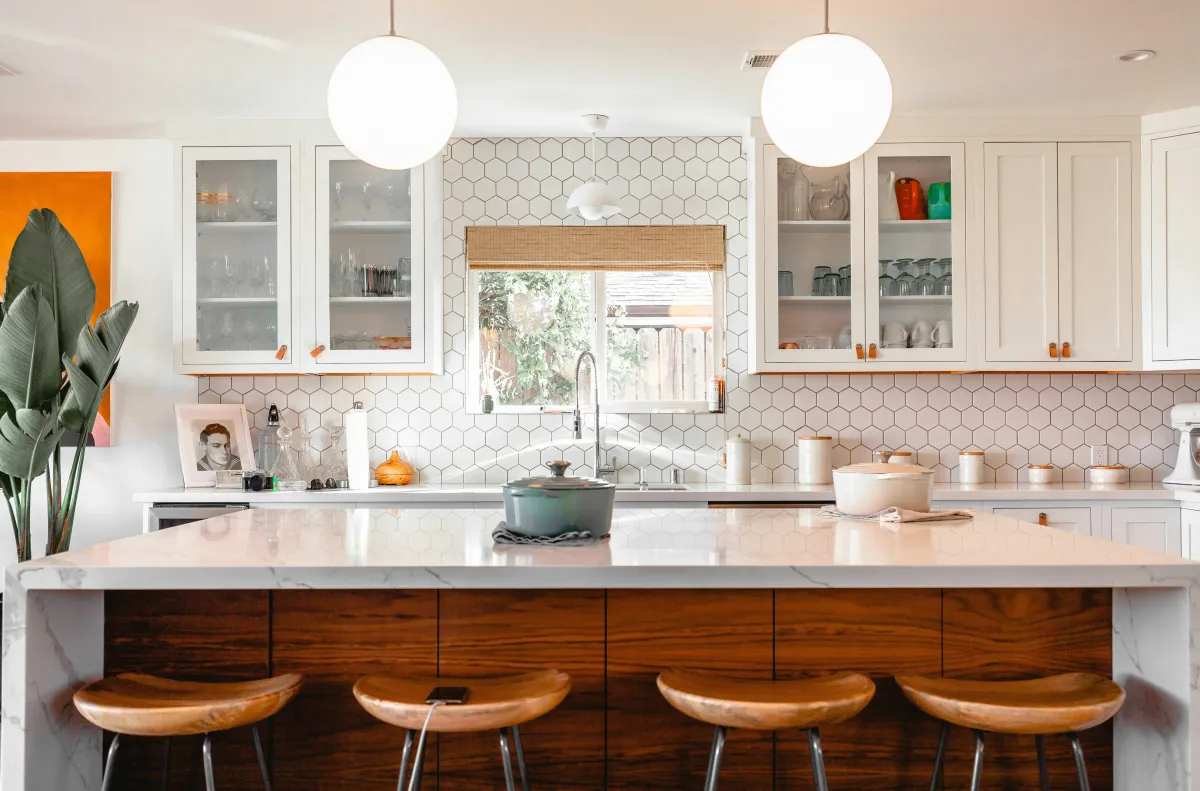
What You Need to Know Before Your Kitchen Renovation
Kitchen renovation preparation guide: realistic timelines, hidden costs, disruption management, building regulations and how to brief your fitter.
The Gap Between Expectation and Reality
A kitchen renovation is not a weekend project. The 2025 Houzz UK Kitchen Trends Study found that 71 percent of homeowners change their kitchen layout during a renovation, and the median spend rose 34 percent year on year to £17,500. Those numbers tell you two things. First, most people end up doing more work than they originally planned. Second, the costs are significant enough that poor preparation leads to genuinely painful surprises.

This guide covers everything you need to understand before the first cabinet comes off the wall. Not the design choices (our kitchen renovation strategy guide covers styles, materials and showroom tactics), but the practical, logistical and regulatory groundwork that separates a smooth renovation from a stressful one. If this is your first kitchen project, read this before you book a showroom appointment.
How Long a Kitchen Renovation Actually Takes
The installation phase gets most of the attention, but the total timeline from first conversation to cooking your first meal in the new kitchen is typically four to six months. Understanding each phase prevents the most common frustration: expecting it to be finished in two weeks and discovering it takes eight.
Pre-Construction Phases
| Phase | Duration | What Happens |
|---|---|---|
| Ideas and budgeting | 1-3 weeks | Measure room, research suppliers, visit showrooms, set budget |
| Design and quotes | 2-6 weeks | Layout planning, appliance selection, get 3+ quotes, finalise design |
| Ordering and lead times | 2-10 weeks | Bespoke cabinets: 8-12 weeks; stock cabinets: 1-3 weeks; premium appliances: 4-8 weeks |
| Contractor booking | 4-16 weeks | Good kitchen fitters are booked months ahead, especially spring to autumn |
Installation Phases
| Phase | Duration | Details |
|---|---|---|
| Site preparation | 1-3 days | Dust barriers, floor protection, temporary kitchen setup |
| Strip-out and demolition | 2-5 days | Remove existing units, disconnect plumbing, electrics and gas |
| Structural work (if needed) | 1-3 weeks | RSJ installation, wall removal, Building Control inspections |
| First fix plumbing and electrics | 2-7 days | New water runs, waste pipes, electrical circuits, socket positions |
| Plastering | 2-5 days | Boarding, skimming, plus 2+ days drying at 18-21 degrees |
| Flooring | 2-4 days | Subfloor preparation, underlay, laying |
| Cabinet installation | 3-8 days | Base units levelled with laser, then wall units, plinths, pelmets |
| Worktop templating and fitting | 1-3 weeks | Template visit once cabinets are fixed; fabrication 5-10 days for stone; installation 1 day |
| Second fix plumbing and electrics | 1-4 days | Connect sink, taps, dishwasher, appliances, sockets, lighting |
| Tiling | 2-4 days | Splashback and wall tiling after worktops are fitted |
| Decoration and snagging | 2-4 days | Painting, final adjustments, door alignment, professional clean |
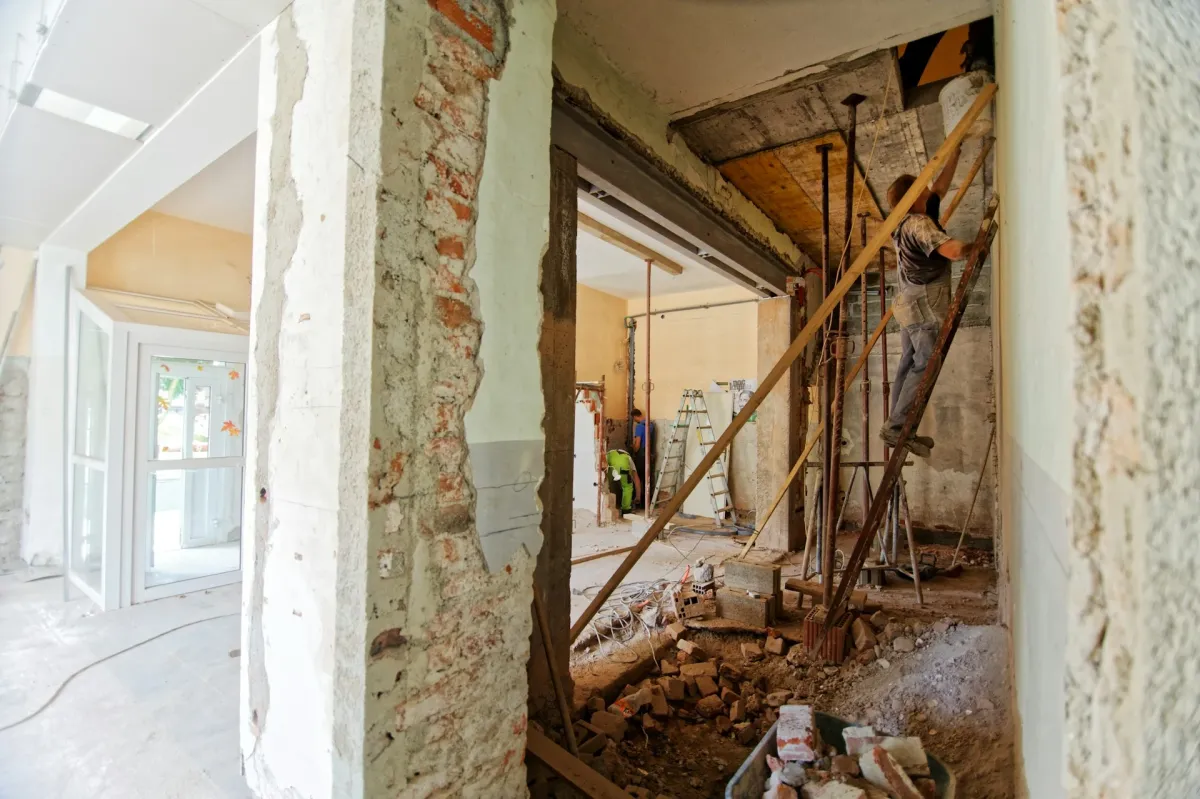
Total build time varies enormously. A like-for-like swap with the same layout takes two to four weeks. A layout change with relocated plumbing and electrics takes four to eight weeks. A full structural conversion with knocked-through walls runs eight to twelve weeks or longer.
The single biggest timeline surprise is worktop fabrication. Stone worktops cannot be templated until every cabinet is fitted and level, and fabrication takes five to ten working days after templating. Moving a cabinet by even a few millimetres after templating means starting again. Plan for this gap in advance.
Hidden Costs That Catch People Out
The kitchen units and appliances are the visible costs. The invisible ones are where budgets unravel.
Plumbing relocation costs £1,000 to £3,000 if you are moving the sink or dishwasher position, and £2,000 to £5,000 for major pipework rerouting or gas relocation. Every metre of waste pipe that needs rerouting adds cost. Moving a sink to an island requires routing waste pipes through the floor.
Electrical upgrades run £400 to £1,200 for new circuits and rewiring. If the consumer unit (fuse board) needs upgrading, that alone is a notifiable job requiring Part P certification. An induction hob needs a dedicated 32A circuit, which many older houses do not have.
Structural work for removing a load-bearing wall costs £1,800 to £7,500 including the RSJ beam, structural engineer’s fees (£300 to £600 for calculations) and Building Control inspection (£250 to £650).
Skip hire runs £200 to £400 per skip for a 6-8 yard builders’ skip. A standard kitchen strip-out fills at least one. If the skip sits on a public road, a council permit costs £15 to £60 in Manchester.
Plastering and making good costs £300 to £600 once old cabinets are removed. Painting and decorating to finish the room adds £100 to £200 or more.
The industry-standard contingency recommendation is 10 to 15 percent of the total budget, rising to 20 percent for properties built before 1960 where hidden issues such as damp, asbestos, outdated wiring and rotten joists are more likely. A kitchen that should cost £15,000 regularly ends up at £18,000 to £20,000 once the hidden costs surface. For a detailed breakdown of costs at every price level, our kitchen worktop comparison covers materials from laminate to premium stone.
Decisions That Must Be Made Before Work Starts
There is a critical sequence to kitchen renovation decisions, and getting it wrong creates expensive problems.
Appliances First, Cabinets Second
This is the single most important planning rule. Built-in ovens, hobs and integrated fridge-freezers all have specific cut-out dimensions that vary by model. Cabinetry is built to fit those dimensions. Ordering cabinets before finalising appliance choices leads to costly modifications or, worse, appliances that do not fit.
Select and ideally order your appliances four to eight weeks before installation begins. Confirm exact cut-out dimensions with the cabinet maker before any manufacturing starts. Premium brands and range cookers can have lead times of six to eight weeks, so factor this into the overall timeline.
Layout and Workflow
The four standard kitchen layouts are galley (two parallel runs, minimum 1.2 metres between for one cook), L-shaped (the most popular UK layout), U-shaped (minimum 3 metres between opposing runs), and island (requires a room of at least 4 by 4 metres with 1 metre clearance on all sides).

The traditional work triangle positions the hob, sink and fridge so the total distance between them is 4 to 7 metres, with no single leg shorter than 1.2 metres or longer than 2.7 metres. Modern open-plan kitchens increasingly use a zone approach instead: preparation, cooking, cleaning, storage and serving zones arranged to minimise unnecessary movement. Whichever model you follow, the core principle is the same. The three things you use most should be close together, and through-traffic should not cut across the cooking area. For more on layout strategies, our kitchen remodelling team can survey your space and advise.
Electrical Planning
Socket positions are one of the most regretted oversights in kitchen renovations. The Building Regulations (BS 7671) require sockets to be at least 30 centimetres horizontally from the edge of a sink. Worktop-height sockets should sit roughly 150 millimetres above the worktop surface, typically 1,050 to 1,150 millimetres from the floor. Every kitchen socket must be protected by a Residual Current Device (RCD).
Six double sockets is the bare minimum recommended by Electrical Safety First. In practice, a modern kitchen needs eight to twelve double sockets to cover the kettle, toaster, microwave, food processor, stand mixer, phone charger, under-cabinet lighting, fridge-freezer, dishwasher and any other appliances you use regularly. All socket positions must be finalised before the first fix electrical phase begins. Adding sockets after the kitchen is fitted means disrupting tiling and worktops.
Lighting
Plan three layers: task lighting (under-cabinet LED strips for worktop illumination), ambient lighting (ceiling downlights positioned to avoid shadows when standing at the worktop) and feature lighting (pendants over an island, hung 750 to 900 millimetres above the surface). Dimmer switches on separate circuits allow the kitchen to shift between bright working light and a softer mood for dining. All lighting positions must be confirmed before first fix electrics.
Extractor Ducting
A recirculating cooker hood does not satisfy UK Building Regulations. Approved Document F requires mechanical extract ventilation of 30 litres per second for a cooker hood spanning the full hob width and venting externally, or 60 litres per second if the fan is positioned elsewhere. Rigid ducting (100mm diameter) is far more efficient than flexible ducting, which can lose up to 72 percent of its efficiency over a 10 metre run. Each additional bend reduces airflow further. Plan the ducting route before fitting wall cabinets, not after.
Building Regulations You Need to Know
Not every kitchen renovation requires Building Regulations approval, but several common elements do.
Electrical work (Part P): Installing a new circuit or upgrading the consumer unit is notifiable work requiring Building Control notification or self-certification by a Part P registered electrician. Since the 2013 amendments, adding or moving sockets on existing circuits is no longer notifiable, but the work must still comply with BS 7671 (IET Wiring Regulations, 18th Edition). A Part P registered electrician can self-certify. A non-registered electrician requires Building Control inspection at £150 to £300.
Gas work: All gas work must be carried out by a Gas Safe registered engineer. This is a legal requirement with no exceptions. Moving a gas hob, installing a gas oven or relocating gas pipework all require Gas Safe certification. Always ask to see the engineer’s Gas Safe ID card and verify it online.

Structural alterations: Removing or altering a load-bearing wall requires Building Regulations approval and a structural engineer’s calculations before any steelwork is installed. Building Control inspects at key stages and issues a completion certificate. This is essential for open-plan kitchen conversions.
Fire safety (Part B): Open-plan layouts that remove walls between the kitchen and hallway or stairs may require additional fire safety measures, including mains-wired heat detectors in the kitchen and fire doors to the hallway. A heat detector rather than a smoke detector is recommended in kitchens to reduce false alarms from cooking.
How to Brief Your Kitchen Fitter
The quality of the brief you give your fitter directly affects the quality of the result. Provide room dimensions with a floor plan showing window and door positions, photos from multiple angles, your budget range (being honest prevents wasted design time), a list of must-haves versus nice-to-haves, the model numbers and dimensions of any appliances already selected, and any hard deadline such as a family event.
A professional kitchen fitter will conduct a site survey that includes precise measurements with a laser measure, assessment of existing plumbing and electrics, floor level checks, identification of potential issues (damp, asbestos risk, load-bearing walls, boiler position, soil pipe routing) and a review of the consumer unit. The written, itemised quotation should arrive within one to two weeks.
Red Flags When Choosing a Contractor
Be cautious of any contractor who provides only a verbal estimate without a written breakdown, demands more than 25 to 30 percent upfront (legitimate firms use stage payments linked to milestones), hesitates to show public liability insurance, cannot provide photos of completed work or references from past clients, pushes for immediate commitment with “this price is only available today” pressure, or requests cash-only payment. Always verify trade body membership directly with the organisation rather than relying on the contractor’s word.
Credentials to check include BiKBBI (British Institute of Kitchen, Bedroom and Bathroom Installation), the Federation of Master Builders, TrustMark (government-endorsed quality scheme), and Checkatrade. For gas work, verify the engineer’s registration at the Gas Safe Register. For electrical work, confirm NICEIC, NAPIT or ELECSA registration. Our kitchen fitting team holds full insurance and trade accreditation, and we provide written, itemised quotes for every project.
Living Without a Kitchen
The actual period without a functioning kitchen is typically three to six weeks for a standard renovation. Planning a temporary cooking setup reduces the stress dramatically.
Set up a temporary kitchen station in a dining room, spare bedroom or garage with a portable induction hob (Tefal and Russell Hobbs sell single-ring units from £30 to £60, plugging into a standard 13A socket), a microwave, kettle, slow cooker and toaster. An air fryer extends the range of meals you can prepare significantly. If the main fridge is disconnected, a mini fridge can be hired cheaply. A folding table and access to power sockets complete the setup.
For washing up, use the utility room sink if you have one, or a washing-up bowl with kettled hot water emptied into the bathroom. Batch cooking meals and freezing them before the old kitchen is stripped out saves both time and money during the disruption period. Budget an extra £30 to £50 per week for takeaways, which accumulates quickly over four to six weeks. If renovating in summer, a barbecue extends your options further.
Dust control is the other major concern. Professional fitters use 0.4 to 0.6 millimetre polythene sheeting taped across doorways to contain dust. Ramboard or canvas drop cloths protect hallway floors. Heating vents in the work area should be covered to prevent dust circulating through the central heating system. Daily vacuuming with a HEPA-filtered machine during plastering and cutting phases keeps the rest of the house habitable.
Mistakes That Cost the Most
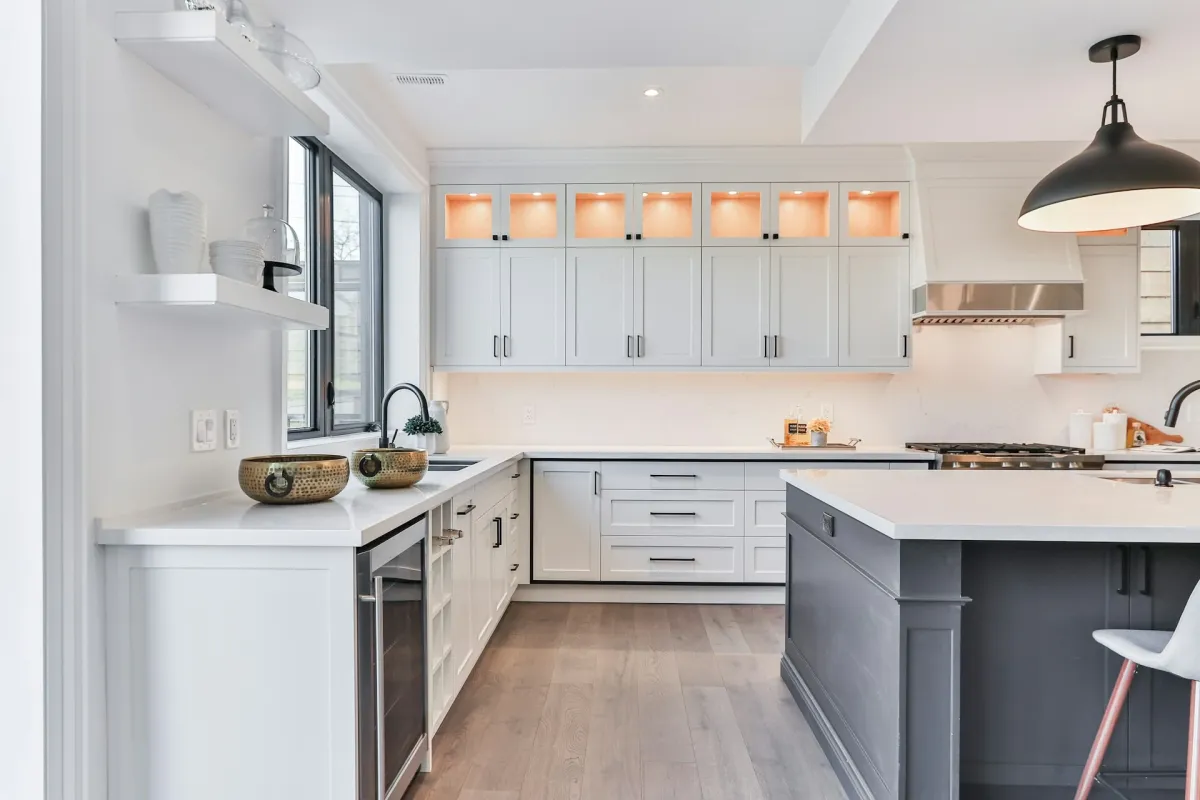
Every kitchen fitter has a list of mistakes they see homeowners make repeatedly. These are the ones that cost the most to fix.
Not planning enough sockets. Six is the bare minimum. Modern kitchens need eight to twelve double sockets. Adding them after tiling and worktops are in place is disruptive and expensive.
Ordering appliances after cabinets. Cut-out dimensions vary by model. Get this wrong and cabinets need modifying or replacing.
Forgetting extractor ducting. A recirculating hood does not meet Building Regulations. The ducting route through the wall or ceiling must be planned from the outset. Island hobs present particular challenges because the ducting must run through the floor or ceiling.
Choosing style over function. Handleless cabinets that show fingerprints, open shelving that collects grease, glossy worktops that show every scratch. Kitchens are high-use rooms. Durability matters more than aesthetics.
Skipping the site survey. Going straight to a showroom design without a professional survey of the actual room leads to surprises: walls that are not plumb, pipes in unexpected locations, uneven floors, inadequate electrical supply.
Unrealistic timelines. Expecting completion in two weeks when the build phase alone is four to six weeks, plus months of design and ordering beforehand. Bespoke cabinet lead times of eight to twelve weeks and stone worktop fabrication of two to three weeks after templating are the biggest timeline surprises.
Not getting everything in writing. Verbal agreements on scope, price and timeline leave you exposed. Every aspect should be documented: itemised quote, payment schedule, start and completion dates, what is included and excluded, warranty terms and the process for handling changes. For inspiration on what a well-planned kitchen renovation looks like, browse our kitchen design trends guide or our Victorian kitchen heritage guide.
Frequently Asked Questions
How long does a full kitchen renovation take in the UK?
How much contingency should I budget for a kitchen renovation?
Do I need Building Regulations approval for a kitchen renovation?
What is the biggest mistake homeowners make during a kitchen renovation?
How do you cope without a kitchen during a renovation?
How many sockets does a kitchen need?
Should I choose appliances before or after ordering kitchen cabinets?
Past Projects


Get a Free Quote
Book a free, no-obligation site survey. Call us on 07428 653 653 or request a callback.
Book Free SurveyOur Clients' Reviews

5/5

5/5

5/5

5/5

5/5
Based on 453+ verified reviews across all platforms
Related Articles

How Much Does a New Bathroom Cost in 2026? UK Pricing Guide
What a New Bathroom Really Costs in 2026 The question every homeowner asks before a bathroom renovation is the same. How much? The answer depends on what you want, what you have already, and how much of the existing layout you intend to keep. But the data from thousands of UK projects gives us a clear picture.
view this article Read more
Bathroom Renovation Guide: Every Stage From Start to Finish
What a Bathroom Renovation Actually Involves A complete bathroom renovation is one of the most rewarding home improvement projects you can undertake, but it is also one of the most misunderstood. Homeowners frequently picture the finished result without appreciating the sequence of skilled trades and carefully timed stages that make it happen. Every professional bathroom renovation follows a logical order, and understanding that order is the single most important thing you can do before your project begins.
view this article Read more
Bathroom Tiling Styles for Timeless Elegance
Why Layout Matters More Than the Tile Itself
view this article Read more
Quartz, Granite or Porcelain Worktops: Which Suits Your Kitchen?
The Three-Way Decision Most Kitchen Renovations Come Down To
view this article Read more
Ceramic Disc Technology in Bathroom Taps: How It Works
The Technology Inside Almost Every Modern Tap If your bathroom taps turn with a smooth quarter-turn rather than two and a half rotations, they contain ceramic disc cartridges. This technology has become so dominant that it is now difficult to buy a new tap in the UK that does not use it. Yet most homeowners have no idea how it works, why it fails, or what to do when a ceramic disc tap starts dripping.
view this article Read more

How to Choose an Electrical Bathroom Mirror
What an Electrical Bathroom Mirror Actually Does
view this article Read more
Best Bathroom and Toilet Brands in the UK
What Makes a Good Bathroom Brand The brand name on your toilet, basin or shower valve determines far more than the price tag. It affects how long the product lasts, how easy it is to get replacement parts in five or ten years, whether the finish holds up to daily cleaning, and how well the engineering behind the product actually performs in a real bathroom rather than a showroom.
view this article Read more
Bathroom Underfloor Heating: Types, Installation and What to Expect
Why Underfloor Heating Works So Well in Bathrooms Stepping onto a warm bathroom floor on a cold January morning is one of those small luxuries that, once experienced, becomes very difficult to give up. Underfloor heating has grown from a niche luxury into a genuinely practical heating solution for UK bathrooms, and the reasons go well beyond comfort.
view this article Read more
Tools Required for Bathroom Fitting: The Professional Trade Toolkit
The Professional Bathroom Fitter’s Complete Toolkit Every professional bathroom fitter knows that quality tools are an investment, not an expense. The difference between a flawless installation and a problematic one often comes down to having the right equipment for the job. Over years of bathroom fitting projects across Greater Manchester, we have refined our toolkit to include everything a trade professional needs on site.
view this article Read more
Accessible Bathroom Design: UK Regulations, Grants and Guide
Why Accessible Bathroom Design Matters Around 16.8 million people in the United Kingdom have a disability. That is one in four of the population, according to the DWP Family Resources Survey 2023/24, and the figure has risen by 4.9 million over the past decade. Among adults over State Pension age, 45 percent are disabled. The most common impairment types for working-age adults are mental health conditions (48 percent) and mobility impairments (42 percent).
view this article Read more
Bathroom Renovation Environmental Impact: Water, Energy and Waste
Why Your Bathroom Renovation Has a Bigger Environmental Footprint Than You Think
view this article Read more