
Wall-Hung Toilets: Are They Worth It? Complete UK Review
Are wall-hung toilets worth the investment? Our bathroom fitters review the best wall-hung toilet models, installation costs, pros and cons for UK homes.
Wall-hung toilets have been standard in much of continental Europe for decades, but they have taken longer to gain traction in British homes. That is changing rapidly. As more UK homeowners opt for modern, minimalist bathroom designs, the demand for wall-hung toilets has increased significantly. But are they genuinely worth the extra investment, or is a traditional close-coupled toilet still the smarter choice for most households?
As professional bathroom fitters in Manchester, we install wall-hung toilets regularly and have seen first-hand what works, what does not, and where homeowners can run into unexpected complications. This honest, comprehensive review will help you decide whether a wall-hung toilet is right for your bathroom.
What Is a Wall-Hung Toilet?
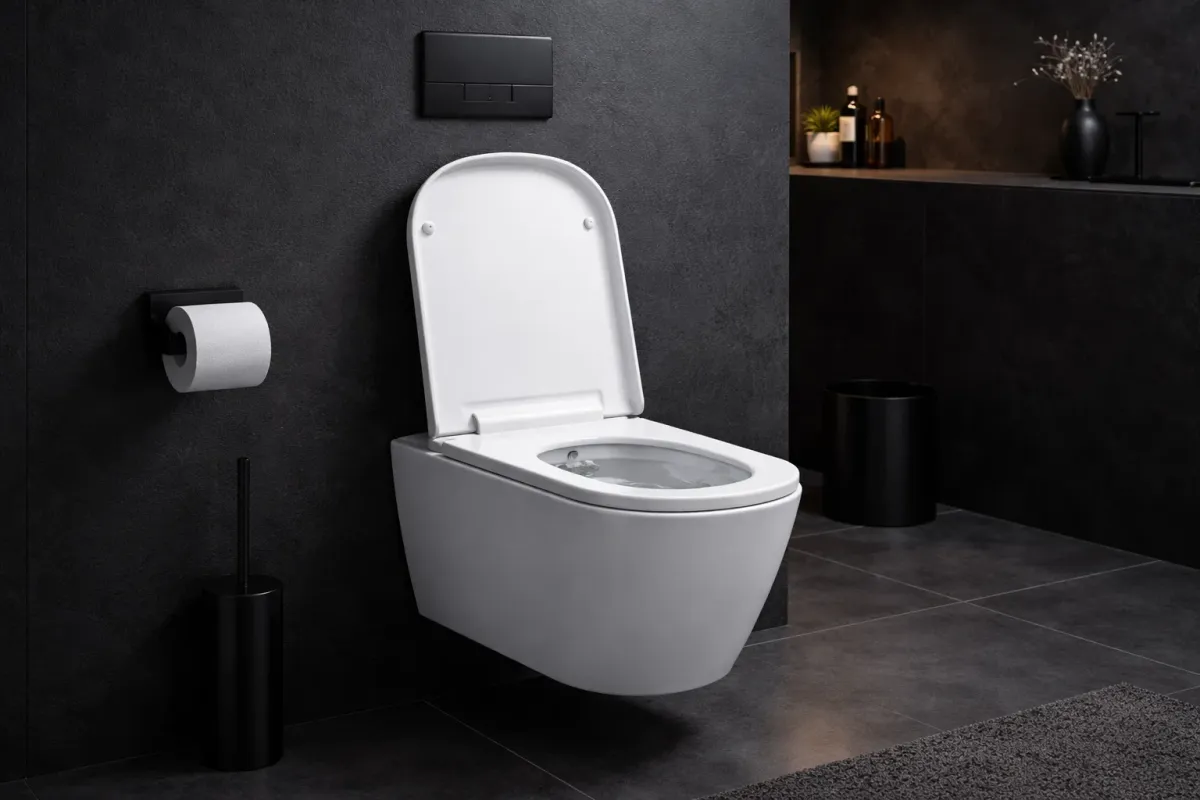
A wall-hung toilet (also called a wall-mounted toilet) is fixed directly to the wall, with the toilet pan suspended above the floor. The cistern and all the flushing mechanisms are concealed within the wall behind a support frame, leaving only the toilet bowl and flush plate visible in the bathroom.
The result is a remarkably clean, streamlined look. There is no base touching the floor, no visible pipework, and no exposed cistern. It is the ultimate choice for homeowners who want a contemporary, uncluttered bathroom aesthetic.
Key Components of a Wall-Hung Toilet System
Understanding the system is important because a wall-hung toilet is more than just the ceramic pan you see. The complete system consists of several components:
1. The Concealed Cistern Frame
This is the structural backbone of the entire system. It is a steel frame that mounts inside the wall cavity or is fixed to the wall and then enclosed with plasterboard and tiles. The frame houses the cistern, the flush mechanism, and the water supply connections. It also provides the structural support that holds the toilet (and the person sitting on it) securely.
2. The Toilet Pan
The ceramic bowl that mounts to the wall frame via two heavy-duty bolts. Wall-hung pans come in various shapes — round, square, D-shaped, and elongated — to suit different design preferences.
3. The Flush Plate
A wall-mounted button or plate that activates the flush. Flush plates come in a wide variety of finishes including chrome, brushed nickel, matt black, and white, allowing you to match the plate to your bathroom brassware and accessories.
4. The Waste Connection
The waste pipe connects from the back of the pan directly into the wall, where it joins the soil pipe. This is all hidden behind the frame and wall finish.
How Wall-Hung Toilets Differ from Floor-Standing Models
The differences go well beyond aesthetics. Here is a detailed comparison:
| Feature | Wall-Hung | Close-Coupled | Back-to-Wall |
|---|---|---|---|
| Cistern visibility | Fully concealed in wall | Visible on top of pan | Concealed behind furniture/wall |
| Floor contact | None — pan is suspended | Full base on floor | Pan base on floor |
| Installation complexity | High — requires frame, wall work | Low — bolts to floor, connects to supply | Medium — needs furniture or concealed cistern |
| Total installed cost | £500 - £1,200+ | £250 - £550 | £350 - £700 |
| Cleaning ease | Excellent — clear floor underneath | Good — but hard to clean behind | Good — but base still on floor |
| Maintenance access | Via flush plate access panel | Lift cistern lid | Via access panel or furniture |
| Weight capacity | Typically 400kg+ (frame-dependent) | N/A (floor-supported) | N/A (floor-supported) |
| Visual impact | Maximum — sleek and minimal | Moderate — visible cistern | Good — cleaner than close-coupled |
| Suitable wall types | Stud walls, masonry, or combination | Any — floor mounted | Most — depends on furniture/concealment method |
The Concealed Cistern Frame System Explained
The frame system is arguably the most critical element of a wall-hung toilet installation, and it is the component that most homeowners know the least about. Getting this right is essential.
How the Frame Works
The concealed frame is a pre-assembled steel unit, typically 1,120mm to 1,200mm tall, 500mm wide, and around 150mm to 200mm deep. It is anchored to the floor and to the wall (or solely to the wall in some configurations). Inside the frame sits an insulated plastic cistern, the fill valve, the flush valve, and the waste connection.
Once the frame is installed, it is enclosed with plasterboard (usually moisture-resistant green board), tiled or plastered over, and then the toilet pan is mounted onto the protruding bolts. The flush plate sits in a pre-cut opening in the wall, providing access to the cistern internals for maintenance.
Frame Brands: Geberit Dominates
While there are several frame manufacturers, Geberit is the undisputed market leader in the UK and across Europe. Their Duofix frame system is used in the vast majority of professional wall-hung toilet installations, and for good reason:
- Exceptional build quality — robust steel construction with a 10-year manufacturer’s guarantee
- Universal compatibility — works with toilet pans from virtually any manufacturer
- Proven reliability — millions of installations worldwide with an excellent track record
- Readily available spare parts — fill valves, flush valves, and seals are easy to source in the UK
- Multiple configurations — frames available for different wall types, heights, and installation scenarios
Other frame brands include Grohe Rapid SL, Roca Duplo, and Ideal Standard Prosys. These are all competent systems, but Geberit remains our recommendation for most installations due to the unmatched parts availability and industry track record.
Our Top 7 Wall-Hung Toilets for UK Homes in 2026
We have chosen these models based on our installation experience, ceramic quality, design, flushing performance, and overall value.
1. Geberit iCon Wall-Hung Rimless Toilet
Geberit is best known for its frame systems, but the company also manufactures excellent toilet pans. The iCon is a beautifully designed rimless toilet with a slightly angular, modern shape. Pairing a Geberit pan with a Geberit frame gives you a fully integrated system from a single manufacturer, which simplifies compatibility and warranty matters.
- Bowl shape: Rectangular with soft edges
- Rimless: Yes — TurboFlush technology
- Seat included: Soft-close seat available as a set
- Recommended frame: Geberit Duofix UP320
- Price range (pan only): £200 - £350
The TurboFlush system directs water in a powerful, asymmetric swirl around the bowl, providing thorough cleaning with minimal water usage. It is an outstanding toilet that works perfectly with the Geberit ecosystem.
2. Duravit ME by Starck Wall-Hung Rimless Toilet
Designed by the legendary Philippe Starck, the ME by Starck range is one of Duravit’s most popular lines. The wall-hung version features a slender, refined profile with a rimless interior (Duravit’s HygieneFlush system). It is the kind of toilet that looks like it belongs in a design magazine.
- Bowl shape: D-shaped, elongated
- Rimless: Yes — HygieneFlush
- Seat included: Soft-close seat available
- Recommended frame: Geberit Duofix or Grohe Rapid SL
- Price range (pan only): £250 - £450
The ME by Starck is a premium choice, but the quality of the ceramic and the attention to design detail justify the price. If your bathroom remodelling project has a focus on aesthetics, this toilet delivers.
3. Villeroy & Boch Subway 2.0 Wall-Hung Rimless Toilet
The Subway 2.0 is one of the best-selling wall-hung toilets in Europe, and it is easy to see why. The design is contemporary but not overly angular, with gentle curves that give it a timeless quality. The DirectFlush rimless system provides a powerful, hygienic flush.
- Bowl shape: Softly rounded, D-shaped
- Rimless: Yes — DirectFlush
- Seat included: SlimSeat soft-close available
- Recommended frame: Geberit Duofix or ViConnect
- Price range (pan only): £220 - £380
Villeroy & Boch offers the optional CeramicPlus surface treatment, which creates an extremely smooth, dirt-repellent finish. This is particularly useful in hard water areas where limescale can be a persistent problem.
4. Roca The Gap Round Wall-Hung Rimless Toilet
Roca brings their practical, quality-focused approach to the wall-hung segment with The Gap Round. This is a compact, efficiently designed toilet that delivers strong flushing performance and easy cleaning thanks to the rimless bowl. It represents excellent value for money in the wall-hung category.
- Bowl shape: Round
- Rimless: Yes
- Seat included: Soft-close seat available
- Recommended frame: Roca Duplo or Geberit Duofix
- Price range (pan only): £150 - £280
If you are looking for an affordable wall-hung toilet from a brand you can trust, Roca The Gap is hard to beat. We have installed many of these across Manchester and the feedback from homeowners has been consistently positive.
5. Ideal Standard Strada II Wall-Hung Rimless Toilet
Ideal Standard’s Strada II range is a popular choice for contemporary UK bathrooms. The wall-hung model features a thin-edge design that gives the pan a lightweight, elegant appearance. Combined with the Aquablade rimless flushing technology, it delivers both style and substance.
- Bowl shape: D-shaped, thin-profile edge
- Rimless: Yes — Aquablade
- Seat included: Thin soft-close seat available
- Recommended frame: Ideal Standard Prosys or Geberit Duofix
- Price range (pan only): £200 - £350
The Aquablade system uses a carefully engineered channel to direct water around the entire bowl in a continuous, powerful flow. It is one of the most effective rimless flushing systems on the market and keeps the bowl remarkably clean between manual cleans.
6. TOTO MH Wall-Hung Toilet
TOTO is a Japanese brand that is synonymous with bathroom innovation. The MH (designed by TOTO’s partner studio in collaboration with British architect Norman Foster) features TOTO’s proprietary CeFiONtect glaze — an extraordinarily smooth ceramic surface that prevents waste and bacteria from adhering to the bowl. This is combined with TOTO’s Tornado Flush system for exceptionally thorough cleaning.
- Bowl shape: D-shaped, elongated
- Rimless: Yes — Tornado Flush
- Seat included: No (TOTO offers heated seats and Washlet bidet seats)
- Recommended frame: Geberit Duofix or TOTO compatible frame
- Price range (pan only): £350 - £600
The TOTO MH is the premium choice on this list. It is worth considering if you want the very best ceramic quality and flushing technology, or if you are interested in pairing the toilet with a TOTO Washlet bidet seat for the ultimate bathroom experience. For more on TOTO and other premium brands, see our guide to toilet brands.
7. Villeroy & Boch O.novo Wall-Hung Rimless Toilet
For homeowners who want the Villeroy & Boch name and quality at a more accessible price point, the O.novo wall-hung rimless is an excellent option. The design is straightforward and unfussy — it will not win design awards, but it is well-made, practical, and reliable.
- Bowl shape: Round, compact
- Rimless: Yes — DirectFlush
- Seat included: Soft-close seat available
- Recommended frame: Geberit Duofix or ViConnect
- Price range (pan only): £150 - £250
This is our top budget recommendation in the wall-hung category. Combined with a Geberit Duofix frame, you can have a complete wall-hung toilet system from reputable brands for well under £500 (excluding installation).
Technical Specifications Comparison Table
| Model | Rimless | Flush Technology | Bowl Shape | CeramicPlus/Coating | Price Range (Pan) |
|---|---|---|---|---|---|
| Geberit iCon | Yes | TurboFlush | Rectangular | N/A | £200 - £350 |
| Duravit ME by Starck | Yes | HygieneFlush | D-shaped | HygieneGlaze option | £250 - £450 |
| V&B Subway 2.0 | Yes | DirectFlush | D-shaped | CeramicPlus option | £220 - £380 |
| Roca The Gap Round | Yes | Standard rimless | Round | N/A | £150 - £280 |
| Ideal Standard Strada II | Yes | Aquablade | D-shaped | N/A | £200 - £350 |
| TOTO MH | Yes | Tornado Flush | D-shaped | CeFiONtect | £350 - £600 |
| V&B O.novo | Yes | DirectFlush | Round | CeramicPlus option | £150 - £250 |
Installation Requirements
Wall-hung toilet installation is significantly more involved than fitting a standard close-coupled toilet. Here is what is required:
Wall Type and Structure
The concealed frame can be installed against several wall types:
- Stud walls (timber or metal frame): The frame is fixed to the floor and braced against the studs. This is the most common scenario in UK bathrooms and works well, provided the studs are properly positioned. Your bathroom plumber and fitter will need to ensure adequate structural support.
- Solid masonry walls: The frame is anchored directly to the brickwork or blockwork and to the floor. This is the most secure installation method.
- Combination walls: Some installations involve building a half-height or full-height stud wall in front of an existing masonry wall to house the frame. This is common when the existing wall structure does not accommodate a recessed frame.
Space Requirements
The frame typically needs a minimum cavity depth of 150mm to 200mm, plus the thickness of the plasterboard and tiles on top. This means a wall-hung toilet installation will bring the finished wall surface forward by approximately 200mm to 250mm from the original wall face. In a small bathroom, this reduction in floor space is worth considering carefully.
However, there is a counterbalancing effect: because the toilet pan is off the floor, the visual impression is one of more space, even if the physical dimensions are slightly reduced. The clear floor beneath the toilet also makes the room easier to clean and feel more open.
Soil Pipe Connection
The waste pipe from the toilet pan exits horizontally into the wall, connecting to the soil pipe within the frame cavity. This needs to be correctly positioned during the first-fix stage of the installation — getting the height and alignment wrong at this point creates major problems later. This is one of the key reasons we always recommend professional installation for wall-hung toilets.
Water Supply
A cold water supply pipe is routed to the cistern within the frame. This is straightforward plumbing work but needs to be completed during the first-fix phase before the frame is enclosed.
Electrical Supply (Optional)
If you plan to add a bidet seat or Washlet (such as the TOTO Washlet), you will need an electrical supply near the toilet. This should be a fused spur on its own circuit, installed by a qualified electrician in accordance with Part P of the Building Regulations.
Cost Comparison: Wall-Hung vs Close-Coupled
One of the biggest considerations for UK homeowners is cost. Here is a realistic breakdown:
| Cost Element | Wall-Hung Toilet | Close-Coupled Toilet |
|---|---|---|
| Toilet pan | £150 - £600 | £100 - £500 |
| Concealed frame & cistern | £150 - £350 | N/A (cistern included) |
| Flush plate | £30 - £200 | N/A (flush button included) |
| Seat | £30 - £100 | £20 - £80 |
| Total product cost | £360 - £1,250 | £120 - £580 |
| Installation labour | £350 - £600+ | £150 - £300 |
| Total installed cost | £710 - £1,850+ | £270 - £880 |
As you can see, a wall-hung toilet typically costs two to three times more than a close-coupled alternative when you factor in the frame, flush plate, and additional installation labour. The question is whether the aesthetic and practical benefits justify that premium for your particular situation.
Maintenance and Access Considerations
A common concern about wall-hung toilets is: “What happens when something goes wrong inside the wall?” This is a valid question, and the answer is more reassuring than most people expect.
Accessing the Cistern
The flush plate on a wall-hung toilet is designed to be removable, providing access to the cistern, fill valve, and flush valve without needing to open up the wall. On a Geberit system, for example, the flush plate pops off to reveal a service opening through which a plumber can reach the internal components, replace seals, adjust the fill level, or swap out a faulty valve. Most maintenance tasks can be completed through this opening.
Replacement Parts
This is where choosing a reputable frame manufacturer matters enormously. Geberit, for instance, guarantees spare parts availability for 25 years. This means you can confidently replace any internal component decades after the initial installation. Lesser-known frame brands may not offer the same assurance, which could leave you in a difficult position if a component fails years down the line.
What If the Cistern Needs Replacing?
In rare cases where the cistern itself develops a fault (such as a crack), it would need to be accessed through the wall. This would involve removing the flush plate and potentially cutting an access panel in the plasterboard. It is not an everyday occurrence — cistern failures are very uncommon with quality brands — but it is worth being aware of the possibility.
Cleaning
One of the greatest practical advantages of a wall-hung toilet is cleaning. With no base on the floor, you can mop or wipe the entire floor area beneath and around the toilet effortlessly. There are no awkward gaps behind the pan where dust and grime accumulate. For families with young children, this alone can be a compelling reason to choose wall-hung.
Pros and Cons of Wall-Hung Toilets
Advantages
- Stunning contemporary aesthetic — creates a clean, minimalist look that transforms the bathroom.
- Easy floor cleaning — no base on the floor means you can clean the entire floor without obstruction.
- Adjustable height — the pan can be mounted at any height to suit the users (standard is 400mm, but it can be raised for taller users or lowered for children).
- Space-saving appearance — although the frame requires wall depth, the visual impression is of more space.
- Quiet flushing — the concealed, insulated cistern is significantly quieter than an exposed close-coupled cistern.
- Premium feel — elevates the overall look and feel of the bathroom, adding to property value.
Disadvantages
- Higher cost — both the products and the installation are more expensive than close-coupled alternatives.
- More complex installation — requires a specialist frame, wall construction work, and careful first-fix plumbing.
- Reduced wall depth — the frame brings the wall forward by 200-250mm, reducing the room’s overall footprint.
- Maintenance concerns — while routine servicing is straightforward via the flush plate opening, major repairs could require wall access.
- Not suitable for all bathrooms — very small bathrooms may not have the space to accommodate the frame without making the room feel too cramped.
- Frame quality is critical — a poor-quality frame can lead to movement, noise, or premature failure. Always invest in a reputable frame system.
Tips for Buying a Wall-Hung Toilet
Here is our professional advice for anyone considering a wall-hung toilet:
1. Invest in a Quality Frame
Do not economise on the concealed frame. The frame is the foundation of the entire system — it supports the weight of the toilet and the user, houses the cistern, and needs to last for decades. Geberit Duofix is our top recommendation, but Grohe Rapid SL and Roca Duplo are also solid choices. Avoid unbranded or very cheap frames.
2. Choose the Right Frame Height
Frames come in different heights to suit various installation scenarios. A standard frame (1,120mm-1,130mm) is suitable for most installations. Low-height frames (820mm-980mm) are available for installations under windows or within half-height walls. Make sure your fitter selects the correct frame for your specific bathroom layout.
3. Match the Flush Plate to Your Brassware
The flush plate is one of the few visible elements of the system, so choose one that complements your bathroom taps, shower controls, and accessories. Chrome, brushed nickel, and matt black are the most popular finishes. Geberit offers a particularly wide range of flush plates, from simple dual-flush buttons to designer glass panels.
4. Confirm Pan Compatibility
While most wall-hung pans are compatible with most frames (they use a standard bolt-fixing pattern), it is always worth confirming compatibility before purchasing. Mixing brands is usually fine — for example, a Duravit pan on a Geberit frame — but check the specifications to be certain.
5. Plan for the Wall Build-Out
The frame will bring your wall forward by at least 200mm. Discuss this with your bathroom fitter during the design stage to ensure the finished room still has adequate space. In some cases, the build-out can be used to create a useful shelf or ledge above the toilet, turning a potential drawback into a design feature.
6. Consider Future Maintenance
Ensure your installer positions the frame and flush plate in a way that provides good maintenance access. The flush plate should be at a comfortable working height, and there should be sufficient clearance around it for a plumber to work. A well-planned installation makes future servicing quick and straightforward.
7. Do Not Forget the Seat
As with close-coupled toilets, many wall-hung pans do not include a seat. Budget for a soft-close seat with quick-release hinges. These are quieter, more durable, and much easier to keep clean.
8. Get Professional Installation
We cannot stress this enough. Wall-hung toilet installation is not a DIY project. It involves structural framework, plumbing within a wall cavity, and precise measurements that must be correct before the wall is tiled. A mistake at the first-fix stage is expensive and disruptive to correct. Use experienced, professional bathroom fitters who have a track record of wall-hung installations.
Frequently Asked Questions
Are wall-hung toilets strong enough to sit on?
How much does it cost to install a wall-hung toilet in the UK?
Can a wall-hung toilet be installed on a stud wall?
What happens if the concealed cistern develops a fault?
Is a wall-hung toilet suitable for a small bathroom?
Do wall-hung toilets leak?
Can I retrofit a wall-hung toilet where I currently have a close-coupled model?
Which wall-hung toilet brand is the most reliable?
So, Are Wall-Hung Toilets Worth It?
The honest answer is: it depends on your priorities and your bathroom.
A wall-hung toilet is worth it if:
- You are carrying out a full bathroom renovation and can incorporate the frame during the build phase
- You value a clean, modern, minimalist aesthetic
- Easy floor cleaning is important to you (especially with young children)
- You have sufficient room to accommodate the wall build-out
- You are willing to invest in quality products and professional installation
A close-coupled toilet may be the better choice if:
- You are on a tighter budget
- You are doing a simple toilet replacement rather than a full renovation
- You prefer easy, accessible maintenance
- Your bathroom is very compact and cannot afford to lose wall depth
- You favour a traditional bathroom style
Neither option is inherently better than the other — they serve different needs and suit different bathrooms. The key is to make an informed decision based on your specific situation.
Final Thoughts
Wall-hung toilets offer a genuinely premium bathroom experience. The clean lines, the easy-to-clean floor, and the quiet flush all contribute to a bathroom that feels modern, hygienic, and thoughtfully designed. But they do come with higher costs and more complex installation requirements that should not be underestimated.
If you are considering a wall-hung toilet for your bathroom, we would be delighted to help. As experienced bathroom fitters and bathroom plumbers based in Manchester, we can assess your bathroom, recommend the right products for your space and budget, and handle the complete installation from first fix to final finish.
For more toilet buying advice, explore our other guides:
- Top 10 Toilets You Can Buy in the UK
- Best Close-Coupled Toilets for UK Homes
- The Throne Guide: Best Toilet Brands for Home Use
Past Projects


Get a Free Quote
Book a free, no-obligation site survey. Call us on +44 7428 653 653 or request a callback.
Book Free SurveyOur Clients' Reviews

5/5

5/5

5/5

5/5
Based on 453+ verified reviews across all platforms
Related Articles
Smart Toilets and Bidet Toilets: The Future of UK Bathrooms
Smart toilets have been a staple in Japanese and South Korean households for decades, but they are now making serious inroads into British bathrooms.
view this article Read more
Best Close-Coupled Toilets for UK Homes: 2026 Buyer's Guide
If you are planning a bathroom renovation or simply replacing your old toilet, there is a very good chance you will end up choosing a close-coupled model.
view this article Read more
Best Back-to-Wall Toilets for Small Bathrooms
If you have a small bathroom, you already know that every centimetre counts. Choosing the right toilet can make or break your layout, and for compact British bathrooms, back-to-wall (BTW) toilets are quickly becoming the go-to option.
view this article Read more
Rimless Toilets vs Standard: Which Should You Choose?
If you have been shopping for a new toilet recently, you have almost certainly noticed that “rimless” has become one of the biggest selling points in the market.
view this article Read more
Top 10 Toilets You Can Buy in the UK | Expert Picks
Choosing the Right Toilet for Your Bathroom Choosing a toilet might not seem like a momentous decision, but considering you will use it several times a day for years, getting it right matters more than most people realise.
view this article Read more
The Best Toilet Brands for Your Home: A UK Buyer's Guide
Choosing a Toilet Brand: What Actually Matters Selecting a toilet brand might seem less important than choosing a specific model, but the manufacturer behind your toilet determines the quality of the ceramic, the reliability of the flush mechanism, the availability of spare parts years down the line, and the level of after-sales support when something eventually needs attention.
view this article Read more
GROHE Grohtherm 800 Thermostatic Shower Mixer Review
An Installer’s Honest Assessment We fit dozens of thermostatic shower mixers every year across Greater Manchester bathrooms and shower rooms. Some arrive in impressive packaging and disappoint within months.
view this article Read more
How to Plan a Kitchen Renovation: A Practical UK Guide
What Separates a Good Kitchen Renovation From a Costly Mistake ![Modern kitchen with clean lines and quality finishes showing the result of careful renovation planning](modern kitchen.
view this article Read more