
Budget Bathroom Upgrades: What to Change and What It Costs
Practical UK bathroom upgrades from £5 to £2,000. Real prices from Screwfix and B&Q, and honest advice on what works and what wastes money.
You Do Not Need a Full Renovation to Transform Your Bathroom

Most bathrooms that look tired are not structurally broken. The plumbing works, the tiles are sound, and the layout is fine. What makes them feel dated is the accumulation of small things: yellowed silicone around the bath, a dripping tap with a worn cartridge, cloudy halogen spotlights, mismatched accessories from three different decades, and paint that stopped being white some time during the last parliament.
The good news is that fixing these things costs a fraction of a full bathroom renovation. A full strip-out and refit in the UK averages £5,000 to £10,000 (use our bathroom renovation cost calculator to estimate what a full renovation would cost for your room). The upgrades in this guide start at £5 and top out at around £2,000, and several of them make a bigger visual impact than you would expect for the money.
This guide is organised by budget tier with specific UK products, real prices from major retailers, and honest assessments of what works, what does not, and when you need a professional.
Under £100: The Quick Wins
These are upgrades you can do in a weekend, most of them without calling a tradesperson.
Fresh Silicone (£5 to £15)
The single highest-impact, lowest-cost upgrade in any bathroom. Old silicone turns yellow, grows black mould (Aspergillus niger, which releases airborne spores that aggravate asthma and respiratory conditions), and looks neglected even in an otherwise clean room.
Cut along both edges of the old silicone with a Stanley knife, apply sealant softener gel (Everbuild Sealant Remover or UniBond Silicone Sealant Remover, £5 to £8), leave it to work, scrape clean and degrease with white spirit. Mask both sides with painter’s tape, apply a new bead of anti-mould bathroom silicone (UniBond, Everbuild 500 or Dow Corning, £4 to £8 per tube) at 45 degrees, smooth with a caulk tool or soapy finger, and leave 24 hours before using the bath or shower. The total materials cost is £5 to £15 including the mastic gun if you do not own one.
New Taps (£25 to £85)
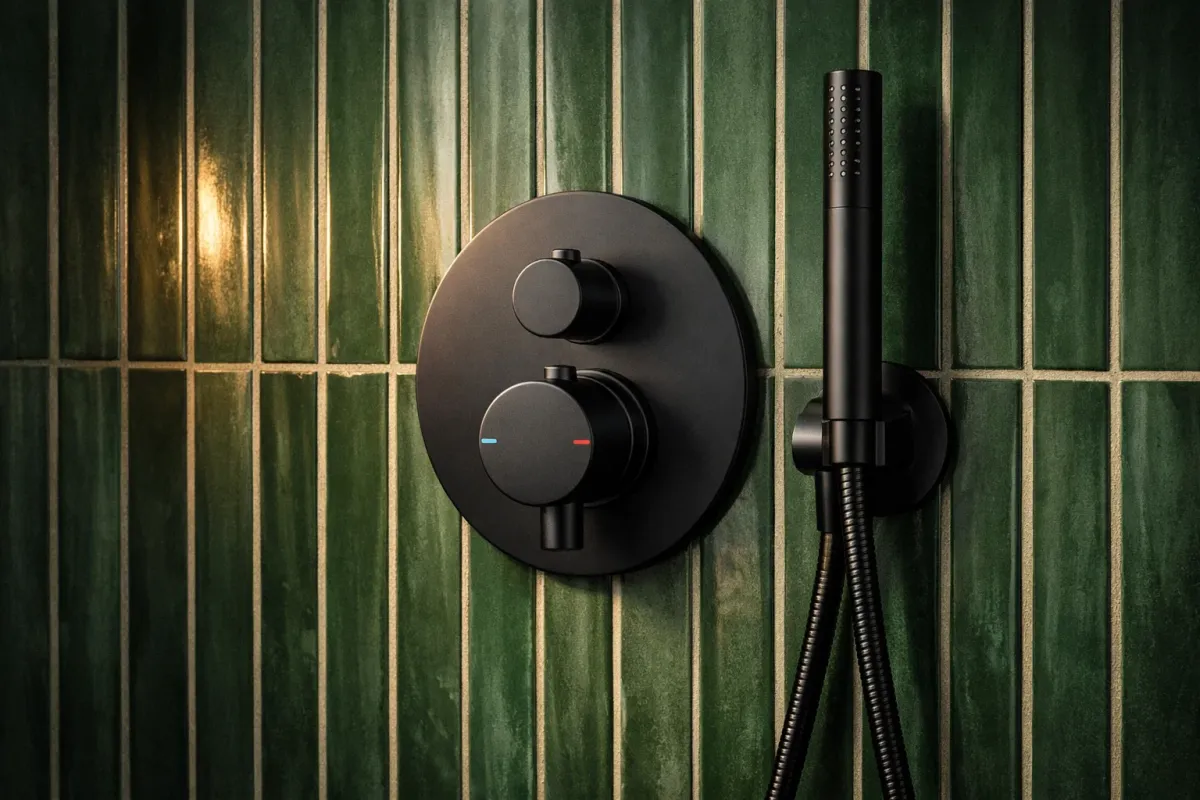
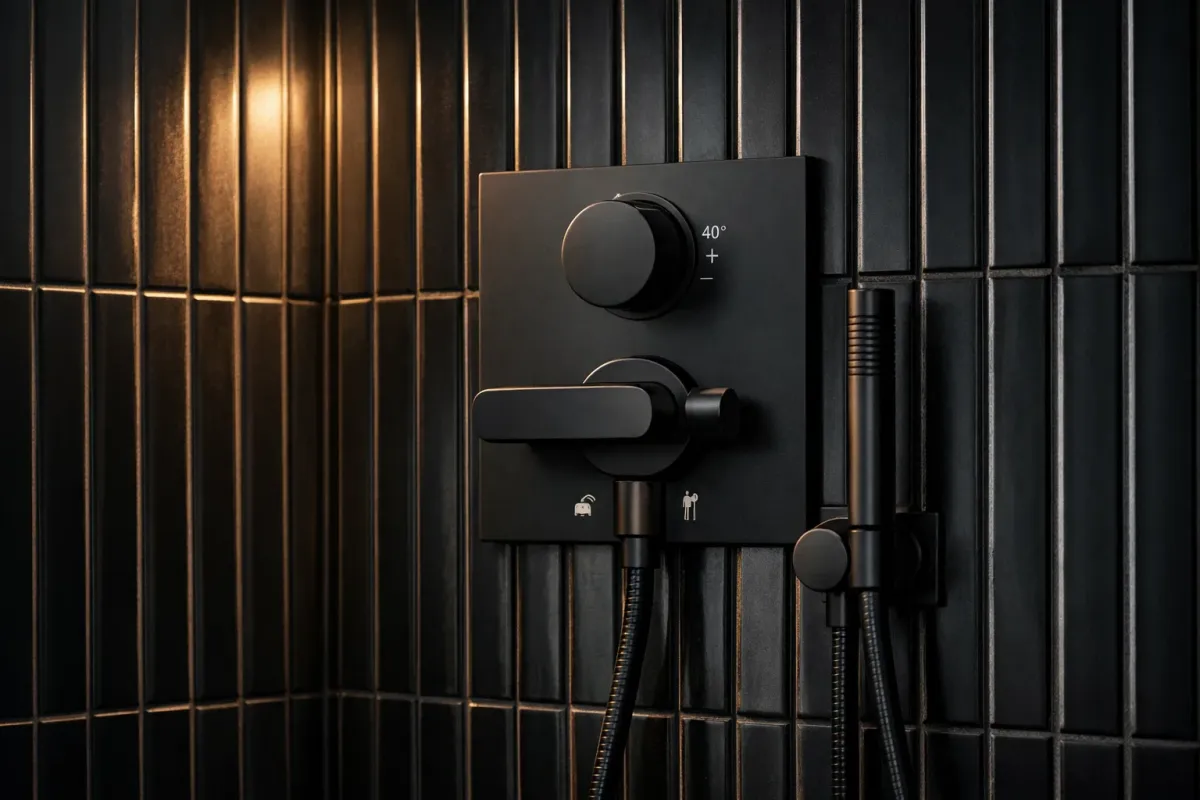
A pair of dated taps ages a bathroom more than almost anything else. Budget basin mono mixers start at £25 to £35 at Screwfix (Swirl Minimalist Chrome) and £35 to £50 at Toolstation (Ebb and Flo, Deva, Methven). Matt black and brushed brass finishes cost more, typically £50 to £85 for a basin mixer. B&Q stocks basin mixers from £29 upward.
Most budget taps use standard 15mm compression fittings. If isolation valves exist under the basin (small oval handles on the hot and cold pipes), a confident DIYer can swap taps without a plumber. Without isolation valves, you need a plumber to turn off the mains water. The plumber call-out for a straightforward tap change runs £60 to £150. For guidance on choosing taps by water pressure and valve type, see our bathroom taps buying guide.
New Shower Head and Hose (£10 to £45)
A shower head swap takes two minutes and requires no tools. The universal half-inch BSP thread fits virtually every UK shower hose. The Mira Response 4-Spray (£27) delivers four spray modes including an eco setting with rub-clean nozzles for limescale removal. The Grohe Tempesta 100 starts from £17, with the 4-spray Cosmopolitan version at £35 to £42. Replacement chrome hoses cost £5 to £12 at Screwfix.
Soft-Close Toilet Seat (£15 to £40)
A cracked, stained or loose toilet seat is disproportionately noticeable. Soft-close seats with quick-release hinges for easy cleaning start at £15 at Screwfix (polypropylene) and reach £35 to £40 for quality brands like Croydex and Bemis. This is a ten-minute job requiring nothing more than an adjustable spanner.
LED Lighting Swap (£10 to £50)
If your bathroom still runs halogen spotlights, each 50W bulb costs roughly £10 per year in electricity and throws a yellowish light that makes everything look dingy. A 5W LED GU10 replacement costs £2 to £5 at Screwfix and lasts 15,000 hours versus 1,000 for halogen. For four to six spotlights, the total cost is £10 to £30 and the energy saving pays for itself within months.
Simply swapping GU10 bulbs in existing fittings is a DIY job. Installing new downlight fittings or new circuits in a bathroom falls under Part P of the Building Regulations and must be done by a registered electrician (NICEIC, NAPIT or ELECSA).
Matching Accessories Set (£25 to £50)
Mismatched accessories from different eras are a visual giveaway. A coordinated set (toilet roll holder, towel ring or rail, robe hooks, glass shelf) in matching chrome from Croydex or Bristan costs £25 to £50 for five or six pieces at Screwfix. Avoid the cheapest unbranded chrome accessories under £3 per piece. Thin chrome plating develops pinholes that allow moisture through to the base metal, causing corrosion and bubbling within six to twelve months. Solid stainless steel (AISI 304 grade) is corrosion-proof and costs only marginally more.
£100 to £500: The Mid-Range Refresh
These upgrades require slightly more investment but deliver a noticeably different bathroom.
Bathroom Paint (£15 to £50 DIY, £200 to £400 Professional)
A fresh coat of paint on the ceiling and walls is transformative, particularly if the existing finish has yellowed or developed patches of condensation staining. Use bathroom-specific paint with anti-mould formulation rather than standard emulsion.
Dulux Easycare Bathroom (£20 to £25 for 2.5L) is the market leader. Its MouldTec formula protects against mould for five years, the Chromalock technology resists colour fade, and the soft sheen finish is claimed to be ten times tougher than standard emulsion. Coverage runs to 14 square metres per litre per coat. For a standard bathroom (20 to 25 square metres of wall and ceiling), two to three litres covers two coats at a materials cost of £20 to £30.
Crown Kitchen and Bathroom (£15 to £20 for 2.5L) is a solid mid-range alternative. Farrow and Ball Modern Emulsion (£63 for 2.5L) delivers beautiful depth of colour with built-in mould protection, but at three times the price of Dulux it is hard to justify unless you are matching a specific colour scheme through the house.
A professional painter charges £200 to £400 for a standard bathroom (ceiling plus walls), depending on condition and region.
LED Illuminated Mirror (£70 to £250)
An LED mirror with integrated demister pad and touch sensor or motion sensor replaces both the old mirror and the shaver light in one fitting. Pebble Grey (UK brand, widely available on Amazon) offers genuine value from £70 to £230 with features like demister pads and motion sensors that would cost two to three times more from HiB or Roper Rhodes. HiB and Roper Rhodes are premium options at £100 to £350 with stronger build quality and longer warranties. Most quality LED mirrors require hardwired installation by a registered electrician. Battery-operated models avoid this requirement.
Heated Towel Rail (£50 to £150 plus fitting)
A warm towel rail replaces the dated radiator and adds genuine daily comfort. Chrome ladder-style rails start at £24 at Toolstation (basic models) and £50 to £100 for branded options from Kudox, Towelrads and Vogue. Central heating models that replace your existing radiator can be fitted by a competent DIYer if isolation valves exist on the pipework. Electric models need a registered electrician for hardwired connection (£100 to £200 labour). Plug-in electric rails are available for rooms where hardwiring is impractical.
Vinyl Flooring Overlay (£200 to £400)
Luxury vinyl tile (LVT) can be laid directly over existing tiles or vinyl if the surface is level, stable and dry. No messy tile removal required. Budget LVT starts at £15 to £30 per square metre. For a typical 6 to 7 square metre bathroom, materials cost £100 to £210 and professional fitting adds £100 to £120. Click-together (floating) LVT is more DIY-friendly than glue-down. Higher-end options like Karndean Van Gogh (from £45 per square metre) and Amtico (from £20 to £90 per square metre) deliver more realistic stone and wood effects.
Tile Paint (Honest Assessment)
Tile paint works acceptably on tiles that receive splashes only. The upper portions of bathroom walls, the area around a basin, and decorative borders respond well to tile paint. Expect three to five years before needing reapplication.
Tile paint is not a reliable solution for tiles inside a shower enclosure or directly around the bath. In consistently wet areas, it peels within six to eighteen months regardless of brand. V33 Renovation Paint (£22 per 750ml) often needs three to five coats despite marketing claims. Johnstone’s Tile Paint (£14 per 750ml) offers the best value but can chip over time. If you need to cover tiles in wet zones, bathroom wall panels (see below) are the better investment.
£500 to £2,000: Significant Upgrades Without a Full Renovation
At this level you are replacing individual fixtures and finishes rather than stripping the room back to bare walls. The bathroom layout stays the same but the look and feel change substantially.
Bathroom Wall Panels Over Existing Tiles (£500 to £1,500)
Wall panels bond directly over existing tiles, eliminating the cost and disruption of tile removal. No grout lines to clean, no mould traps, and installation is typically 20 to 40 per cent cheaper than traditional tiling.
Multipanel tile-effect panels start at £190 per panel (2400x598mm). The Linda Barker collection (marble and stone effects) runs £280 to £310 per panel. Bushboard Nuance sells in pre-made packs: Pack A (corner enclosure up to 1200mm) from £505, Pack B (up to 1800mm) from £743. Showerwall panels start from £100 to £165 each with a marine-grade plywood core. Leading brands offer 10 to 20 year guarantees.
The trade-off is authenticity. Faux-tile and faux-stone panels never look identical to real tile or stone at close range. In a shower enclosure where practicality matters more than material authenticity, panels are an excellent solution. For a broader guide on wall finishing options, see our article on bathroom panels versus tiles.
New Toilet (£200 to £400 installed)
A modern rimless close-coupled toilet from Victorian Plumbing or Screwfix costs £100 to £200 for the unit. Rimless designs are significantly easier to clean than traditional rimmed bowls. Plumber labour for a straightforward swap on existing waste runs £100 to £200, bringing the total installed cost to £200 to £400. For specific model recommendations, see our toilet buying guide.
New Vanity Unit with Basin (£200 to £500 installed)
A vanity unit replaces a pedestal basin and adds storage underneath. Wall-hung units free up floor space and make the room easier to clean. Victorian Plumbing stocks units from £100 (budget) to £600 (mid-range) in white, grey, blue and black. Professional fitting (connecting water supply and waste) adds £100 to £200 in plumber labour. Combination toilet and basin units are particularly space-efficient for small bathrooms and en-suites.
New Shower Screen or Enclosure (£100 to £400)
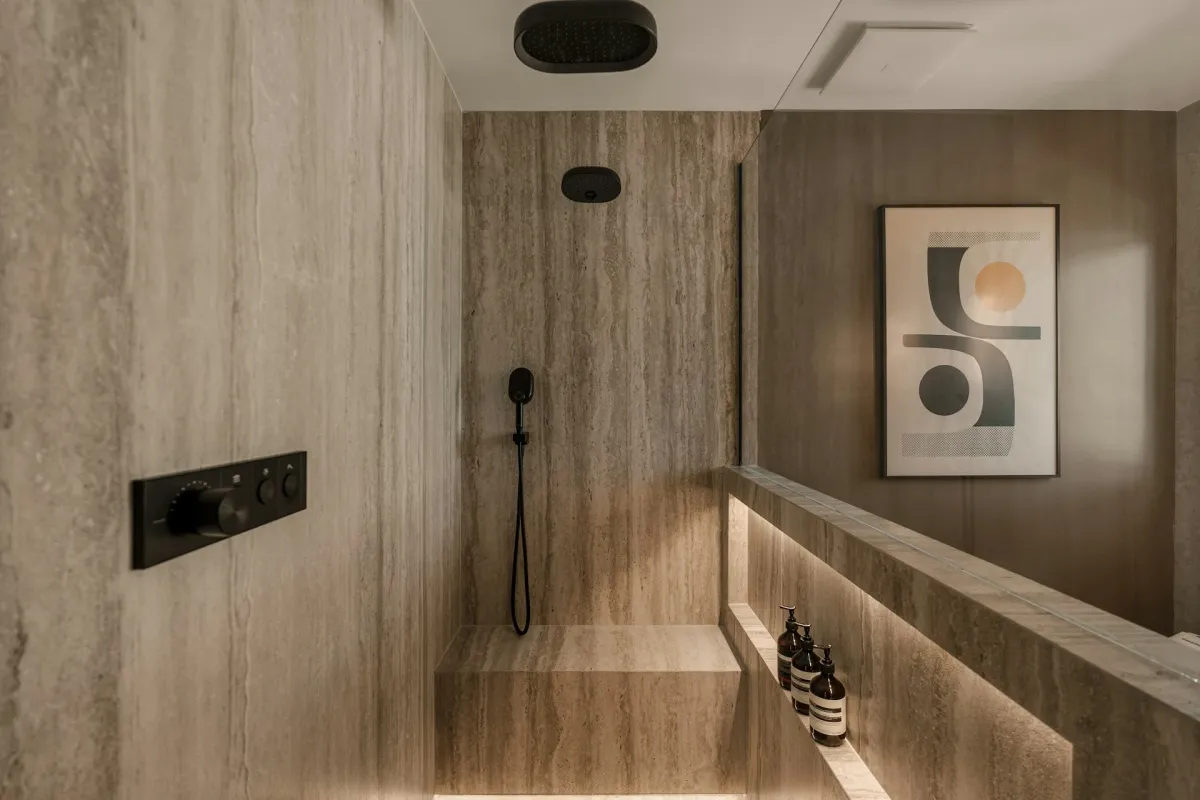
A frameless or semi-frameless glass screen replaces a dated framed enclosure or shower curtain and immediately modernises the showering area. Wickes stocks bath screens from £100 to £250 and shower enclosures from £100 to £400. The Nexa by Merlyn 8mm frameless wet room screen starts at £225. Bath screens are often DIY-manageable (wall-mounted, four to six screws plus silicone). Full enclosures are more complex and benefit from professional fitting at £100 to £200 labour.
The Combined Refresh (£160 to £600)
The biggest visual impact per pound comes from combining several smaller upgrades in one weekend:
| Item | DIY Cost |
|---|---|
| Paint (Dulux Easycare, 2 coats) | £25 |
| Basin taps | £30-£50 |
| Shower head | £20-£30 |
| Soft-close toilet seat | £20 |
| Accessories set (towel rail, hooks, toilet roll holder) | £30-£50 |
| Fresh silicone | £10 |
| Towel set and bath mat | £25 |
| Total DIY | £160-£210 |
Add professional painting at £200 to £400 and the total reaches £360 to £610 for what feels like an entirely different room.
What Not to Do on a Budget
Tile Paint in Wet Areas
Worth repeating because it is the most common budget mistake. Tile paint in a shower enclosure or around a bath rim peels within six to eighteen months. The money is better spent on wall panels or saved towards proper retiling. For splash zones and upper walls away from direct water contact, tile paint is reasonable.
DIY Plumbing Without Isolation Valves
Before attempting any tap or basin swap, check whether isolation valves (small oval handles on the hot and cold pipes beneath the fixture) exist. Without them, you must turn off the mains stopcock, draining the entire house and risking air locks. If isolation valves are absent, have a plumber fit them (roughly £20 to £40 per valve, £80 to £120 labour). This one-time investment makes every future plumbing change simpler and safer.
Ignoring Ventilation
Under Part F of the Building Regulations, bathroom extract ventilation must achieve a minimum 15 litres per second (intermittent fan) or 8 litres per second (continuous fan). A bathroom without an extractor fan and without an openable window will develop condensation, mould and paint peeling regardless of how much you spend on cosmetic upgrades. A basic extractor fan costs £20 to £50 at Screwfix. Installation by an electrician (Part P notifiable work) runs £100 to £200. This should be the priority upgrade before any decorative work. For more on ventilation and its impact on bathroom longevity, see our guide to common renovation mistakes.
Cheap Chrome That Corrodes
Budget chrome accessories with thin, porous plating corrode from within when moisture penetrates pinholes in the chrome. The base metal rusts faster than if it had never been plated at all. Bubbling and flaking appear within six to twelve months. Spend £8 to £15 per piece on Croydex, Bristan or Miller, or choose solid stainless steel (AISI 304 grade) which is inherently corrosion-proof.
DIY or Professional? A Quick Guide

| Job | DIY Safe? | Professional Needed? | Typical Labour Cost |
|---|---|---|---|
| Silicone replacement | Yes | Optional (£50-£100) | - |
| Toilet seat swap | Yes | No | - |
| Shower head/hose | Yes | No | - |
| GU10 bulb swap (existing fittings) | Yes | No | - |
| Painting | Yes | Optional (£200-£400) | - |
| Bath panel replacement | Yes | No | - |
| Click-together LVT flooring | Yes | Optional | - |
| Tap change (with isolation valves) | Confident DIYer | Plumber safer | £60-£150 |
| Toilet replacement | Experienced DIYer | Plumber recommended | £100-£200 |
| Central heating towel rail | Experienced DIYer | Plumber recommended | £80-£150 |
| New downlight fittings | No | Electrician (Part P) | £150-£350 |
| Hardwired LED mirror | No | Electrician (Part P) | £80-£150 |
| Extractor fan installation | No | Electrician (Part P) | £100-£200 |
Any new electrical circuit or wiring change in a bathroom is notifiable under Part P of the Building Regulations and must be carried out by a registered electrician (NICEIC, NAPIT or ELECSA) who can self-certify the work. All bathroom circuits must be protected by a 30mA RCD.
If your bathroom needs more than cosmetic upgrades and you are ready for a full transformation, our bathroom fitting team can assess the scope and provide a realistic quote for the complete project.
Frequently Asked Questions
What is the cheapest way to make a bathroom look new?
Is tile paint worth using in a bathroom?
Can I change bathroom taps myself?
How much does a bathroom refresh cost compared to a full renovation?
Do I need an electrician to change bathroom lights?
Can bathroom wall panels go over existing tiles?
What bathroom upgrades add the most value to a property?
Past Projects


Get a Free Quote
Book a free, no-obligation site survey. Call us on 07428 653 653 or request a callback.
Book Free SurveyOur Clients' Reviews

5/5

5/5

5/5

5/5

5/5
Based on 453+ verified reviews across all platforms
Related Articles

Bathroom Remodelling Ideas for Greater Manchester Homeowners
Remodelling Ideas That Work for Manchester Homes Greater Manchester homes come with character. Victorian terraces in Didsbury, semi-detached houses in Prestwich, post-war estates in Salford, new builds in Trafford. Each type brings its own quirks to a bathroom renovation, from awkward plumbing routes in older properties to compact en-suites in modern developments. The ideas in this guide are drawn from projects we have completed across the region and reflect what actually works in the kinds of bathrooms Manchester homeowners live with every day.
view this article Read more
How Much Does a New Bathroom Cost in 2026? UK Pricing Guide
What a New Bathroom Really Costs in 2026 The question every homeowner asks before a bathroom renovation is the same. How much? The answer depends on what you want, what you have already, and how much of the existing layout you intend to keep. But the data from thousands of UK projects gives us a clear picture.
view this article Read more
Bathroom Renovation Guide: Every Stage From Start to Finish
What a Bathroom Renovation Actually Involves A complete bathroom renovation is one of the most rewarding home improvement projects you can undertake, but it is also one of the most misunderstood. Homeowners frequently picture the finished result without appreciating the sequence of skilled trades and carefully timed stages that make it happen. Every professional bathroom renovation follows a logical order, and understanding that order is the single most important thing you can do before your project begins.
view this article Read more
Bathroom Tiling Styles for Timeless Elegance
Why Layout Matters More Than the Tile Itself
view this article Read more
Quartz, Granite or Porcelain Worktops: Which Suits Your Kitchen?
The Three-Way Decision Most Kitchen Renovations Come Down To
view this article Read more
Ceramic Disc Technology in Bathroom Taps: How It Works
The Technology Inside Almost Every Modern Tap If your bathroom taps turn with a smooth quarter-turn rather than two and a half rotations, they contain ceramic disc cartridges. This technology has become so dominant that it is now difficult to buy a new tap in the UK that does not use it. Yet most homeowners have no idea how it works, why it fails, or what to do when a ceramic disc tap starts dripping.
view this article Read more

How to Choose an Electrical Bathroom Mirror
What an Electrical Bathroom Mirror Actually Does
view this article Read more
Best Bathroom and Toilet Brands in the UK
What Makes a Good Bathroom Brand The brand name on your toilet, basin or shower valve determines far more than the price tag. It affects how long the product lasts, how easy it is to get replacement parts in five or ten years, whether the finish holds up to daily cleaning, and how well the engineering behind the product actually performs in a real bathroom rather than a showroom.
view this article Read more
Bathroom Underfloor Heating: Types, Installation and What to Expect
Why Underfloor Heating Works So Well in Bathrooms Stepping onto a warm bathroom floor on a cold January morning is one of those small luxuries that, once experienced, becomes very difficult to give up. Underfloor heating has grown from a niche luxury into a genuinely practical heating solution for UK bathrooms, and the reasons go well beyond comfort.
view this article Read more
Tools Required for Bathroom Fitting: The Professional Trade Toolkit
The Professional Bathroom Fitter’s Complete Toolkit Every professional bathroom fitter knows that quality tools are an investment, not an expense. The difference between a flawless installation and a problematic one often comes down to having the right equipment for the job. Over years of bathroom fitting projects across Greater Manchester, we have refined our toolkit to include everything a trade professional needs on site.
view this article Read more
What You Need to Know Before Your Kitchen Renovation
The Gap Between Expectation and Reality A kitchen renovation is not a weekend project. The 2025 Houzz UK Kitchen Trends Study found that 71 percent of homeowners change their kitchen layout during a renovation, and the median spend rose 34 percent year on year to £17,500. Those numbers tell you two things. First, most people end up doing more work than they originally planned. Second, the costs are significant enough that poor preparation leads to genuinely painful surprises.
view this article Read more