

Luxury Bathroom Trends: What Is Defining Premium UK Bathrooms
Materials, technology and design choices defining luxury UK bathrooms. Natural stone, smart toilets, frameless glass and statement lighting.
What Makes a Bathroom Feel Genuinely Luxurious

Luxury in a bathroom is not about spending the most money. It is about the considered selection of materials, fittings and details that work together to create a space that feels calm, functional and built to last. The most expensive sanitaryware in a poorly planned room still produces a poor result. A well-proportioned room with carefully specified mid-premium fittings, proper lighting and the right surface materials can feel genuinely luxurious at a fraction of the cost.
The trends shaping premium UK bathrooms are driven by three forces. The first is material quality. Natural stone, solid wood and engineered composites are replacing the mass-produced acrylic and chrome that defined the previous decade. The second is technology. Smart toilets, digital showers and connected mirrors have moved from novelty to genuine utility. The third is spatial design. Walk-in wet areas, concealed cisterns and wall-hung sanitaryware create uncluttered rooms where the architecture does the work rather than the accessories.
This guide covers the specific materials, products and design choices that are defining the premium end of UK bathroom renovation, with brand names, prices and practical installation considerations.
Natural Stone and Premium Surface Materials
The 2025 UK Houzz Bathroom Trends Study shows demand for natural stone surging at the luxury end of the market. Searches for marble bathrooms rose 51 per cent year-on-year, while searches for onyx tile increased elevenfold in a single year. The direction is clear. Natural materials are shifting from surface treatments to sculptural statements.
What Is Trending
Travertine is having a significant revival, particularly in large-format unfilled slabs where the visible voids read as artisanal rather than dated. The warm beige-and-caramel tones align with the quiet luxury palette dominating UK interiors.
Marble remains the perennial luxury choice. Calacatta and Statuario sit at the top, with book-matched slabs (two consecutive faces mirrored to create symmetrical veining) used on feature walls. Carrara is the entry point for marble specification.
Onyx is the statement choice for backlit feature panels. When lit from behind, onyx produces a glowing, gemstone-like effect that transforms a wall into a light source. The elevenfold search spike suggests it is moving from niche to aspirational mainstream.
Large-format porcelain slabs (1200 x 2400mm or larger) replicate the appearance of natural stone at a fraction of the maintenance cost. For homeowners who want the marble aesthetic without sealing requirements and stain risk, stone-effect porcelain is the practical choice. The visual quality of the best current porcelain is remarkably close to natural stone.
UK Cost Benchmarks (Supply Only)
| Material | Budget per m² | Mid-Range per m² | Premium per m² |
|---|---|---|---|
| Travertine tiles | From £12 | £40 - £80 | £140 - £300 (slab) |
| Limestone tiles | From £34 | £55 - £100 | £200 - £400 (slab) |
| Marble tiles | From £42 | £70 - £80 | £300 - £800 (slab) |
| Porcelain (stone effect) | £25 - £35 | £40 - £60 | £60 - £100+ (large format) |
| Onyx panels | - | £80 - £150 | £200 - £400+ |
Installation labour for large-format tiles (600mm and above) runs £50 to £80 per square metre due to levelling system requirements and additional handling care. For natural stone, add sealing costs and allow 10 to 15 per cent waste on cuts. UK suppliers worth visiting include Mandarin Stone (16 UK showrooms) and Lapicida (Yorkshire and London) for upper-luxury natural stone.
For a full guide to bathroom tile types and their properties, see our dedicated article.
Smart Bathroom Technology
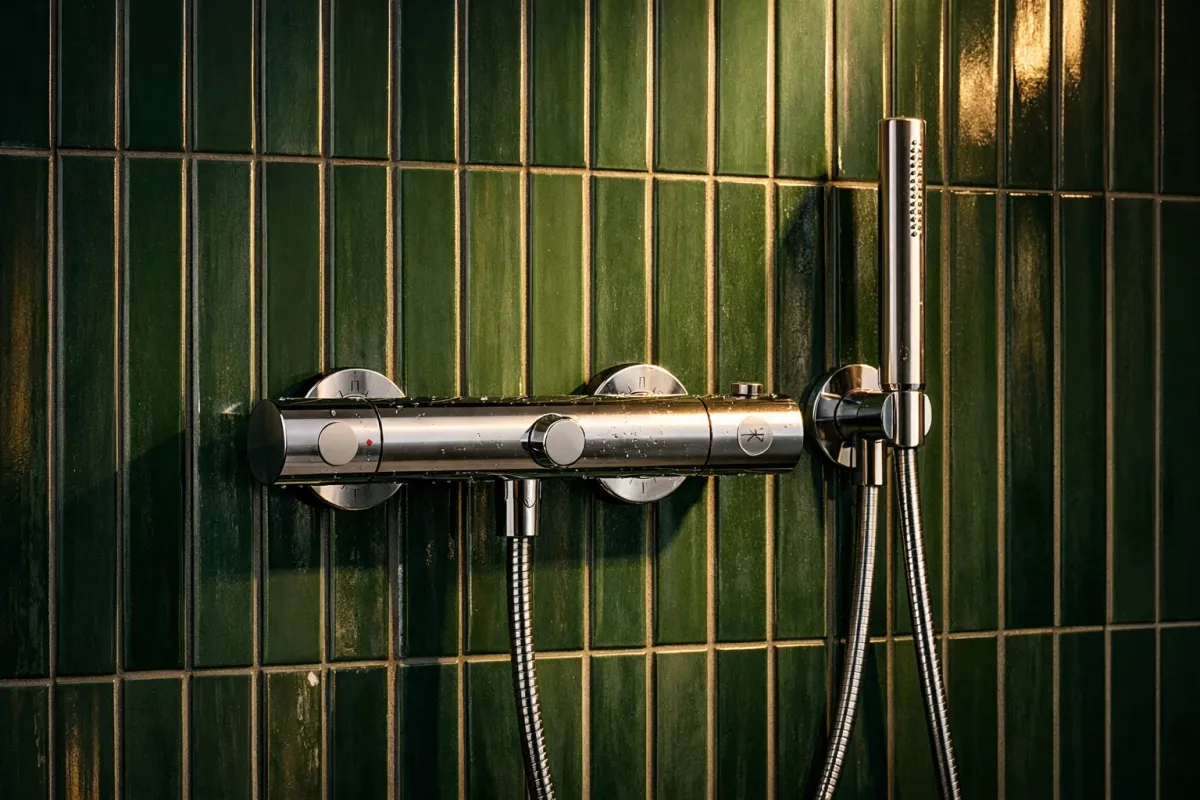
Smart bathroom technology has matured beyond novelty. The 2025 Houzz UK data shows 65 per cent of renovating homeowners chose thermostatic mixers (up from 58 per cent in 2024), with growing adoption of remote temperature control and app-connected shower systems.
Smart Toilets
The three brands that matter in the UK market are Geberit, Roca and TOTO.
Geberit AquaClean dominates the European market. The entry-level Alba (wall-mounted, WhirlSpray washing, rimless, Bluetooth control) starts at approximately £770. The mid-range Sela adds a heated seat and warm-air dryer at £1,800 to £2,200. The flagship Mera Comfort, with automatic lid, night light and full wash suite, runs to £3,500 to £5,700 depending on the retailer. Twenty-five year spare parts availability is guaranteed.
Roca In-Wash Inspira offers a rimless close-coupled smart toilet with oscillating wash, warm-air dryer, LED night light and wireless remote at approximately £1,800. WRAS approved. Also available in wall-hung In-Tank configuration. For a detailed review, see our Roca In-Wash Inspira assessment.
TOTO Washlet RW sits at the upper luxury end. EWATER+ electrolysed water cleaning, auto open and close lid, user memory presets. Approximately £2,650 to £3,770. TOTO invented the Washlet concept over fifty years ago and the engineering heritage shows.
All smart toilets require a 230V hardwired electrical supply at the toilet position. This is Part P notifiable work. Budget £300 to £600 for the additional electrical and plumbing connections on top of the unit price. For a detailed comparison of smart toilets and bidet seats available in the UK, see our smart toilets and bidet seats guide.
Digital Showers
Digital showers separate the processor (thermostatic valve, pump if needed) from the user interface. Temperature is set digitally and held precisely, with features including preset profiles, warm-up notifications and remote activation.
Mira Platinum is the leading UK premium brand. The dual concealed valve (pumped for gravity systems) starts at approximately £750, with full systems including overhead and handset reaching £1,200 to £1,500. Wireless remote control and up to four outlet zones on dual variants.
Aqualisa Quartz offers digital concealed valves from approximately £660 to £875 depending on configuration. The processor installs remotely (in a loft or under the floor), keeping the bathroom installation clean and simple. For more options across price ranges, see our guide to the top shower mixers available in the UK.
Smart Mirrors
Illuminated mirrors are now the most universal luxury bathroom upgrade. Houzz UK data shows 42 per cent of renovating homeowners upgraded to illuminated mirrors, with 66 per cent choosing anti-fog models. Roper Rhodes offers WiZ-connected smart mirrors with app and voice control of lighting colour temperature and brightness scheduling. The Luka smart mirror takes it further with built-in Alexa, allowing voice commands for music, smart home control and lighting adjustment.
Statement Bathing
Freestanding baths rose four percentage points year-on-year in the Houzz UK study. Half of respondents now prefer baths that accommodate two people, up from a third in 2024. The bath has become the architectural centrepiece of the luxury bathroom rather than a functional fitting pushed against a wall.
Materials
Stone resin and composite is the dominant material for luxury freestanding baths in the UK. Victoria and Albert use their proprietary Quarrycast (volcanic limestone blended with high-performance resin), which is warm to the touch, retains heat and carries a 25-year guarantee. BC Designs, Clearwater and Arezzo all offer stone resin freestanding baths in forms that would be impossible to achieve in steel or acrylic.
Cast iron remains the choice for heritage-style bathrooms. Extremely heavy (250 to 350 kg for a standard double-ended bath), exceptional heat retention, and a provenance that modern materials cannot replicate. Burlington and Hurlingham are the key UK suppliers. Upper-storey installations require structural floor assessment.
Copper is a niche choice for bespoke and Arts and Crafts interiors. BC Designs offers a 1500mm copper boat bath at approximately £4,250. Hurlingham copper baths start from approximately £1,400 for smaller Bateau models.
UK Pricing Reference
| Brand | Material | Example Price |
|---|---|---|
| Arezzo (Victorian Plumbing) | Stone resin | £999 - £1,299 |
| Clearwater Puro (1700 x 750mm) | Stone resin | £1,925 |
| BC Designs Bampton | Stone resin | £2,400 - £2,500 |
| BC Designs Kurv (1890 x 900mm) | Stone resin | £3,000 |
| Victoria and Albert | Quarrycast | £2,500 - £6,000+ |
| Burlington / Hurlingham | Cast iron | £2,000 - £5,000+ |
| BC Designs Copper Boat (1500mm) | Copper | £4,250 |
For a full comparison of bath materials, sizes and installation considerations, see our guide to choosing the best bathtub.
Concealed Cisterns and Wall-Hung Toilets
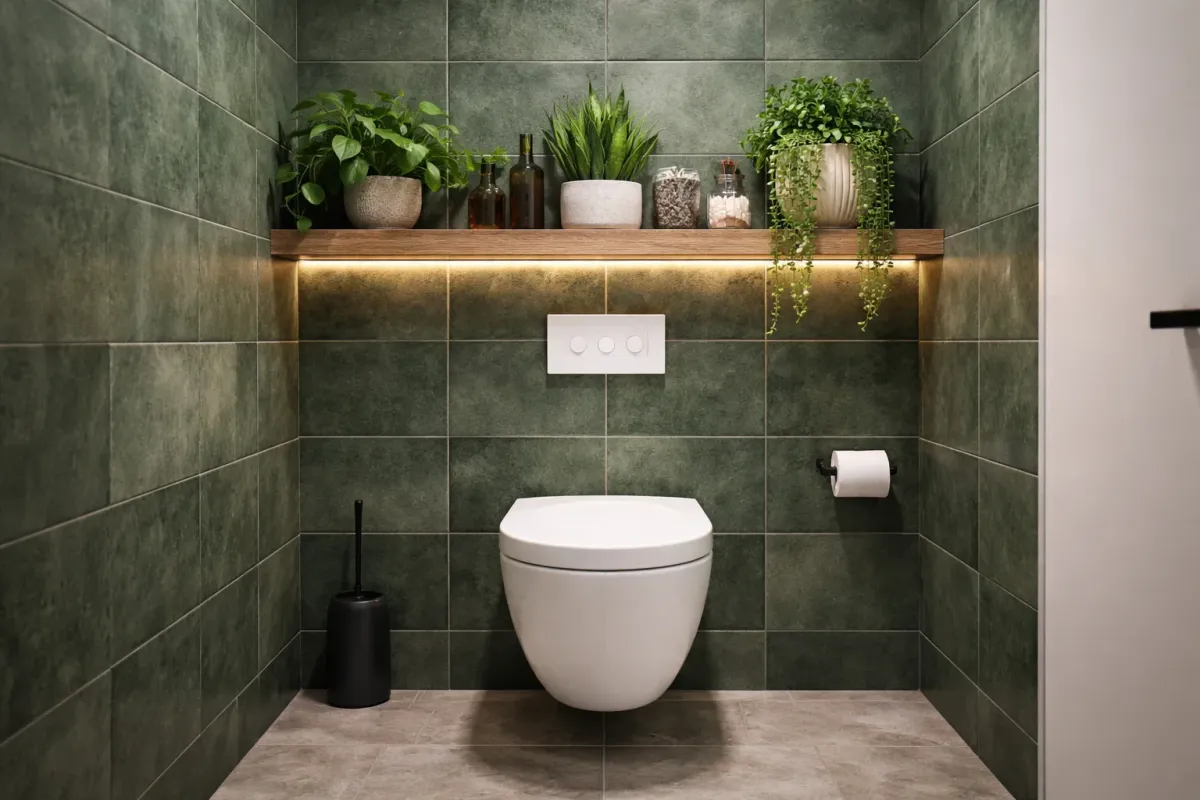
Wall-hung toilets have become the default specification in luxury bathrooms. The cantilevered pan creates an uninterrupted floor surface, making the room feel larger and simplifying cleaning. The height is adjustable at installation (typically 38 to 48cm floor to rim), the cistern is hidden inside the wall structure, and only the flush plate is visible on the surface.
Frame Systems
Geberit Duofix with Sigma cistern is the European market leader. The standard 12cm cistern requires a finished wall depth of approximately 210 to 250mm including studwork and tile finish. The slimline 8cm cistern suits space-constrained situations. Frames are load-tested to 400 kg. Prices start at approximately £250 for basic frames, rising to £450 for slimline versions with premium flush plates.
Grohe Rapid SL is the other dominant frame in the UK market. The 3-in-1 set with Skate flush plate starts at approximately £227. Full 1.0m frame and cistern configurations run to £350 to £500. Both Geberit and Grohe flush plates are available in brushed brass, matt black, chrome and gunmetal to coordinate with tap hardware throughout the room.
Service access is critical. A removable flush plate or concealed service panel must allow access to the cistern for future maintenance without demolishing tiled surfaces. Any competent bathroom fitter will plan this into the wall construction from the outset.
Walk-In Wet Areas and Frameless Glass
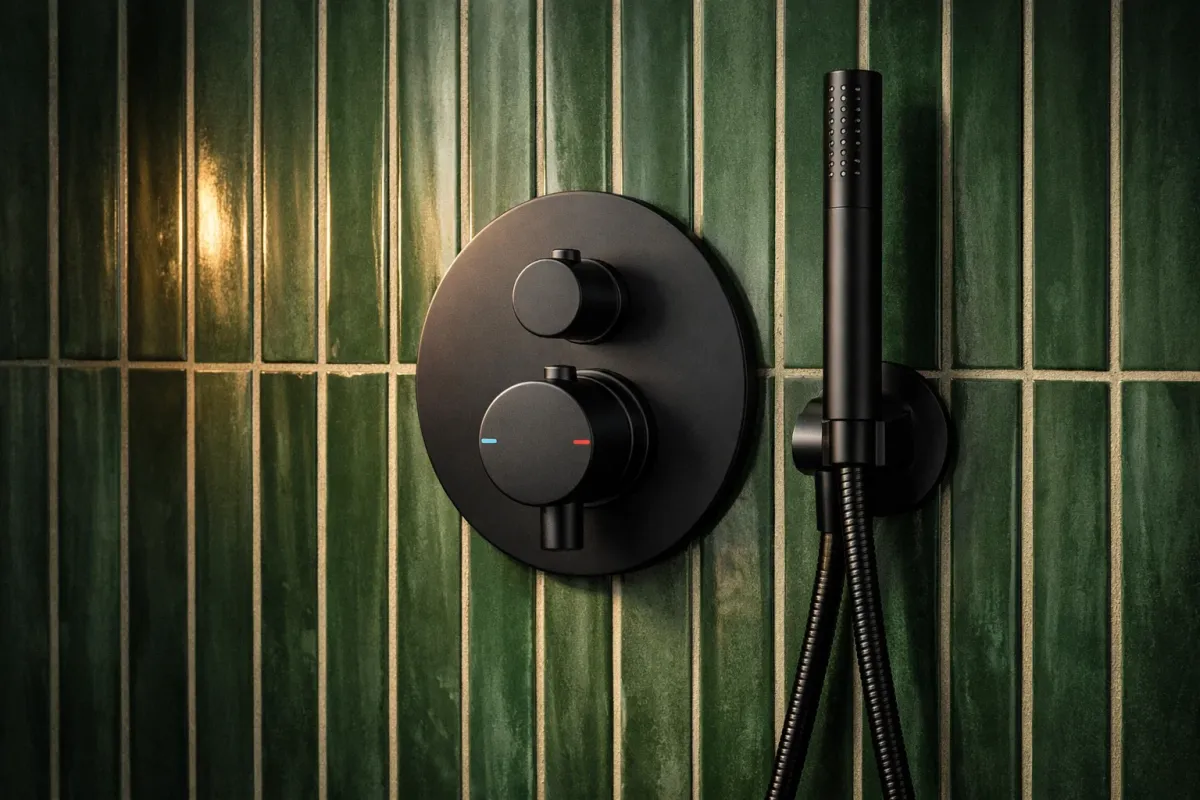
The 2025 Houzz UK study found that 58 per cent of homeowners enlarged their primary shower during renovation, with a quarter expanding by more than 50 per cent. Walk-in showers with no threshold reached 14 per cent of all installations. The direction of travel is unmistakable. Level-access wet rooms are becoming the luxury standard.
A level-access wet floor requires a tanking membrane across walls and floor, a sloped floor former or screeded gradient (minimum 1:60, ideally 1:40) directing water to a linear drain, and frameless glass panels to contain splash. The linear drain is typically positioned at the shower wall to minimise visual interruption to the floor tile pattern.
Frameless Glass
Matki (British made, Bristol) produces some of the finest frameless shower glass available in the UK. Their Boutique Walk-In range starts at approximately £2,700 for a corner enclosure. Premium British manufacture with strong trade specification credentials.
Roman (Bishop Auckland, British made) is one of the few manufacturers with in-house glass processing. Their Innov8 collection targets the high-specification market, typically £800 to £2,500 depending on configuration.
Merlyn 8 Series uses 8mm toughened safety glass throughout. A walk-in enclosure (1200 x 900mm) starts at approximately £520. Mid-premium positioning with wide UK distribution.
At the premium end, specify 10mm toughened glass with EasyClean nano-coating and low-iron ultra-clear glass (which eliminates the green tint visible in standard float glass). For a comparison of wet rooms and traditional shower enclosures, see our wet rooms vs shower rooms guide.
Colour, Finish and Hardware
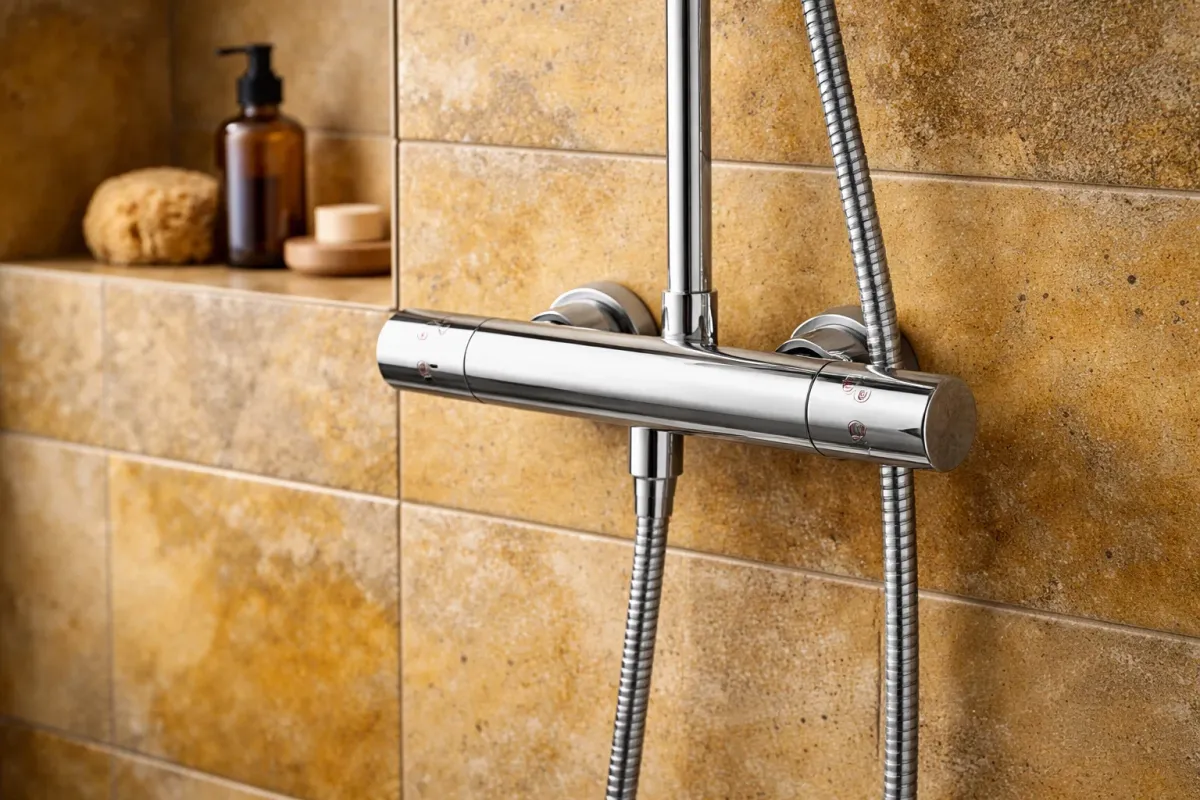
The Dominant Palette
The overarching direction in UK luxury bathrooms is quiet luxury. Warm, tonal interiors that feel considered rather than stark. Warm stone tones (sandy beige, putty, limestone white) dominate walls and surfaces, working with natural stone and warm metals.
Deep saturated accents are used in contrast. Emerald green, petrol blue, oxblood and dark teal appear on vanity units, niches and feature walls against neutral stone backgrounds. Houzz UK data shows searches for pink bathrooms up 114 per cent and Art Deco bathrooms up 144 per cent, both driven by the appetite for warmth and personality over clinical minimalism.
Hardware Finishes
Brushed and satin finishes have overtaken polished chrome.
Brushed brass and brushed gold are the dominant luxury finish, warm and understated, pairing naturally with stone tones and dark wood. Coalbrook, Vado and Burlington are key UK suppliers.
Matt black remains strong for contemporary, minimal schemes, particularly against white or grey tile.
Gunmetal and anthracite offer a more sophisticated alternative to matt black, with a cooler blue-grey metallic quality.
Brushed nickel is trending as the cooler-toned alternative where brass feels too warm.
Mixed metals are now mainstream rather than a design risk. The accepted approach is to mix within the same temperature family (warm with warm, cool with cool) rather than crossing the divide.
Lighting
Bathroom Electrical Zones
Under BS 7671, bathroom lighting is governed by electrical zones. Zone 0 (inside the bath or shower) requires IP67 and maximum 12V. Zone 1 (above the bath or shower to 2.25m height) requires minimum IP65 for showers or IP44 for baths without a showerhead. Zone 2 (600mm beyond Zone 1) requires minimum IP44. Beyond Zone 2, standard IP20 fittings are acceptable. All bathroom electrical work falls under Part P.
What Is Trending
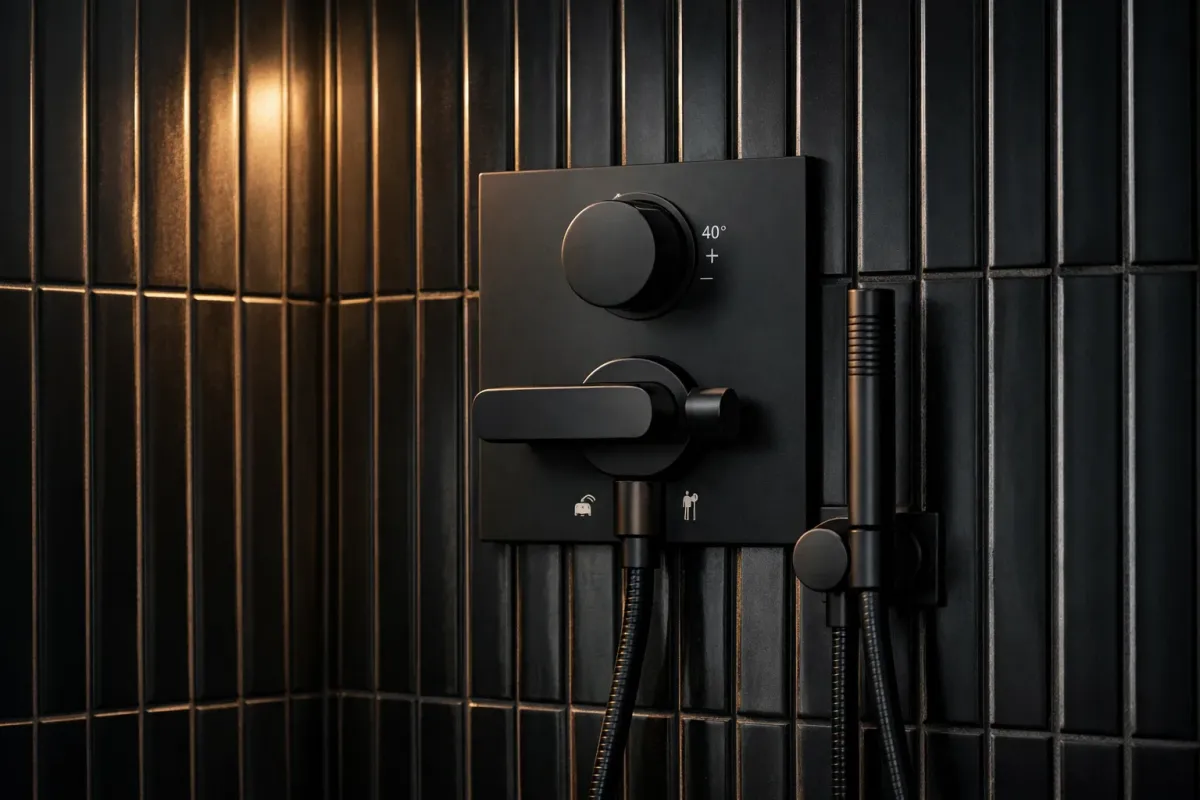
Backlit mirrors are the most universal luxury upgrade. HIB, Sensio and Roper Rhodes all offer LED mirrors with colour temperature adjustment, demister pads and touch or app control. Expect to spend £180 to £400 for a quality illuminated mirror.
LED niche lighting in shower recesses and bath surrounds creates disproportionate visual impact for minimal cost (£30 to £80 per niche in components). Warm white (2700 to 3000K) produces a spa-like atmosphere. Cool white (4000K and above) reads as clinical and should be avoided except in dedicated task zones.
Decorative pendants over freestanding baths are increasingly common in premium specifications. Tom Dixon, Fritz Fryer and Astro Lighting all produce IP-rated bathroom pendants suitable for Zone 2 positions. The fitting must carry the appropriate IP rating for its zone.
Bespoke Joinery and Vanity Units
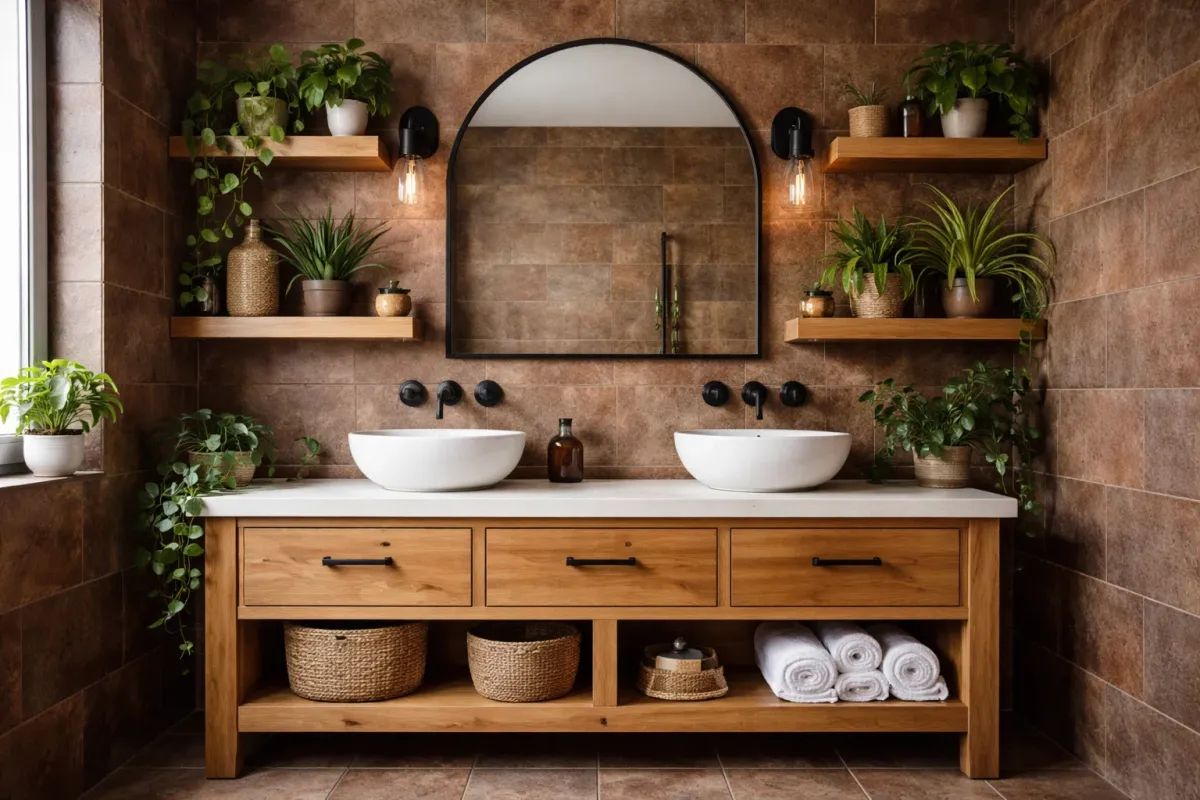
Houzz UK data shows freestanding vanity units surged seven percentage points to 28 per cent of all installations, with solid wood chosen by a third of renovators. The move away from factory-made MDF furniture toward bespoke or semi-bespoke joinery reflects the broader luxury trend of craft over mass production.
Harvey George (British made) is the most prominent UK specialist in bespoke bathroom vanity units. CNC manufacturing combined with traditional hand finishing, with a standard six-week lead time. Ranges include painted MDF, solid oak and coloured lacquer finishes with marble, quartz or timber worktops.
Stonewood Bathrooms offers bespoke oak vanity units from approximately £1,450 (750mm wide), with larger 2m-wide vanities from £3,250. Painted finishes including Farrow and Ball colour matching are available.
At the top of the market, companies like HUX London and specialist joinery firms produce fully custom bathroom suites with floor-to-ceiling storage, integrated lighting and custom door profiles. Projects at this level start at £8,000 to £15,000 for fitted bathroom joinery.
The Details That Complete a Luxury Bathroom
Heated Towel Rails
A heated towel rail is one of the most cost-effective luxury upgrades, transforming the daily experience of stepping out of a shower or bath. The trend in premium bathrooms has moved away from standard chrome ladder rails toward designer radiators that function as wall art. Vogue UK, Bisque and Aestus produce sculptural heated rails in brushed brass, matt black and gunmetal finishes to coordinate with tap and shower hardware. Dual-fuel models (connected to central heating with an independent electric element for summer use) ensure warm towels year-round. Budget £250 to £800 for a designer rail, or £80 to £200 for a quality standard rail from Hudson Reed or Reina.
Recessed Niches and Concealed Storage
The move away from visible shelving, freestanding caddies and surface clutter defines the luxury bathroom aesthetic. Recessed shower niches (tiled to match the surrounding wall) provide storage for bottles and toiletries without interrupting the wall plane. Pre-formed niche boxes from Lux Elements and Schluter KERDI-BOARD simplify construction and ensure waterproof integrity. LED strip lighting inside niches adds visual depth.
Beyond the shower, concealed medicine cabinets (recessed into the wall between studs), full-height mirror cabinets and vanity units with internal drawer organisers all contribute to the sense of calm that luxury bathrooms depend on. The principle is simple: if it can be hidden, it should be.
Underfloor Heating
For bathroom applications, electric mat systems dominate at every price point including luxury. Bathrooms are relatively small areas where electric running costs are manageable. Electric systems require no manifold, no boiler connection and no plumber for the heating circuit. A heating mat sits within the tile adhesive bed with minimal floor height addition (3 to 5mm) and heats up in 15 to 30 minutes from cold.
Warmup StickyMat is the UK’s most widely specified system, from approximately £54 per square metre excluding VAT. Their 4iE smart thermostat (Wi-Fi enabled, app control, energy monitoring) sells for approximately £130 to £150.
Schluter DITRA-HEAT is the professional tiler’s choice, combining the heating mat with an uncoupling membrane that prevents cracking in natural stone and large-format porcelain installations. Complete kits including thermostat start at approximately £320 for 1.5 square metres.
At current energy prices (26.35p per kWh), a standard 4.5 square metre bathroom with a 150W system running four hours daily costs approximately 71p per day. These are supplementary comfort systems that bring cold floor surfaces to a comfortable temperature.
For a detailed guide to bathroom underfloor heating systems and installation, see our dedicated article.
Many of these luxury trends work together. A walk-in wet area with natural stone, frameless glass, underfloor heating, a wall-hung smart toilet, brushed brass hardware and LED niche lighting creates a cohesive, spa-like space that is genuinely transformative. The key is consistency of specification. Every element should coordinate in material quality, colour temperature and finish.
For homeowners across Manchester and Greater Manchester considering a premium bathroom remodelling project, our team can advise on material selection, product specification and practical installation considerations for any of the trends covered in this guide. Manchester showrooms worth visiting for luxury specification include CP Hart (Manchester), Alternative Bathrooms and independent design studios across the Northern Quarter and Altrincham.
Frequently Asked Questions
How much does a luxury bathroom renovation cost in the UK?
Are smart toilets worth the investment?
What is the best material for a luxury freestanding bath?
Why are wall-hung toilets so popular in luxury bathrooms?
What hardware finish is most popular for luxury UK bathrooms?
How much does bathroom underfloor heating cost to install and run?
What is the difference between natural stone and porcelain tiles for a luxury bathroom?
Past Projects


Get a Free Quote
Book a free, no-obligation site survey. Call us on 07428 653 653 or request a callback.
Book Free SurveyOur Clients' Reviews

5/5

5/5

5/5

5/5

5/5
Based on 453+ verified reviews across all platforms
Related Articles

How Much Does a New Bathroom Cost in 2026? UK Pricing Guide
What a New Bathroom Really Costs in 2026 The question every homeowner asks before a bathroom renovation is the same. How much? The answer depends on what you want, what you have already, and how much of the existing layout you intend to keep. But the data from thousands of UK projects gives us a clear picture.
view this article Read more
Bathroom Renovation Guide: Every Stage From Start to Finish
What a Bathroom Renovation Actually Involves A complete bathroom renovation is one of the most rewarding home improvement projects you can undertake, but it is also one of the most misunderstood. Homeowners frequently picture the finished result without appreciating the sequence of skilled trades and carefully timed stages that make it happen. Every professional bathroom renovation follows a logical order, and understanding that order is the single most important thing you can do before your project begins.
view this article Read more
Bathroom Tiling Styles for Timeless Elegance
Why Layout Matters More Than the Tile Itself
view this article Read more
Quartz, Granite or Porcelain Worktops: Which Suits Your Kitchen?
The Three-Way Decision Most Kitchen Renovations Come Down To
view this article Read more
Ceramic Disc Technology in Bathroom Taps: How It Works
The Technology Inside Almost Every Modern Tap If your bathroom taps turn with a smooth quarter-turn rather than two and a half rotations, they contain ceramic disc cartridges. This technology has become so dominant that it is now difficult to buy a new tap in the UK that does not use it. Yet most homeowners have no idea how it works, why it fails, or what to do when a ceramic disc tap starts dripping.
view this article Read more

How to Choose an Electrical Bathroom Mirror
What an Electrical Bathroom Mirror Actually Does
view this article Read more
Best Bathroom and Toilet Brands in the UK
What Makes a Good Bathroom Brand The brand name on your toilet, basin or shower valve determines far more than the price tag. It affects how long the product lasts, how easy it is to get replacement parts in five or ten years, whether the finish holds up to daily cleaning, and how well the engineering behind the product actually performs in a real bathroom rather than a showroom.
view this article Read more
Bathroom Underfloor Heating: Types, Installation and What to Expect
Why Underfloor Heating Works So Well in Bathrooms Stepping onto a warm bathroom floor on a cold January morning is one of those small luxuries that, once experienced, becomes very difficult to give up. Underfloor heating has grown from a niche luxury into a genuinely practical heating solution for UK bathrooms, and the reasons go well beyond comfort.
view this article Read more
Tools Required for Bathroom Fitting: The Professional Trade Toolkit
The Professional Bathroom Fitter’s Complete Toolkit Every professional bathroom fitter knows that quality tools are an investment, not an expense. The difference between a flawless installation and a problematic one often comes down to having the right equipment for the job. Over years of bathroom fitting projects across Greater Manchester, we have refined our toolkit to include everything a trade professional needs on site.
view this article Read more
What You Need to Know Before Your Kitchen Renovation
The Gap Between Expectation and Reality A kitchen renovation is not a weekend project. The 2025 Houzz UK Kitchen Trends Study found that 71 percent of homeowners change their kitchen layout during a renovation, and the median spend rose 34 percent year on year to £17,500. Those numbers tell you two things. First, most people end up doing more work than they originally planned. Second, the costs are significant enough that poor preparation leads to genuinely painful surprises.
view this article Read more
Accessible Bathroom Design: UK Regulations, Grants and Guide
Why Accessible Bathroom Design Matters Around 16.8 million people in the United Kingdom have a disability. That is one in four of the population, according to the DWP Family Resources Survey 2023/24, and the figure has risen by 4.9 million over the past decade. Among adults over State Pension age, 45 percent are disabled. The most common impairment types for working-age adults are mental health conditions (48 percent) and mobility impairments (42 percent).
view this article Read more