
Tips for Effective Bathroom Cleaning
Efficient bathroom cleaning routine covering the optimal order of tasks, zone method, 15-minute speed clean, supplies checklist and mistakes to avoid.
The Difference Between Cleaning Hard and Cleaning Smart
A DBS Bathrooms survey of British adults found that the average UK household cleans the bathroom 2.5 times per week. Yet most people follow no particular system. They grab a cloth, spray surfaces in whatever order feels right, and spend 30 to 45 minutes achieving what a structured routine accomplishes in 15. The issue is not effort. It is sequence.

Professional cleaners work to a fixed order because it eliminates wasted movement, exploits chemical dwell time and prevents cross-contamination. This guide covers that order, the zone method that structures it, and the daily habits that reduce the weekly workload by 70 to 80 percent. For guidance on which products are safe for specific surfaces, our companion article on bathroom cleaning without damage covers surface-specific care in detail.
The Optimal Cleaning Order
Three principles govern the most efficient bathroom clean, applied simultaneously.
Top to bottom. Gravity pulls dust, spray residue and debris downward. Clean ceiling vents and mirrors first, floors last. Anything dislodged from a high surface lands on something you have not cleaned yet.
Dry before wet. Remove loose hair, dust and cobwebs with a dry microfibre cloth or vacuum before applying any wet cleaner. Professional cleaners call this the “dry round” before the “wet round.” It prevents loose debris turning into a smeared paste when it meets moisture.
Clean to dirty. Start with the least contaminated surfaces (mirrors, shelves, accessories) and finish with the dirtiest (toilet bowl, floor). This keeps your cloths cleaner for longer and prevents transferring bacteria from high-contamination areas to surfaces you wash your face over.
The Step-by-Step Sequence
- Squirt toilet cleaner under the rim. This sits working while you clean everything else. Toilet cleaners need a minimum of 10 minutes dwell time for effective disinfection.
- Spray the shower and bath. Most bathroom cleaners need 5 to 10 minutes of contact time to dissolve soap scum and limescale. Walk away.
- Declutter. Remove bottles, towels and bath mats. Put dirty towels in the laundry basket.
- Dry round. Dust the extractor fan cover, light fittings, top of cabinets, shelves and windowsill. Work clockwise around the room, top to bottom.
- Mirrors and glass. Spray and wipe while dwell time works elsewhere.
- Basin, taps and vanity. Spray, wipe, polish taps dry.
- Return to shower and bath. The product has done the heavy lifting. Scrub, rinse thoroughly.
- Toilet exterior. Cistern lid, flush handle, seat (both sides), pedestal, floor around the base.
- Toilet bowl. Scrub with the brush, flush.
- Floor. Sweep or vacuum, then mop from the far corner toward the door.
- Replace items. Fresh towels, bath mat, restock toilet roll.
This sequence takes 25 to 30 minutes for a standard weekly clean. With practice and the speed techniques covered below, a maintenance clean takes 10 to 15 minutes.
The Zone Method
Breaking the bathroom into five zones ensures nothing gets missed and prevents the most dangerous cleaning mistake: using the same cloth for the toilet and the basin.
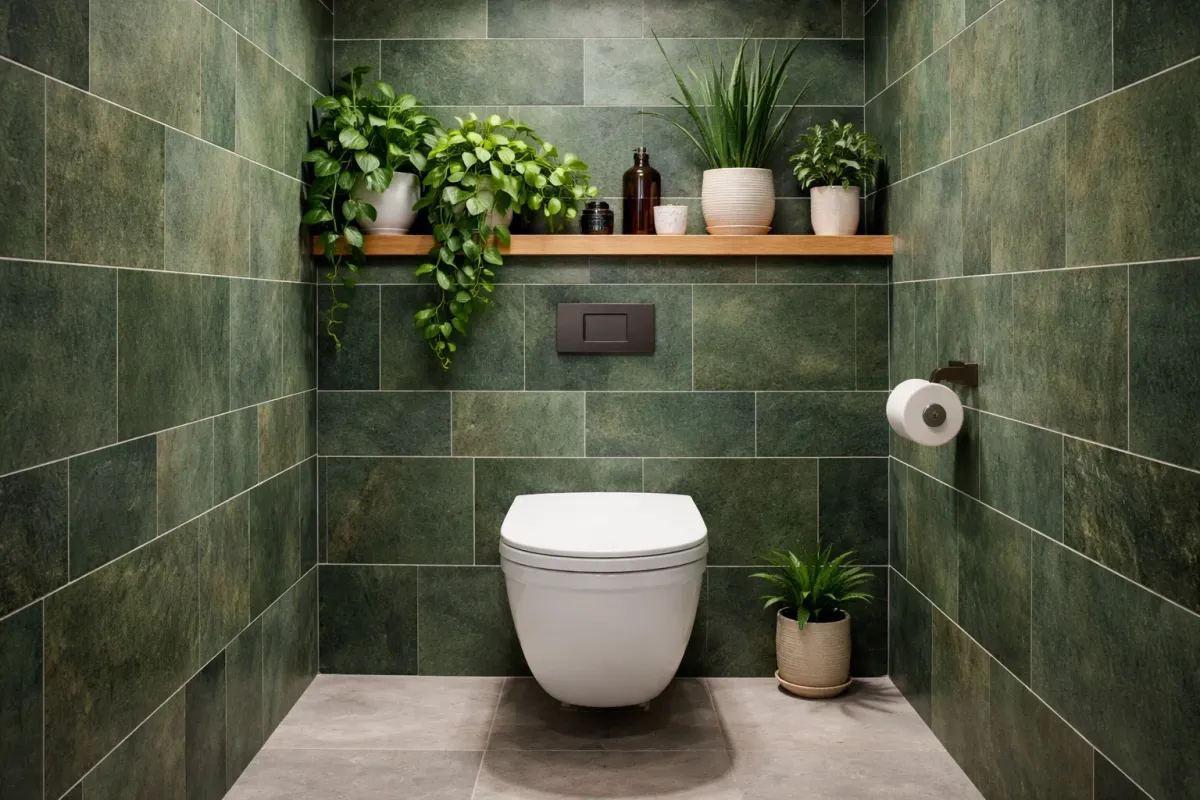
Zone 1: Toilet (Red Cloth Only)
The toilet harbours the highest bacterial load of any bathroom surface. The British Institute of Cleaning Science (BICSc) colour-coding system, used across the NHS and commercial cleaning sector since the 1990s, designates red exclusively for toilets. At minimum, every household should have a dedicated cloth that only ever touches the toilet.
Clean the bowl interior (under the rim and waterline), seat top and underside, hinges, cistern lid, flush handle, pedestal (front, sides, behind) and the floor within a 30 centimetre radius of the base. This last area is one of the most bacteria-dense zones in the home and is skipped in most routine cleans because it is awkward to reach. A flexible duster or cloth wrapped around a ruler gets behind a pedestal toilet.
Zone 2: Shower and Bath (Blue Cloth)
The warm, wet conditions make this the primary zone for mould, mildew and limescale. Spray all tiled surfaces, the shower screen (both sides), showerhead and hose, taps, shower tray or bath surface, silicone seals and the drain cover. Scrub with a non-scratch sponge or nylon brush, rinse thoroughly, and squeegee the glass dry.
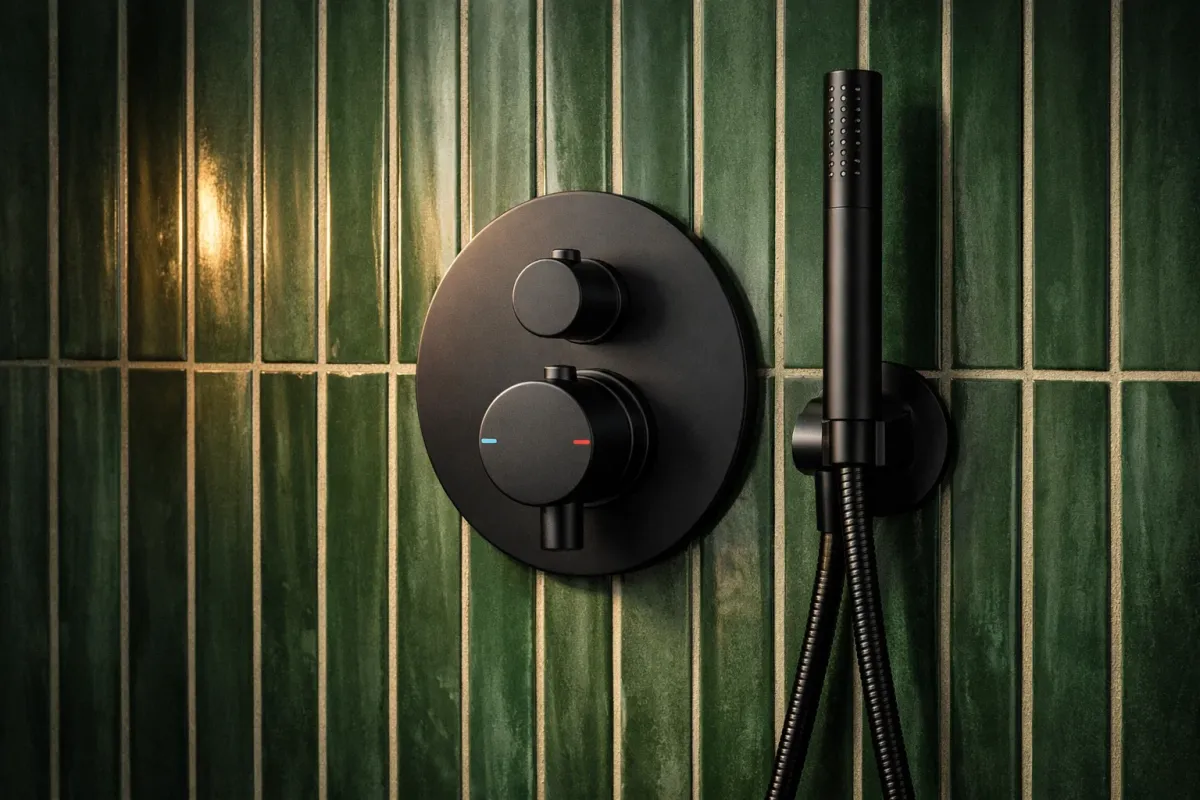
The showerhead deserves monthly attention beyond the weekly wipe. Limescale clogs the nozzles progressively, reducing flow and creating uneven spray patterns. Unscrew the head and soak it in white vinegar for two to four hours, or spray with Viakal and leave for 15 minutes. In hard water areas of southern England (200 to 350+ parts per million), this needs doing fortnightly rather than monthly. Manchester and the North West benefit from soft water (30 to 50 ppm), making limescale a minor issue by comparison.
Zone 3: Basin and Vanity (Yellow Cloth)
The basin, taps, countertop, splashback, mirror and accessories (soap dispenser, toothbrush holder). This is the highest-frequency touchpoint in the bathroom. Toothpaste splatters, soap residue and water spots accumulate daily. The overflow hole, which most people never clean, can harbour bacteria and produce unpleasant odours. A small bottle brush or pipe cleaner inserted into the overflow opening once a month eliminates the problem.
Zone 4: Floor (Mop or Dedicated Floor Cloth)
The floor collects everything that falls from every other zone. Sweep or vacuum first (hair and dust turn into a smeared paste if you mop over them), then mop from the far corner toward the door. Pay attention to the base of the toilet, the gap behind the bath panel and the corners where skirting meets tile. Floor grout traps moisture and stains more readily than wall grout because of constant foot traffic and water pooling.
Zone 5: Mirrors, Glass and High-Touch Surfaces
Mirrors, window glass, light switches, door handles (both sides), flush handles and towel rail. Use a dedicated lint-free glass cloth to prevent streaking. Light switches and door handles are touched with wet or unwashed hands multiple times daily but rarely wiped during a routine clean. A quick pass with a disinfectant cloth takes seconds and makes a meaningful difference to hygiene.
The 15-Minute Speed Clean
The 15-minute speed clean exploits the single biggest time-saving technique: spray and walk away. Rather than spraying and immediately scrubbing, you pre-treat surfaces and move to a different task while the chemicals dissolve the grime. By the time you return, the product has done the work.
| Minute | Task |
|---|---|
| 0:00-1:00 | Squirt toilet cleaner under the rim. Spray shower and bath surfaces. |
| 1:00-2:00 | Spray basin, taps and countertop. Spray mirror. |
| 2:00-3:00 | Wipe mirror and any glass surfaces. |
| 3:00-5:00 | Wipe basin, taps, countertop, splashback. Polish taps dry. |
| 5:00-8:00 | Return to shower and bath. Scrub, rinse, squeegee glass. |
| 8:00-11:00 | Wipe toilet exterior: cistern, handle, seat, base, pedestal, surrounding floor. |
| 11:00-12:00 | Scrub toilet bowl. Flush. |
| 12:00-14:00 | Quick floor sweep and rapid mop. |
| 14:00-15:00 | Replace towels, restock, final visual check. |
Three principles keep this under 15 minutes. First, never go back to a surface twice. Move through the room in one direction and do not double back. Second, carry two cloths simultaneously: one damp for wiping in your dominant hand, one dry for polishing taps tucked in your pocket. Third, keep every cleaning product in a caddy stored permanently in the bathroom. Having to fetch supplies from the kitchen cupboard adds three to five minutes every time. The first few sessions may take slightly longer than 15 minutes, but once the routine is established and maintained weekly, the timing becomes achievable consistently.
Deep Clean vs Maintenance Clean
The weekly maintenance clean handles visible, high-touch surfaces and prevents buildup. The monthly deep clean covers everything the weekly routine does not reach.
| Task | Weekly | Monthly | Quarterly |
|---|---|---|---|
| Basin, taps, countertop | Yes | ||
| Toilet (bowl, seat, exterior) | Yes | ||
| Shower and bath surfaces | Yes | ||
| Mirror | Yes | ||
| Floor (sweep and mop) | Yes | ||
| Launder towels and bath mat | Yes | ||
| Grout scrubbing | Yes | ||
| Showerhead descaling | Yes | ||
| Behind and around toilet base | Yes | ||
| Silicone seal inspection | Yes | ||
| Extractor fan (remove cover, vacuum blades) | Yes | ||
| Inside cabinets and drawers | Yes | ||
| Shower door runners and tracks | Yes | ||
| Overflow holes (basin and bath) | Yes |
The extractor fan is the most neglected item on this list. Dust accumulates on the blades and grille, reducing airflow progressively until the fan can no longer clear steam effectively. A clogged fan leads to persistent condensation, which leads to mould. The fix takes 10 minutes: remove the cover, wash it in warm soapy water, vacuum the fan blades, dry everything and refit. Around one in five UK homes are affected by condensation damp, and inadequate bathroom ventilation is one of the primary causes. For more on how ventilation standards prevent mould, our bathroom cleaning without damage guide covers Part F requirements.
The Supplies You Actually Need
A complete bathroom cleaning kit costs £25 to £35 and covers every task.
| Product | Example (UK) | Approx. Price | Purpose |
|---|---|---|---|
| All-purpose bathroom spray | Cif Power & Shine Bathroom (700ml) | £2.95 | General surfaces, basin, tiles |
| Limescale remover | Viakal Classic Spray (500ml) | £2.49-£3.45 | Taps, shower screens, hard water deposits |
| Toilet cleaner | Harpic Power Plus (750ml) | £1.50-£2.48 | Under-rim and bowl disinfection |
| Mould remover | HG Mould Spray (500ml) | £3.99 | Grout, silicone seals |
| Glass cleaner | Windolene (750ml) | £1.50-£2.50 | Mirrors, shower screens |
| Colour-coded microfibre cloths | E-Cloth or Vileda (4-pack) | £5-£8 | One per zone, washable |
| Rubber gloves | Marigold Bathroom Gloves | £2.50 | Hand protection |
| Grout brush | HG or OXO Good Grips | £3-£5 | Grout lines, tight corners |
| Squeegee | Addis or Leifheit | £3-£6 | Shower screen after every use |
| Toilet brush | Standard quality | £3-£8 | Bowl scrubbing |
For an eco-friendly kit, Method Bathroom Cleaner (£3.85) and Ecover Bathroom Cleaner (£3.64) are both plant-derived and non-toxic. Astonish Mould and Mildew Remover (£1.99 for 750ml) offers exceptional value compared to HG at £3.99 for 500ml.
In soft water areas such as Manchester, white vinegar (around £0.60 for 568ml from any supermarket) handles light limescale on glass and chrome effectively and costs a fraction of specialist products. In hard water areas (London, the South East, East Anglia), a dedicated limescale remover is essential because vinegar cannot dissolve heavy calcium carbonate deposits quickly enough.
Mistakes That Make Bathrooms Dirtier
Using one cloth for everything. Wiping the basin, shower and toilet with the same cloth transfers bacteria from the dirtiest surface to the cleanest. At minimum, use a separate cloth for the toilet.
Mixing bleach with other products. Mixing bleach (sodium hypochlorite) with acidic toilet cleaners or limescale removers produces chlorine gas, which causes coughing, chest pain and in severe cases chemical pneumonia. Mixing bleach with ammonia-based cleaners produces chloramine gas. Never use two cleaning products on the same surface at the same time. Rinse thoroughly between products.
Scrubbing before letting products dwell. Spraying and immediately scrubbing forces you to use far more effort for worse results. The chemical needs time to break down soap scum, limescale and bacteria. Toilet cleaners need 10 minutes. Bathroom sprays need 5 to 10.
Using too much product. Excess spray leaves a sticky residue that attracts more dirt and makes surfaces look dull faster. One or two sprays per surface is sufficient.
Never cleaning the extractor fan. A fan that cannot clear steam leads to condensation, mould and structural damp. Ten minutes of maintenance every three months prevents problems that cost hundreds to remediate.
Daily Habits That Replace Weekly Effort
The most effective bathroom maintenance is not a weekly clean. It is a set of 10-second daily habits that prevent buildup from forming in the first place.
Squeegee the shower screen after every use. This single habit reduces limescale deposits by approximately 90 percent and cuts humidity dwell time in the bathroom from 30 to 60 minutes down to about 10. It is the most time-efficient thing you can do for your bathroom.
Wipe the basin and taps after morning and evening use. A microfibre cloth kept beside the basin makes this a 10-second task. It eliminates toothpaste splatters and water spots before they harden.
Put the toilet lid down before flushing. This reduces aerosol bacteria spread by up to 80 percent, keeping surfaces cleaner between weekly cleans.
Hang towels properly to dry. Bunched towels stay damp, develop odour and need laundering more frequently. Spread them on a rail with air circulating on both sides.
Run the extractor fan for 15 to 20 minutes after every shower. This clears residual moisture that would otherwise condense on tiles and grout, feeding mould. If you have a window, crack it open as well to create cross-ventilation.
These five habits, totalling less than two minutes per day, eliminate 70 to 80 percent of the work that would otherwise accumulate into the weekly clean. For homeowners considering a bathroom renovation designed to minimise cleaning effort, features like wall-hung toilets (no pedestal to clean behind), frameless shower screens (fewer tracks to descale) and large-format tiles (fewer grout lines) all reduce long-term maintenance significantly.
Frequently Asked Questions
How often should you clean the bathroom?
What order should you clean a bathroom in?
Can you clean a bathroom in 15 minutes?
Is it safe to mix bleach with other bathroom cleaners?
Why should you use different cloths for the toilet and basin?
How do you prevent limescale in a hard water area?
How often should you clean the bathroom extractor fan?
Past Projects


Get a Free Quote
Book a free, no-obligation site survey. Call us on 07428 653 653 or request a callback.
Book Free SurveyOur Clients' Reviews

5/5

5/5

5/5

5/5

5/5
Based on 453+ verified reviews across all platforms
Related Articles

Choosing the Right Bathroom Tiles: A Type-by-Type Guide
Choosing Tiles That Work for Your Bathroom Every tile you lay in a bathroom has a job to do. It needs to repel water, survive years of foot traffic, resist staining from soap and cosmetics, and still look good after thousands of cleaning cycles. The tile that ticks every box for a feature wall behind the vanity may be entirely wrong for a wet room floor. Getting this decision right at the outset saves homeowners from costly replacements and frustrating maintenance routines down the line.
view this article Read more
Full House Renovation UK: Costs, Trade Sequence and What to Expect
What a Full House Renovation Actually Involves
view this article Read more
The Art of Bathroom Tiling: A Professional Installation Guide
How Professional Bathroom Tiling Actually Works
view this article Read more
Sustainable Materials in Bathroom Fittings
Building a Greener Bathroom Without Compromising on Style
view this article Read more