
Bathroom Renovation Environmental Impact: Water, Energy and Waste
How UK bathroom renovations affect water use, energy and waste. Part G regulations, water-saving fittings and embodied carbon guidance.
Why Your Bathroom Renovation Has a Bigger Environmental Footprint Than You Think

The average person in England uses 136.5 litres of water every day, and more than two thirds of that disappears through the bathroom. Showers, toilets, baths and basin taps together account for roughly 68 per cent of household water consumption according to Waterwise and the Energy Saving Trust. When you add the energy required to heat that water, the embodied carbon locked into the tiles, sanitaryware and metals, and the waste generated during a strip-out, a single bathroom renovation touches nearly every environmental pressure point a household produces.
None of this means you should avoid renovating. A well-planned bathroom upgrade can actually reduce your long-term water and energy consumption by a significant margin, particularly if the room you are replacing dates from before the current Part G Building Regulations came into force. The difference between a renovation that increases your environmental burden and one that reduces it comes down to the choices you make at the specification stage. The fittings, the materials, the heating system, the ventilation and even the way you handle the waste all matter.
This guide covers the full lifecycle impact of a UK bathroom renovation and sets out the practical steps that make a measurable difference.
Water Consumption: Where It Goes and How to Reduce It
A UK household of 2.4 people uses approximately 343 litres of water per day. The bathroom accounts for the largest share by a considerable margin.
| Use | Share of Household Water |
|---|---|
| Toilets | 25 to 30% |
| Showers and baths | 33% |
| Basin taps | 5 to 8% |
| Kitchen and dishwasher | 8 to 14% |
| Washing machine | 12 to 15% |
| Outdoor and other | Remainder |
Toilets alone consume a quarter to a third of everything that comes through the stopcock. An old single-flush cistern uses 9 to 13 litres per flush. Multiply that by five or six flushes per person per day across a family of four, and a single toilet can account for more than 200 litres daily.
Dual-Flush Toilets
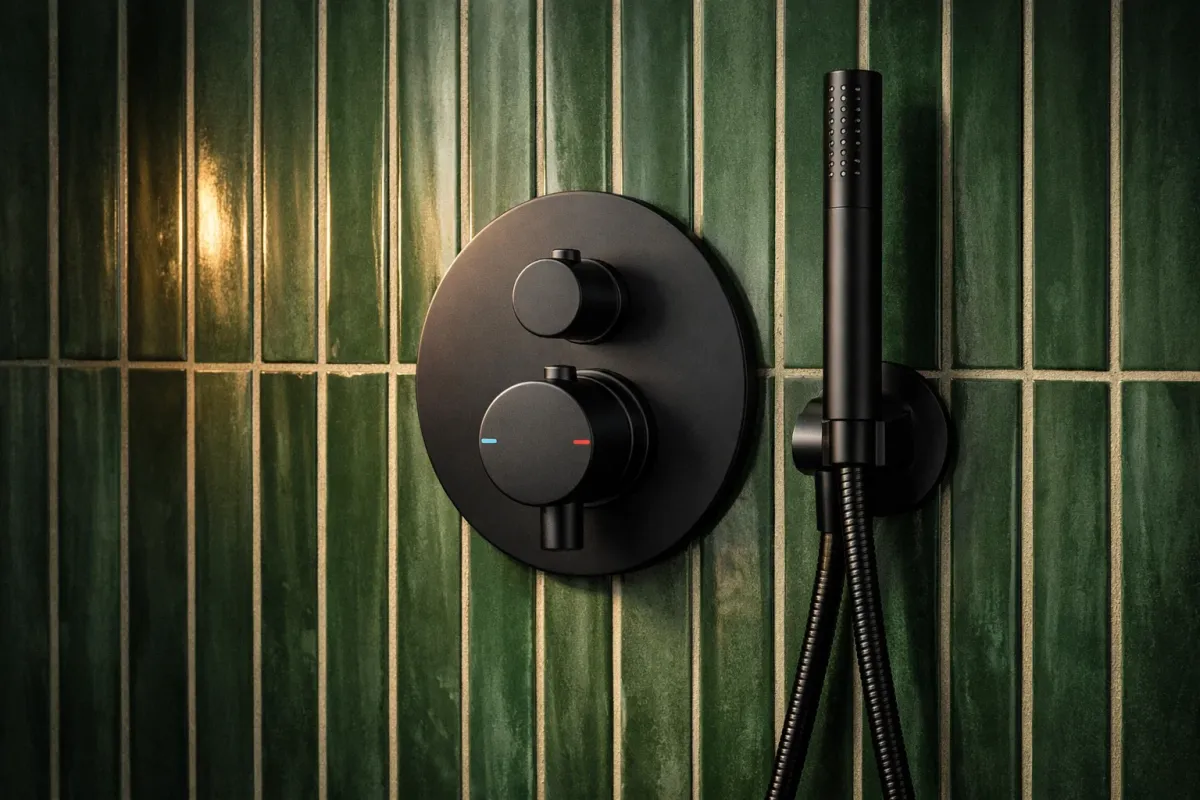
Modern dual-flush cisterns use 4 litres for a full flush and 2.6 litres for the reduced flush. WRAS regulations now cap the maximum flush volume at 6 litres, with the reduced flush limited to two thirds of the full volume. Replacing a 13-litre single-flush toilet with a 4/2.6 litre dual-flush model cuts toilet water consumption by up to 67 per cent, saving a typical household between £50 and £100 per year on metered water bills alone.
Low-Flow Showerheads and Aerated Taps
A standard mixer showerhead delivers 10 to 15 litres per minute. A low-flow alternative using aerator technology mixes air into the water stream, maintaining the sensation of pressure while reducing flow to 6 to 8 litres per minute. Over a ten-minute shower, the saving is 40 to 90 litres of water, and because less water needs heating, the energy saving compounds the benefit.
Tap aerators work on the same principle. Hansgrohe’s EcoSmart technology reduces basin tap flow to 5 litres per minute (their EcoSmart+ range achieves 4 litres per minute), representing up to a 60 per cent reduction at the basin. Grohe’s EcoJoy aerators deliver 5.7 litres per minute and claim up to 70 per cent savings compared to conventional taps. These are not specialist products. They are widely available from UK suppliers and fit standard connections.
Part G Building Regulations and the Water Efficiency Calculator
Part G of the Building Regulations sets the legal framework for water efficiency in new dwellings. The current standard requires total consumption of no more than 125 litres per person per day. In water-stressed areas, local planning authorities can mandate the optional tighter standard of 110 litres per person per day.
Compliance is calculated using the Water Efficiency Calculator for New Dwellings, which requires the exact make and model of every water-using fitting. While these regulations technically apply to new builds, they provide a useful benchmark for renovation specifications. The government’s consultation on further tightening these standards to 105 litres (standard) and 100 litres (optional) per person per day signals the direction of travel for UK water policy.
The Unified Water Label, which harmonises the previous WELL and European Water Label schemes, provides a standardised rating for taps, showers, toilets and other water-using fittings. Specifying products that carry the label simplifies the process of meeting efficiency targets.
Energy: The Hidden Cost of Hot Water
Water heating accounts for approximately 17 to 18 per cent of a household’s total energy consumption, costing an average of £228 per year. Because the bathroom uses the majority of hot water in the home, the fittings you choose have a direct impact on your energy bills and carbon emissions.
A four-person household making relatively modest changes to bathroom water use (low-flow showerheads, aerated taps, shorter showers) can reduce water-related carbon emissions by roughly 330 kg of CO2 per year. Research from the Energy Saving Trust shows that households adopting comprehensive water-efficient fittings could reduce heating-related emissions by up to 58 per cent.
Wastewater Heat Recovery
One of the most effective but least known technologies for bathroom energy efficiency is the wastewater heat recovery system. These devices recover heat from shower drain water and use it to pre-warm the incoming cold supply, reducing the energy required per shower by up to 55 per cent. Vertical installations achieve heat recovery efficiencies of 55 to 65 per cent. The systems are recognised under SAP calculations and count towards Part L building regulation compliance, making them particularly valuable in new builds and major renovations.
Heating the Room Itself
Underfloor heating in a bathroom saves approximately 25 per cent of the energy consumed by a traditional radiator, rising to 40 per cent when paired with a heat pump. The lower operating temperature (35 to 55 degrees Celsius versus 60 to 80 for radiators) makes underfloor systems particularly well suited to the renewable heating systems that will become standard as gas boilers are phased out. Beyond efficiency, drying a tiled or stone floor quickly after use reduces dampness and discourages mould growth, cutting the need for chemical cleaning products.
LED Lighting
The shift from halogen to LED in bathrooms delivers up to 85 per cent energy savings per fitting. A single 50W halogen spotlight costs roughly £10 per year to run and lasts around 1,000 hours. An equivalent LED uses a fraction of that energy and lasts 15,000 hours or more. Since halogen bulbs were largely removed from UK sale in 2021, LED is now the default for any bathroom lighting specification. If your existing bathroom still runs halogen, replacing those fittings during a renovation is one of the simplest wins available.
Embodied Carbon: What Your Materials Cost the Planet Before They Reach Your Bathroom
The environmental impact of a bathroom renovation does not begin when the plumber arrives. Every material carries embodied carbon from its extraction, manufacture and transport, and the differences between common bathroom materials are substantial.
| Material | Embodied Carbon | Notes |
|---|---|---|
| UK sandstone | 77 kg CO2e per tonne | 29% quarry waste rate |
| UK granite | 107 kg CO2e per tonne | 47% quarry waste rate |
| UK slate | 251 kg CO2e per tonne | 85% quarry waste rate |
| Ceramic/porcelain tiles | ~3,730 kg CO2e per tonne | Fired above 1,000°C, roughly 10x natural stone per kg |
| Chinese imported sandstone | ~6x UK sandstone | Transport dominates the differential |
| Spanish imported stone | 2-7% above UK equivalent | Comparable to UK cross-country transport |
Ceramic sanitaryware (toilets, basins, baths) carries a significant carbon load due to the firing temperatures involved. The global warming potential of ceramic tile production runs to approximately 14.4 kg CO2 equivalent per square metre. EU ceramic manufacturing accounts for 19 million tonnes of CO2 annually.
Cast iron baths are heavy to transport and energy-intensive to produce, but their 50-year-plus lifespan and 100 per cent recyclability mean far fewer replacements over a building’s lifetime than acrylic alternatives, which typically last 10 to 15 years. Copper pipework tells a similar story. Recycling copper saves up to 85 per cent of the energy needed to extract and refine new material, and roughly a third of global copper demand is already met from recycled sources.
Several major manufacturers now publish Environmental Product Declarations covering their ranges. Ideal Standard has committed to publishing cradle-to-grave EPDs for over 5,000 products. Geberit and Laufen have published EPDs for their sanitary ceramics. These declarations allow direct comparison of the environmental cost of competing products, something that was not possible even five years ago.
For specific material alternatives such as bamboo, recycled glass tiles, cork and reclaimed terrazzo, see our guide to sustainable materials in bathroom fittings.
Waste, Disposal and the Law
The UK construction industry generates 62 per cent of the country’s total waste and sends roughly 5 million tonnes to landfill every year. A bathroom strip-out produces a concentrated mix of ceramic, plasterboard, metal, plastic and potentially hazardous materials, all of which carry specific disposal requirements.
Plasterboard
Plasterboard must be recycled separately. Gypsum in landfill conditions produces hydrogen sulphide gas, making mixed disposal illegal. Installation wastage rates of 10 to 35 per cent mean that even a standard bathroom renovation generates a meaningful volume of plasterboard waste.
Asbestos
Any property built or refurbished before 2000 may contain asbestos in bathroom panels, floor tiles, artex ceilings, pipe lagging and even toilet cisterns. The Control of Asbestos Regulations 2012 requires checking for asbestos before any work begins. If found, 14 days’ notice to the HSE is mandatory before starting removal work, and only licensed waste carriers can transport asbestos waste to licensed disposal sites. Fines for non-compliance reach £20,000 in the magistrates’ court and are unlimited in the Crown Court.
Waste Duty of Care
Anyone removing renovation waste from site must hold an Upper Tier waste carrier registration (identifiable by a CBDU number). Every movement of non-hazardous waste requires a Waste Transfer Note listing the producer, waste type, containment method, quantity, carrier registration and signatures. These notes must be kept for a minimum of two years. You can verify a waste carrier’s registration on the Environment Agency’s online public register.
Recycling What You Strip Out
Most bathroom materials can be recycled with the right approach. Ceramic tiles and sanitaryware go into brick and rubble skips at recycling centres. Metal fittings (taps, towel rails, copper pipes) go into mixed metal skips. Cast iron baths and radiators have genuine scrap value. The key is segregation at source, keeping materials separated during the strip-out rather than throwing everything into a single skip.
Practical Steps for a Lower-Impact Renovation
Refurbish Before You Replace
Re-enamelling an existing cast iron or steel bath costs £300 to £600 and extends its life by 10 to 15 years. Installing a new bath costs £850 or more before plumbing adjustments. The environmental benefit is proportional. No demolition waste, no manufacturing energy for a replacement, no transport carbon, and no disruption to surrounding tiling and plumbing that might trigger further work.
Specify Water-Efficient Fittings as Standard
Dual-flush toilets, aerated taps and low-flow showerheads are not premium products. They cost the same or marginally more than conventional alternatives and deliver measurable savings from day one. WRAS-approved products guarantee compliance with UK water regulations.
Choose Manufacturers with Verified Environmental Commitments
Ideal Standard operates its UK ceramic site on 100 per cent renewable energy, uses 75 per cent recycled plastic in packaging, and targets zero waste to landfill by 2030. Roca’s W+W unit captures basin water to flush the toilet, reducing WC water use by 25 per cent. Duravit’s DuroCast Nature is the first fully recyclable mineral cast material, and their Hornberg factory recycles 60 per cent of its process water. These are not niche brands. They are mainstream UK bathroom suppliers whose products are available through any bathroom supply and fit service.
Ventilate Properly
Part F of the Building Regulations requires a minimum extraction rate of 15 litres per second for bathrooms with a bath or shower (continuous mechanical systems need 8 litres per second minimum). Proper ventilation prevents condensation, reduces mould growth, and cuts the need for chemical mould treatments. As homes become more airtight through energy efficiency improvements, mechanical ventilation becomes more important, not less.
Consider Low-VOC Products
Traditional tile adhesives and synthetic grouts release volatile organic compounds that affect indoor air quality. Low-VOC and zero-VOC alternatives are now widely available without compromising bond strength. Look for products carrying GREENGUARD Gold or Cradle to Cradle certification. Solvent-free adhesives from manufacturers like AURO and zero-emission products from the ZHERORisk range eliminate this issue entirely.
Plan Your Waste Before the Strip-Out Begins
Brief your bathroom fitter on waste segregation before work starts. Separate skips or clearly labelled areas for ceramic, metal, plasterboard and general waste make recycling straightforward and keep disposal costs down. For properties built before 2000, commission an asbestos check before any demolition work.
Frequently Asked Questions
How much water does a typical UK bathroom use per day?
What are the Part G water efficiency requirements for bathrooms?
How much can dual-flush toilets save compared to old single-flush models?
What is embodied carbon in bathroom materials?
Do I need to check for asbestos before a bathroom renovation?
Is it more environmentally friendly to refurbish a bath or replace it?
What is a wastewater heat recovery system and is it worth installing?
Past Projects


Get a Free Quote
Book a free, no-obligation site survey. Call us on 07428 653 653 or request a callback.
Book Free SurveyOur Clients' Reviews

5/5

5/5

5/5

5/5

5/5
Based on 453+ verified reviews across all platforms
Related Articles

Sustainable Materials in Bathroom Fittings
Building a Greener Bathroom Without Compromising on Style
view this article Read more
How Much Does a New Bathroom Cost in 2026? UK Pricing Guide
What a New Bathroom Really Costs in 2026 The question every homeowner asks before a bathroom renovation is the same. How much? The answer depends on what you want, what you have already, and how much of the existing layout you intend to keep. But the data from thousands of UK projects gives us a clear picture.
view this article Read more
Bathroom Renovation Guide: Every Stage From Start to Finish
What a Bathroom Renovation Actually Involves A complete bathroom renovation is one of the most rewarding home improvement projects you can undertake, but it is also one of the most misunderstood. Homeowners frequently picture the finished result without appreciating the sequence of skilled trades and carefully timed stages that make it happen. Every professional bathroom renovation follows a logical order, and understanding that order is the single most important thing you can do before your project begins.
view this article Read more
Bathroom Tiling Styles for Timeless Elegance
Why Layout Matters More Than the Tile Itself
view this article Read more
Quartz, Granite or Porcelain Worktops: Which Suits Your Kitchen?
The Three-Way Decision Most Kitchen Renovations Come Down To
view this article Read more
Ceramic Disc Technology in Bathroom Taps: How It Works
The Technology Inside Almost Every Modern Tap If your bathroom taps turn with a smooth quarter-turn rather than two and a half rotations, they contain ceramic disc cartridges. This technology has become so dominant that it is now difficult to buy a new tap in the UK that does not use it. Yet most homeowners have no idea how it works, why it fails, or what to do when a ceramic disc tap starts dripping.
view this article Read more

How to Choose an Electrical Bathroom Mirror
What an Electrical Bathroom Mirror Actually Does
view this article Read more
Best Bathroom and Toilet Brands in the UK
What Makes a Good Bathroom Brand The brand name on your toilet, basin or shower valve determines far more than the price tag. It affects how long the product lasts, how easy it is to get replacement parts in five or ten years, whether the finish holds up to daily cleaning, and how well the engineering behind the product actually performs in a real bathroom rather than a showroom.
view this article Read more
Bathroom Underfloor Heating: Types, Installation and What to Expect
Why Underfloor Heating Works So Well in Bathrooms Stepping onto a warm bathroom floor on a cold January morning is one of those small luxuries that, once experienced, becomes very difficult to give up. Underfloor heating has grown from a niche luxury into a genuinely practical heating solution for UK bathrooms, and the reasons go well beyond comfort.
view this article Read more
Tools Required for Bathroom Fitting: The Professional Trade Toolkit
The Professional Bathroom Fitter’s Complete Toolkit Every professional bathroom fitter knows that quality tools are an investment, not an expense. The difference between a flawless installation and a problematic one often comes down to having the right equipment for the job. Over years of bathroom fitting projects across Greater Manchester, we have refined our toolkit to include everything a trade professional needs on site.
view this article Read more
What You Need to Know Before Your Kitchen Renovation
The Gap Between Expectation and Reality A kitchen renovation is not a weekend project. The 2025 Houzz UK Kitchen Trends Study found that 71 percent of homeowners change their kitchen layout during a renovation, and the median spend rose 34 percent year on year to £17,500. Those numbers tell you two things. First, most people end up doing more work than they originally planned. Second, the costs are significant enough that poor preparation leads to genuinely painful surprises.
view this article Read more