
Sustainable Materials in Bathroom Fittings
Sustainable bathroom materials compared with UK costs and suppliers. Bamboo, recycled glass, cork, terrazzo and water-saving fittings explained.
Building a Greener Bathroom Without Compromising on Style

The Houzz UK Bathroom Trends Study found that 87% of homeowners added at least one sustainable feature during their bathroom renovation. That figure has climbed year on year, driven partly by environmental awareness and partly by something far more immediate: water bills. United Utilities charges in the North West rose to £4.75 per cubic metre in April 2025, a 30% jump in a single year. The national average household water bill now sits at £603 annually, and Kingfisher research projects that water inefficiency alone could cost families over £300 a year by 2030.
A sustainable bathroom renovation is no longer a niche aspiration. It is a practical decision that pays for itself. This guide covers the materials, fittings, and technologies available in the UK that reduce environmental impact while creating a bathroom that looks and performs as well as any conventional design. If you are planning a bathroom remodelling project in Greater Manchester, every choice outlined here is available through UK suppliers and can be fitted by a professional team.
For a broader look at the environmental footprint of bathroom products across their full lifecycle, see our environmental impact of bathroom fittings guide.
Sustainable Surface Materials
The surfaces in a bathroom account for most of its visual character and most of its material weight. Choosing the right surfaces is where sustainability makes its biggest difference.
Recycled Glass Tiles
Recycled glass tiles are made from repurposed bottles, windows, and industrial glass waste, fired at lower temperatures than conventional ceramics. The result is a tile that uses less than half the energy to produce while diverting waste from landfill.
Alusid, based in Preston, Lancashire, produces the world’s first 100% recycled ceramic glazed tiles. Spun out of the University of Central Lancashire, their tiles are made from 95-100% recycled glass, ceramic, and mineral waste with zero production waste. Original Style manufactures tiles with approximately 95% recycled content, including their Bohemia Recycled Glass Mosaic range. British Ceramic Tile in Devon incorporates up to 15% recycled ceramic waste into every tile body.
Recycled glass mosaics typically cost £100 to £200 per square metre, a 15-25% premium over standard ceramic tiles. The visual payoff is significant. Recycled glass catches light differently from ceramic, creating depth and texture that suits both contemporary and traditional bathroom designs. For more on tile selection, see our guide to bathroom tile trends.
Terrazzo with Recycled Aggregate
Terrazzo has seen a remarkable resurgence in UK bathrooms, and the material has evolved. Up to 60% of a modern terrazzo surface can be aggregate from pre-consumer or post-consumer waste, including recycled glass, granite chips, flint, marble, and even mother-of-pearl.
Diespeker & Co in London, established in 1881 and widely regarded as the UK’s leading terrazzo specialist, offers the Rubblazzo range. Created in collaboration with garden designer Tom Massey, Rubblazzo is made from recycled London construction rubble set in ultra-low carbon alternative cement. Bluestone produces Diore Terrazzo worktops containing 70-90% recycled stone aggregate, suitable for bathroom vanities and worktops in finishes like Basilica, Purbeck, and Amalfi. A honed finish provides a practical matte surface for wet rooms and splash zones.
Bamboo
Bamboo reaches maturity in three to five years, compared with twenty to sixty years for hardwood. Harvesting from the outer bark does not kill the plant, and the process actually increases the plant’s CO2 absorption by up to five times. FSC-certified bamboo is available through UK suppliers including UK Bamboo, which uses low-VOC adhesives in its engineered products.
Solid bamboo flooring costs approximately £25 to £70 per square metre, generally cheaper than equivalent hardwood at £30 to £120 per square metre. It works well for vanity units, shelving, cabinets, and bathroom accessories. However, bamboo is not ideal for direct wet-zone flooring such as shower enclosures without proper sealing. For areas with standing water, consider it for furniture rather than floor surfaces.
Cork Flooring
Cork is a carbon-negative material. Harvesting the bark from cork oak trees does not harm the tree, and regeneration boosts CO2 absorption significantly. Wicanders (by Amorim) offers the WISE Cork Inspire range, a 7 mm thick glue-down system with a waterproof rigid core and non-PVC construction, specifically designed for bathrooms. It carries a limited lifetime residential warranty. Beach Bros Ltd is the largest UK importer of Wicanders cork flooring, with the country’s only dedicated cork showroom.
Cork flooring costs approximately £52 per square metre for the Wicanders range, comparable to mid-range engineered hardwood. It feels warm and forgiving underfoot, naturally resists mould, and provides acoustic insulation. An excellent choice for family bathrooms where comfort and safety matter as much as sustainability.
Reclaimed Wood
Reclaimed timber adds character that new wood simply cannot replicate. For bathroom vanity units, reclaimed teak is ideal because it is naturally water-resistant and does not require heavy chemical treatment. UK makers including Cottage Two, Still and Bloom, and Little Devon Furniture Company handcraft bespoke vanity units from reclaimed timber, with waterproofing options ranging from Osmo Hard Wax Oil (extremely hard-wearing, never needs resealing) to commercial-grade lacquer finishes.
The key consideration is moisture management. Reclaimed wood performs well in vanity units and shelving where it will encounter splashes rather than standing water. Pair it with proper ventilation and it will last decades.
Natural Stone
When locally sourced, natural stone has the lowest embodied carbon of any bathroom surface material. UK quarries in Portland, Purbeck, York, and Bath produce stone that avoids the transport emissions associated with imports from Italy, India, or Brazil. Natural stone is fully recyclable, contains no resins or petroleum-based binders, and can last centuries.
By comparison, engineered quartz has roughly double the global warming potential (102.6 kg CO2 equivalent versus 46.8 kg for natural stone) due to the energy-intensive manufacturing and petroleum-based resins involved. Quartz is also extremely difficult to recycle at end of life. Porcelain sits somewhere between the two.
| Material | Embodied Carbon (kg CO2 eq) | Recyclability | Typical Lifespan | UK Source Available |
|---|---|---|---|---|
| Natural stone (UK quarried) | 46.8 | Fully recyclable | 50-100+ years | Yes |
| Porcelain | Moderate | Rarely recycled | 30-50 years | Yes |
| Engineered quartz | 102.6 | Very difficult | 25-30 years | No (imported) |
| Recycled glass tile | Low | Recyclable | 30-50 years | Yes (Alusid, Original Style) |
| Terrazzo (recycled) | Low-moderate | Recyclable | 50+ years | Yes (Diespeker, Bluestone) |
Low-VOC Paints and Sealants
Volatile organic compounds off-gas from conventional paints and sealants, reducing indoor air quality for weeks or months after application. In a bathroom, where warmth and moisture accelerate off-gassing, this matters more than in any other room.
Several British manufacturers produce genuinely low or zero-VOC bathroom paints. Earthborn Claypaint is zero-VOC, made in Britain, carries the EU Eco-Label, and costs £42 to £48 per five litres. Little Greene, based in Manchester, offers paints below 7 g/L VOC at £45 to £52 per five litres, with a vegetable oil gloss for woodwork. Farrow & Ball in Dorset produces low-VOC formulations, recycles 97% of liquid production waste, and generates zero dry waste. Even Dulux has reformulated all emulsions to below 5 g/L VOC at £28 to £35 per five litres.
For sealants, Mapei Mapesil AC ECO is a solvent-free silicone with BioBlock mould-resistant technology, packed in recycled plastic cartridges. The Mapei Ultrabond Eco range provides solvent-free, low-VOC adhesives for bathroom tiling projects.
Water-Saving Fittings
Around 70% of household water use happens in the bathroom. It is the single most impactful room for water efficiency, and the savings are substantial.
Taps and Showerheads
Standard basin taps deliver 6 to 8 litres per minute. Water-saving taps fitted with eco aerators reduce that to 4 to 5 litres per minute without a noticeable drop in perceived pressure. The aerator mixes air into the water stream, maintaining the feel of a strong flow while using significantly less water.
Hansgrohe EcoSmart technology reduces basin tap consumption to approximately 5 L/min (or 4 L/min for EcoSmart+ models) and showerhead flow to 6-8 L/min. Grohe EcoJoy achieves similar reductions, cutting shower water use by up to 68% to just 5.8 L/min. Both technologies are hidden inside the fitting and require no user adjustment. For a detailed comparison of tap types and water pressure requirements, see our bathroom taps guide.
The UK is introducing Mandatory Water Efficiency Labelling (MWEL) from 2026, with an A-F rating system for taps, showers, toilets, and appliances. Similar to energy labels, this will make water efficiency comparison straightforward at point of sale. The government estimates the scheme could save 1,200 million litres of water per day across the UK.
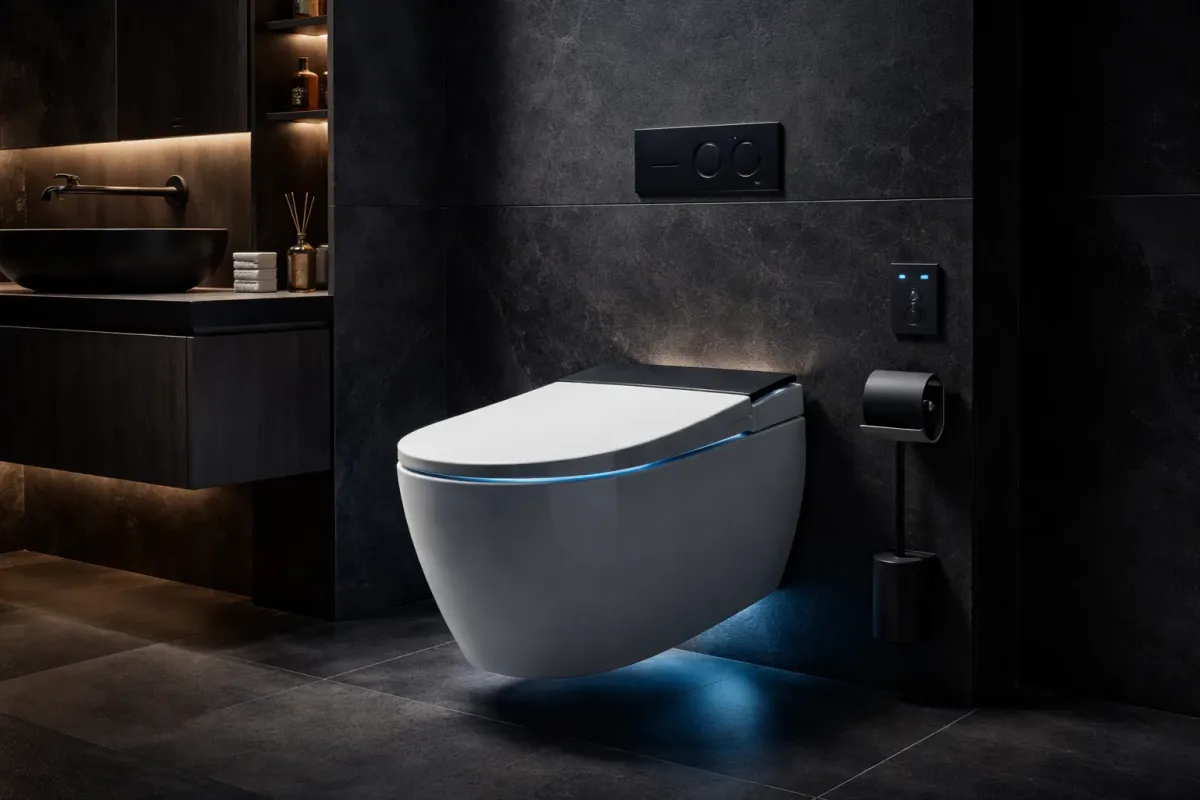
Dual Flush Toilets
Older single-flush toilets use 13 litres per flush. A modern dual flush toilet uses 6 litres for a full flush and 3 litres for a half flush. The most efficient models use just 4 litres and 2.6 litres respectively. Based on approximately 5,000 flushes per year in an average household, switching from an old single flush to dual flush saves roughly 7,000 litres annually. On a metered North West water supply, that translates to approximately £109 saved per year.
The payback period for a dual flush toilet is typically two to four years, after which the savings are pure profit. When specifying a new toilet for a bathroom fitting project, dual flush is now the default rather than the exception.
Smart Shower Systems
Smart showers with water monitoring take efficiency a step further. Aqualisa Optic Q is Wi-Fi and app-compatible, displaying real-time water consumption and costs. Mira Activate shows temperature and flow rate on a crystal-clear display, with the companion app tracking usage over 30 days or two years. Both systems provide tangible feedback that encourages shorter, more efficient showers. A family of four shortening showers by just two minutes each can save approximately £210 per year on combined water and energy bills.
Energy Efficiency in the Bathroom
LED Lighting
LEDs use up to 90% less electricity than halogen equivalents and last up to 25 times longer. A typical bathroom downlight draws 7 to 15 watts compared with 35 to 50 watts for halogen. The 2025 Houzz UK study found that 72% of renovating homeowners now incorporate LED lighting, making it the single most popular sustainable bathroom feature.
Bathroom lighting must meet IP ratings appropriate to each zone: IP67 for Zone 0 (inside bath or shower), IP65 recommended for Zone 1 (above bath to 2.25 m height), and IP44 for Zone 2 (within 0.6 m of the bath perimeter). UK Building Regulations Part P requires electrician notification for new bathroom lighting circuits.
Underfloor Heating
Water-based underfloor heating runs 25% more efficiently than conventional radiators, operating at just 27-31°C compared with 65-75°C for a towel radiator. Installation costs range from £70 to £110 per square metre for wet systems or £50 to £75 for electric. In a typical 4 m² bathroom, winter running costs sit between £15 and £25 per month for a wet system. Paired with a heat pump, energy savings can reach 40%. See our bathroom underfloor heating guide for a full comparison of system types.
Heat Recovery Ventilation
Mechanical ventilation with heat recovery (MVHR) extracts stale, moist air from the bathroom and recovers up to 90% of the heat that would otherwise escape through an extractor fan. Building Regulations Part F recognises MVHR as System 4, and Part L (energy efficiency) actively encourages it where airtightness is high. For new builds working toward the Future Homes Standard, which demands a 75-80% reduction in carbon emissions, MVHR is becoming standard rather than optional.
What Sustainable Choices Actually Cost
Sustainability carries a reputation for being expensive, but the reality is more nuanced. Some eco materials cost less than their conventional equivalents, and virtually all water-saving fittings pay for themselves within a few years.
| Category | Sustainable Option | Standard Option | Premium/Saving | Annual Saving |
|---|---|---|---|---|
| Flooring | Bamboo (£25-70/m²) | Hardwood (£30-120/m²) | Often cheaper | - |
| Flooring | Cork (£52/m²) | Engineered wood (£40-80/m²) | Comparable | - |
| Tiles | Recycled glass (£100-200/m²) | Standard ceramic (£25-60/m²) | +15-25% | - |
| Paint (5L) | Earthborn zero-VOC (£42-48) | Standard emulsion (£28-35) | +20-50% | - |
| Toilet | Dual flush | Single flush (13L) | Similar price | £109/year |
| Showerhead | Eco (6-8 L/min) | Standard (12+ L/min) | Similar price | £94/year |
| Tap aerator | Eco insert (£5-15) | Standard aerator | Negligible | £19/year |
A complete water-efficiency upgrade across an entire bathroom can save £200 to £400 per year on metered water and energy bills. The overall premium for specifying sustainable materials throughout a bathroom renovation is typically 10-20% above a standard refurbishment, but much of that is recovered within two to five years through reduced utility costs.
UK Brands Leading the Way
Hansgrohe leads on water saving with EcoSmart technology across taps (5 L/min) and showerheads (6-8 L/min), reducing consumption by up to 60% without compromising comfort.
Grohe matches with EcoJoy technology, plus the Grohe Blue filtered water system that saves a family of four up to 800 single-use plastic bottles per year. The filters are 99% recyclable and Cradle-to-Cradle certified.
Duravit has set 2030 targets to increase water-saving products to 80% of their range, reduce global carbon emissions by 20%, and achieve 30% recycled material content. Their DuroCast Nature range uses the first recyclable mineral cast material.
Crosswater incorporates water-saving technology across their ranges, with the Kai WC collection consuming 33% less water than standard toilets. All products carry a 15-year guarantee.
Fired Earth offers the Malmo recycled glass tile range and reclaimed terracotta collections through their collaboration with Bert & May, plus low-VOC paints and eco-friendly packaging.
For a full comparison of bathroom suppliers in the UK, see our dedicated guide.
Certifications Worth Looking For
When shopping for sustainable bathroom products, these certifications provide genuine assurance rather than marketing claims:
- WRAS approval - Confirms the fitting meets UK Water Supply Regulations. Every water-saving tap and showerhead recommended in this guide is WRAS approved.
- FSC or PEFC certification - Guarantees timber (vanity units, shelving, cabinets) comes from responsibly managed forests. Both meet the UK Government Timber Procurement Policy.
- BRE Green Guide - Rates building materials from A+ (best) to E (worst) across 13 environmental impact categories. Over 1,500 specifications are available at the BRE online tool.
- Environmental Product Declarations (EPDs) - Third-party verified lifecycle assessments compliant with EN 15804. The most rigorous form of environmental evidence.
- Unified Water Label / MWEL - The new mandatory A-F water efficiency rating coming in 2026 for taps, showers, and toilets.
Frequently Asked Questions
How much more does a sustainable bathroom renovation cost?
Is bamboo flooring suitable for bathrooms?
Do water-saving taps actually feel different to use?
What is the best eco-friendly bathroom paint for damp areas?
How much water does a dual flush toilet save per year?
Are recycled glass tiles as durable as standard ceramic tiles?
What certifications should I look for when buying sustainable bathroom products?
Past Projects


Get a Free Quote
Book a free, no-obligation site survey. Call us on 07428 653 653 or request a callback.
Book Free SurveyOur Clients' Reviews

5/5

5/5

5/5

5/5

5/5
Based on 453+ verified reviews across all platforms
Related Articles

Bathroom Renovation Environmental Impact: Water, Energy and Waste
Why Your Bathroom Renovation Has a Bigger Environmental Footprint Than You Think
view this article Read more
Choosing the Right Bathroom Tiles: A Type-by-Type Guide
Choosing Tiles That Work for Your Bathroom Every tile you lay in a bathroom has a job to do. It needs to repel water, survive years of foot traffic, resist staining from soap and cosmetics, and still look good after thousands of cleaning cycles. The tile that ticks every box for a feature wall behind the vanity may be entirely wrong for a wet room floor. Getting this decision right at the outset saves homeowners from costly replacements and frustrating maintenance routines down the line.
view this article Read more
Full House Renovation UK: Costs, Trade Sequence and What to Expect
What a Full House Renovation Actually Involves
view this article Read more
The Art of Bathroom Tiling: A Professional Installation Guide
How Professional Bathroom Tiling Actually Works
view this article Read more
Tips for Effective Bathroom Cleaning
The Difference Between Cleaning Hard and Cleaning Smart A DBS Bathrooms survey of British adults found that the average UK household cleans the bathroom 2.5 times per week. Yet most people follow no particular system. They grab a cloth, spray surfaces in whatever order feels right, and spend 30 to 45 minutes achieving what a structured routine accomplishes in 15. The issue is not effort. It is sequence.
view this article Read more