
Shower Renovation Challenges and How Professionals Solve Them
The most common shower renovation challenges UK homeowners face, from waterproofing failures to drainage problems, and how professional fitters solve them.
Why Shower Renovations Go Wrong
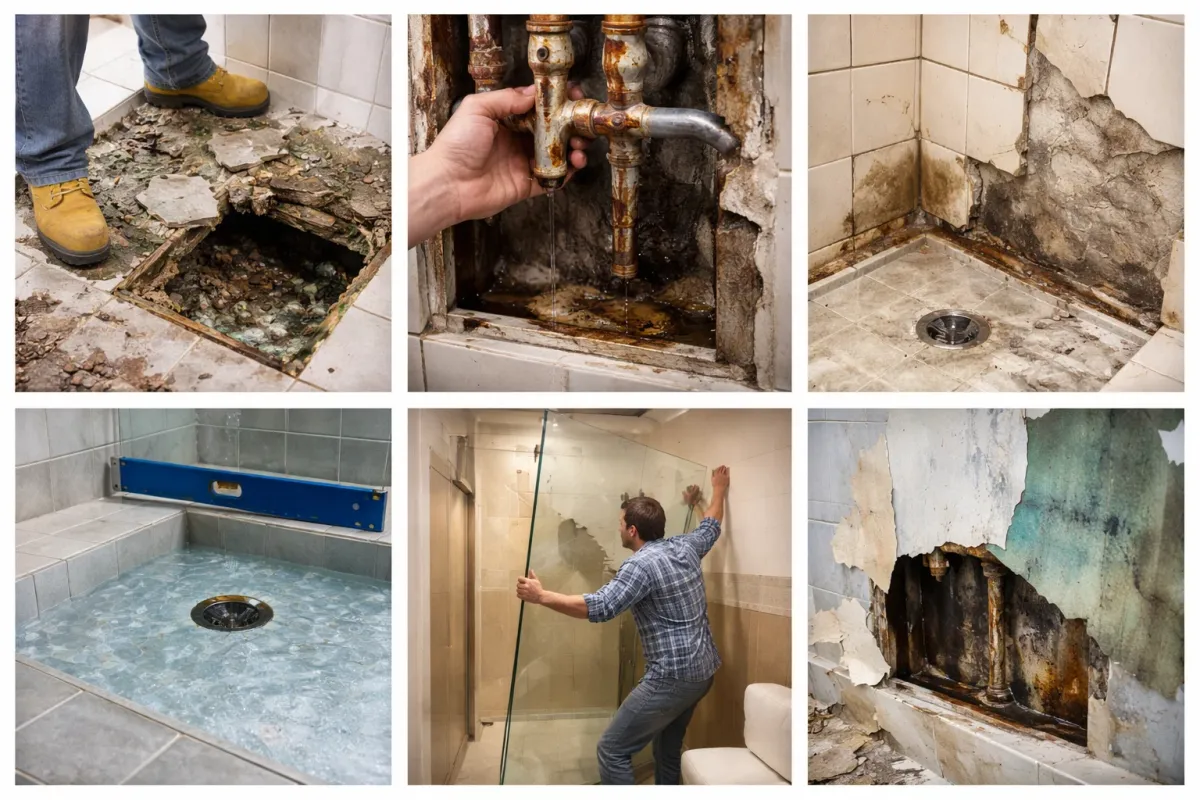
Shower renovations fail more often than most homeowners expect. The combination of water, confined spaces, multiple trades and tight tolerances creates a project where small mistakes compound into serious problems. A poorly waterproofed shower enclosure might look perfect on the day it is finished, only to cause damp damage to the room below within months. Bad drainage can turn a morning shower into a flooding event. Incorrect plumbing connections lead to scalding water or pathetic trickle pressure.

We have been fitting shower rooms across Greater Manchester for years, and certain problems appear on nearly every project we take over from failed DIY attempts or inexperienced tradespeople. This article covers the real challenges that arise during shower renovations and the professional solutions that prevent them. If you are planning a shower renovation or are already dealing with problems from a previous one, this guide will help you understand what went wrong and what needs to happen to put it right.
Plumbing and Water Pressure Problems
The plumbing is where most shower renovations encounter their first obstacle. Older Manchester properties frequently have a gravity-fed system with a cold water tank in the loft and a hot water cylinder on the landing. This setup delivers variable water pressure that depends on the height difference between the tank and the showerhead. Move the shower to a different wall or install a larger rainhead and the pressure may drop below usable levels.
The solution depends on the existing system. In some cases a dedicated shower pump resolves the issue, though pumps need careful positioning (they cannot be installed in the loft space above the cold tank) and they generate noise that travels through pipework. Switching to a combi boiler or an unvented hot water system eliminates the pressure problem entirely but involves a larger investment. A professional bathroom plumber will assess your system before any work begins and recommend the approach that matches your budget and property.
Thermostatic mixing valves present another common issue. Cheap or incorrectly installed TMVs cause temperature fluctuations when someone runs a tap elsewhere in the house. Quality valves from Grohe or Bristan maintain stable temperatures even when the supply pressure changes. Our Grohe Grohtherm 800 review covers one of the most reliable options, and our top 10 shower mixers guide compares the best thermostatic valves available in the UK.
Waterproofing and Tanking Failures
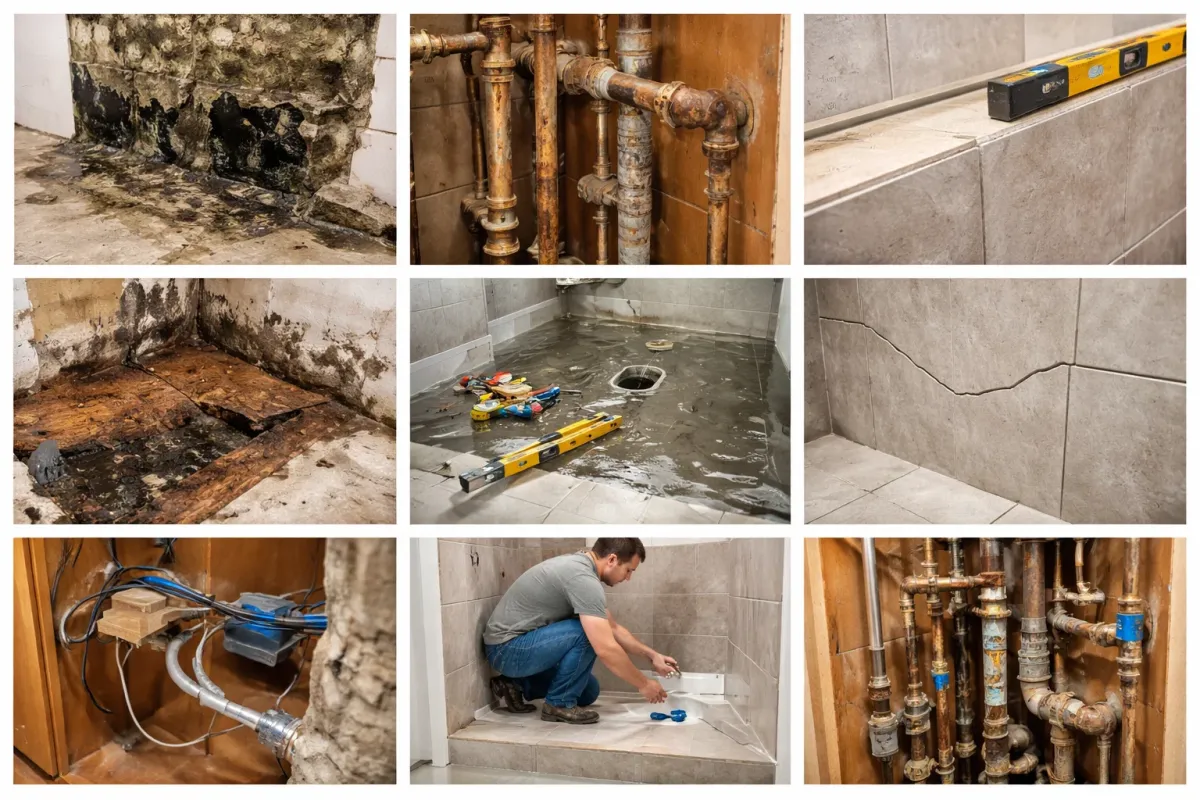
Waterproofing is the single most critical element of any shower installation, and it is also the one most frequently done badly. Water does not just flow downward in a shower. It penetrates grout joints, works behind tiles through capillary action, and migrates through poorly sealed junctions between walls and trays. Without a continuous waterproof membrane behind the tiled surface, moisture reaches the substrate and causes damage that remains invisible until it becomes severe.
The professional approach involves tanking the entire shower area with a liquid-applied membrane or sheet membrane before any tiles go on. Every junction, corner, pipe penetration and drain connection receives additional reinforcement with tape or pre-formed corners. This creates a sealed envelope that contains water within the shower zone regardless of what happens to the grout or tile adhesive over time.
Many DIY renovations and some budget trade installations skip tanking entirely, relying on the tiles and grout alone. This works for a few months, sometimes a year, before the first signs of trouble appear on the ceiling below. Using cement boards instead of standard plasterboard as the substrate adds another layer of moisture resistance. Standard plasterboard in a shower zone is a failure waiting to happen, and we see it on a depressing number of remedial jobs.
Structural and Wall Preparation Issues
Tiles need a flat, rigid surface. Shower walls in older properties are rarely either. Plaster over brick often has undulations of 10mm or more across a single wall, and timber-framed stud walls flex when you press on them. Tiling directly onto an uneven or flexible surface leads to cracked tiles, failed adhesive bonds and hollow spots where water pools behind the tile face.
Correcting the substrate is not glamorous work, but it determines whether the finished shower lasts five years or twenty-five. For masonry walls, this might involve removing old plaster and applying a new render coat to achieve a flat plane. For stud walls, it means adding extra noggins for rigidity and fixing cement board over the studs to create a solid, moisture-resistant surface. Wall-hung shower components like thermostatic valves, grab rails and glass panels need solid fixing points that are planned before the boarding goes on, not discovered as an afterthought during the fit.
Floor levels present a related challenge. Shower trays need a level base, and many older bathroom floors slope, dip or bounce. A timber floor that flexes underfoot will eventually crack the seal around a rigid shower tray. Strengthening the floor joists or adding a plywood overlay before the tray goes in prevents this. For walk-in showers and wet rooms, the floor gradient must channel water reliably toward the drain without creating low spots where puddles form.
Drainage and Shower Tray Problems
A shower that drains slowly is more than an inconvenience. Standing water around your feet during a shower means the tray or floor is not falling correctly toward the drain, the waste pipe run is too long or has insufficient gradient, or the trap is undersized for the flow rate. Low-profile shower trays look elegant but often have shallow wastes that block easily. Walk-in showers with linear drains need precise floor gradients that are set during the build phase and cannot be corrected afterward without stripping everything back.
The waste pipe itself must maintain a minimum fall of around 1:40 (roughly 25mm per metre) to drain reliably. Long horizontal runs, tight bends, and connections into an existing soil stack all reduce flow. On upper floors, routing the waste pipe through the floor void to reach the stack can involve cutting joists, which needs structural consideration. These are not problems you discover on installation day. Professional fitters plan the drainage route before ordering the tray, ensuring the waste connection works before committing to a layout.
Tiling Mistakes
Tiling a shower enclosure is more demanding than tiling a kitchen splashback. The surfaces are larger, the cuts are more complex (around valves, niches and shower screens), and the consequences of poor workmanship are amplified by constant exposure to water.
The most common tiling mistakes we see on remedial jobs include using wall adhesive instead of a flexible, waterproof adhesive rated for wet areas, applying grout that is not epoxy or at least mould-resistant, leaving gaps at internal corners instead of using silicone, and failing to waterproof behind the tiles. Large-format tiles are increasingly popular but demand perfectly flat walls and skilled handling during installation. A single lippage (height difference between adjacent tiles) of more than 1mm is noticeable and collects water.
Choosing the right tiles matters too. Natural stone requires sealing before and after grouting. Highly polished porcelain can be dangerously slippery on a shower floor. Our guides to bathroom tile trends, tile types and panels vs tiles cover the practical considerations alongside the design choices.
Ventilation and Damp
A shower generates a large volume of warm, moisture-laden air in a small space. Without adequate ventilation, that moisture condenses on cold surfaces, feeds mould growth and eventually causes damp problems in the surrounding structure. The Building Regulations require mechanical extraction in bathrooms without an openable window, but even bathrooms with windows benefit from a quality extractor fan.
The fan needs to be rated for the room size (typically 15 litres per second for a shower room) and should run on a timer that continues for at least 15 minutes after the shower is turned off. Ducting must be routed to discharge outside the building, not into the loft space. Venting into the loft is a common shortcut that causes condensation problems in the roof structure.
Heated towel rails and underfloor heating help by raising the ambient temperature of surfaces where condensation would otherwise form. They are not a substitute for proper ventilation, but they make a noticeable difference to how quickly a shower room dries out after use.
How to Avoid These Problems
Most shower renovation failures share a common root cause. The work was started before the planning was finished. Drainage routes were not checked, substrates were not assessed, waterproofing was treated as optional, and the cheapest materials were used in the areas that matter most.
Professional shower room fitting begins with a site survey that identifies every potential problem before a single tile is removed. The drainage route is confirmed, the water supply is assessed, the walls and floors are inspected, and a full specification is agreed before work begins. This upfront investment in planning is what separates a shower that lasts from one that fails.
If you are considering a shower renovation and want to avoid costly mistakes, the most valuable step you can take is to involve a professional from the start rather than calling one in to fix problems after they appear. Our team provides free, no-obligation site surveys across Greater Manchester.
Common Challenges at a Glance
| Challenge | Root Cause | Professional Solution |
|---|---|---|
| Low water pressure | Gravity-fed system, undersized pipes | System assessment, pump or boiler upgrade |
| Temperature fluctuations | Cheap TMV, pressure imbalance | Quality thermostatic valve, balanced supply |
| Damp on ceiling below | No tanking membrane behind tiles | Full tanking with liquid or sheet membrane |
| Cracked or hollow tiles | Uneven walls, flexible substrate | Cement board over levelled substrate |
| Slow drainage | Insufficient pipe gradient, undersized trap | Planned waste route with correct fall |
| Mould growth | Poor ventilation, no extraction | Timer-controlled fan, exterior ducting |
| Cracked tray seal | Flexible timber floor, rigid tray | Floor strengthening, flexible sealant |
| Tile lippage | Uneven substrate, large-format tiles | Levelling compound, skilled installation |
Frequently Asked Questions
What is the most common cause of shower renovation failure?
Can I renovate a shower myself or do I need a professional?
How long does a professional shower renovation take?
Why does my new shower have low water pressure?
Do I need cement boards behind shower tiles?
Should I choose a shower tray or a wet room floor?
How do I prevent mould in my shower room?
Past Projects


Get a Free Quote
Book a free, no-obligation site survey. Call us on +44 7428 653 653 or request a callback.
Book Free SurveyOur Clients' Reviews

5/5

5/5

5/5

5/5
Based on 453+ verified reviews across all platforms
Related Articles
Bathroom Tap Finishes: Chrome, Brass, Matt Black and Beyond
The Finish You Choose Outlasts Every Other Bathroom Decision Tiles can be re-grouted. Paint can be refreshed in a weekend. But the finish on your taps, shower valves and accessories is permanent for the life of the fitting.
view this article Read more
Top 10 Shower Mixers You Can Buy in the UK
Why Your Shower Mixer Matters The shower mixer is the heart of your shower system. A good one delivers stable temperature, consistent flow and reliable performance for years.
view this article Read more
Bathroom Renovation Mistakes and How to Avoid Them
Why Bathroom Renovations Go Wrong Most bathroom renovations that end badly were doomed before the first tile came off the wall.
view this article Read more
Electric Shower Not Working? Expert Troubleshooting Guide
Why Electric Showers Fail and What You Can Do About It Electric showers heat water on demand using a powerful element, drawing between 7.
view this article Read more
How Small Businesses Are Being Targeted by Fake Negative Reviews
What Fake Reviews Look Like Fake negative reviews usually follow a recognisable pattern. Some common red flags include: Vague or generic complaints – Reviews that lack specific details about the service, product, or experience.
view this article Read more
Asbestos in Bathrooms and Kitchens: Risks, Safety and UK Law
What Is Asbestos? Asbestos refers to a group of six naturally occurring silicate minerals made up of fine, durable fibres. Because of its strength and fire resistance, it was commonly used in insulation materials, roofing and flooring products, cement compounds, automotive parts and fireproof textiles.
view this article Read more
Hiring Bathroom Fitters in Manchester: Costs, Process and Advice
What Manchester Homeowners Need to Know Before Hiring Renovating a bathroom is one of the most rewarding home improvements you can make, and one of the easiest to get wrong if you hire the wrong people.
view this article Read more
The Best Toilet Brands for Your Home: A UK Buyer's Guide
Choosing a Toilet Brand: What Actually Matters Selecting a toilet brand might seem less important than choosing a specific model, but the manufacturer behind your toilet determines the quality of the ceramic, the reliability of the flush mechanism, the availability of spare parts years down the line, and the level of after-sales support when something eventually needs attention.
view this article Read more
Bathroom Remodelling Ideas for Greater Manchester Homeowners
Remodelling Ideas That Work for Manchester Homes Greater Manchester homes come with character. Victorian terraces in Didsbury, semi-detached houses in Prestwich, post-war estates in Salford, new builds in Trafford.
view this article Read more
How to Replace a Shower with a Bath
Replacing a shower with a bath is an excellent way to enhance both the functionality and comfort of your bathroom, especially if you’re accommodating a growing family.
view this article Read more
How to Find the Best Bathroom Fitters Near You
Finding a Bathroom Fitter You Can Trust Searching for “bathroom fitters near me” returns dozens of results, but a Google listing tells you almost nothing about whether a contractor will deliver quality work on time, stay within budget, and stand behind their installation for years to come.
view this article Read more
Small Bathroom Ideas for British Homes
Making the Most of a Small British Bathroom The average bathroom in a British home measures roughly 2.2 metres by 1.
view this article Read more