
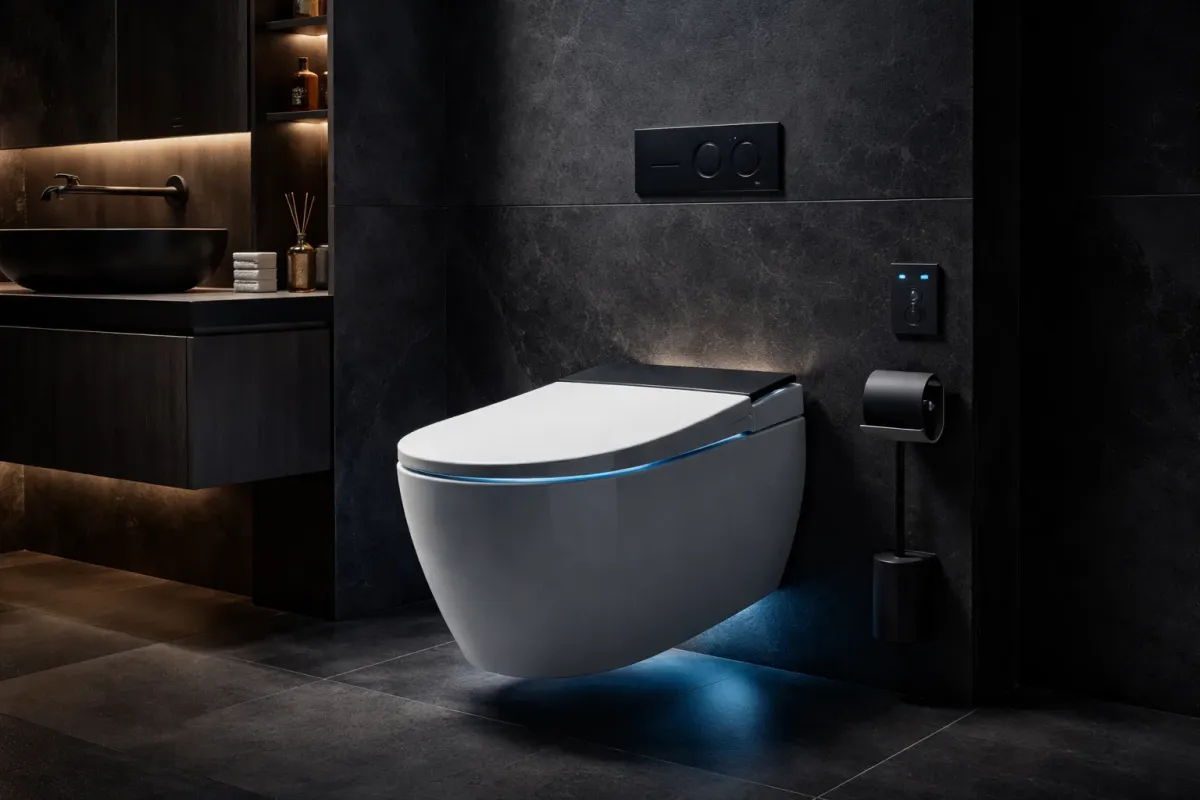
Rimless Toilets vs Standard: Which Should You Choose?
Rimless toilets vs standard rimmed toilets - which is better? Our bathroom fitters compare hygiene, cleaning, cost, flush performance and top UK models.
If you have been shopping for a new toilet recently, you have almost certainly noticed that “rimless” has become one of the biggest selling points in the market. Manufacturers are heavily promoting rimless technology, and bathroom showrooms are full of sleek, rim-free models. But is rimless genuinely better than a standard rimmed toilet, or is it just clever marketing?
As bathroom fitters in Manchester who install toilets every week, we have worked with both types extensively. In this guide, we give you an honest, practical comparison of rimless and standard toilets — covering hygiene, cleaning, flush performance, cost, splash risk and more — so you can make the right decision for your bathroom.
What Is a Rimless Toilet?
A standard toilet has a rim — a curved channel that runs around the inside top of the bowl. When you flush, water flows through holes in this rim and cascades down the sides of the bowl. The problem is that the underside of the rim is hidden from view and very difficult to clean. Over time, bacteria, limescale and staining accumulate in these hard-to-reach areas.
A rimless toilet removes this channel entirely. Instead of a hidden rim with holes, the bowl has an open, smooth edge. Water is directed into the bowl using a specially engineered flush distributor — usually a raised section at the rear of the bowl — that sends water around the entire inner surface in a controlled, sweeping motion.
The result is a toilet with no hidden areas for bacteria to lurk and a bowl that is visually and practically easier to keep clean.
How Rimless Flush Technology Works
Different manufacturers use slightly different approaches, but the core principle is the same:
- Water enters the bowl from a single point at the rear, guided by a flush distributor.
- The distributor directs the water in a sweeping motion around the full circumference of the bowl.
- Because there is no rim, the water covers every part of the inner surface before draining away.
This contrasts with a standard rimmed flush, where water enters through multiple small holes under the rim. Those holes can become partially blocked by limescale over time, reducing flush effectiveness — a problem that simply does not exist with rimless designs.
Rimless vs Standard Toilets: Direct Comparison
Let us break down the key differences across the factors that matter most when choosing a toilet.
Comparison Table
| Factor | Standard (Rimmed) | Rimless | Verdict |
|---|---|---|---|
| Hygiene | Bacteria can accumulate under the rim, hidden from view | No rim means no hidden areas for bacteria | Rimless wins |
| Ease of cleaning | Rim requires angled brush and effort to clean underneath | Smooth open bowl — quick wipe or brush | Rimless wins |
| Flush efficiency | Water distributed via rim holes; can reduce over time with limescale | Controlled, sweeping flush covers full bowl surface | Rimless wins |
| Splash risk | Minimal — rim contains water | Slightly higher risk if flush is poorly designed | Draw — depends on model |
| Noise | Rim dampens flush noise slightly | Can be marginally louder due to open design | Draw — varies by brand |
| Cost (toilet only) | £80–£250 for a good quality model | £120–£400 for a comparable quality model | Standard is cheaper |
| Availability | Universal — all styles and price points | Increasingly common, but fewer budget options | Standard has more range |
| Long-term maintenance | Rim holes can clog; harder to keep hygienic | Less maintenance; easier to keep clean long-term | Rimless wins |
Hygiene
This is the biggest advantage of rimless toilets and the primary reason they were developed. Independent studies have shown that the hidden underside of a toilet rim can harbour significant colonies of bacteria, including E. coli and other harmful organisms. These bacteria thrive in the damp, dark environment under the rim and are very difficult to reach with a standard toilet brush.
A rimless bowl eliminates this problem entirely. With no rim to hide behind, bacteria have nowhere to accumulate, and the entire inner surface of the bowl is visible and accessible for cleaning. If hygiene is your top priority — and in a family bathroom, it should be — rimless is the clear winner.
Cleaning
Anyone who has ever tried to scrub under a toilet rim with a bent-neck brush knows it is an unpleasant and often ineffective task. You cannot see what you are cleaning, you cannot easily reach all areas, and limescale deposits under the rim are notoriously stubborn.
A rimless toilet changes this experience completely. The open, smooth bowl can be cleaned with a quick swipe of a brush or even a cloth. There are no hidden grooves, no undercut edges and no blind spots. Most rimless toilet owners report spending significantly less time cleaning their toilet — and getting a better result.
Flush Performance
Standard rimmed toilets rely on water flowing through small holes under the rim. Over time, especially in hard water areas (which includes much of England), these holes can become partially blocked by limescale. This reduces flush power and can lead to incomplete flushing, requiring a second flush that wastes water.
Rimless toilets use a single, powerful stream of water directed by a flush distributor. Because the water enters at one point and sweeps around the bowl, the flow is more consistent and less susceptible to limescale degradation. In practice, rimless toilets tend to maintain their flush performance better over the long term.
Splash Risk
This is the one area where rimless toilets have historically received criticism. Early rimless designs were sometimes prone to water splashing over the open edge of the bowl during flushing, particularly at the front. However, modern rimless toilets from reputable manufacturers have largely solved this problem through improved bowl geometry and carefully engineered flush distributors.
If you are concerned about splash, stick with established brands (the models we review below have all been tested and refined). Avoid very cheap rimless toilets from unknown manufacturers, as these are more likely to have splash issues due to lower engineering standards.
Cost
Rimless toilets typically cost £30–£150 more than equivalent rimmed models from the same manufacturer. This premium has been falling steadily as the technology has become mainstream, and in 2026 the price gap is smaller than ever. Given the benefits in hygiene and reduced cleaning effort, most homeowners find the premium worthwhile.
Noise
Some people report that rimless toilets are slightly louder during flushing. This is because the open bowl does not dampen the sound of flowing water in the same way a rimmed bowl does. In practice, the difference is marginal and varies significantly between models. If noise is a concern — for example, if the toilet is adjacent to a bedroom — test the flush in a showroom before buying, or choose a model with a soft-close seat to at least eliminate lid noise.
Top 7 Rimless Toilets Available in the UK
We have selected seven rimless models that represent the best options currently available to UK buyers, spanning a range of budgets and styles.
1. Roca The Gap Rimless
Roca’s The Gap is one of the most popular toilet ranges in Europe, and the rimless version is an excellent all-rounder. Available in close-coupled, back-to-wall and wall-hung configurations, it features Roca’s Supraglaze coating for additional stain resistance. The flush is powerful, well-controlled and splash-free.
Best for: Buyers who want a reliable, well-priced rimless toilet from a trusted brand.
2. Villeroy & Boch Subway 2.0 DirectFlush
The Subway 2.0 is Villeroy & Boch’s bestselling range, and the DirectFlush rimless version takes it to the next level. The CeramicPlus coating actively repels dirt and water, keeping the bowl cleaner between cleans. The flush distributor is one of the best engineered in the industry, delivering thorough coverage without any splash.
Best for: Those who want premium quality and are willing to pay for it.
3. Ideal Standard Concept Air Aquablade
Ideal Standard’s Aquablade technology is their take on rimless flushing. Rather than a traditional stream, Aquablade uses a thin sheet of water that clings to the bowl surface, covering every millimetre. It is one of the quietest rimless flush systems available and delivers outstanding cleaning performance.
Best for: Buyers who value a quiet, thorough flush — ideal for en-suites near bedrooms.
4. RAK Ceramics Resort Rimless
RAK Ceramics offers some of the best value sanitaryware in the UK market, and the Resort Rimless is a standout. It features a clean, modern design, a soft-close quick-release seat, and a well-engineered rimless flush that performs as well as models costing twice the price.
Best for: Budget-conscious buyers who do not want to compromise on rimless technology.
5. Grohe Bau Ceramic Rimless
Grohe is best known for taps and showers, but their Bau Ceramic range of sanitaryware has earned a strong reputation. The rimless version features Grohe’s Triple Vortex flush technology — a three-point water distribution system that creates a powerful, thorough clean. The PureGuard coating adds antimicrobial protection.
Best for: Buyers who already have Grohe brassware and want a coordinated bathroom.
6. Duravit ME by Starck Rimless
Designed by Philippe Starck, this is one of the most architecturally refined rimless toilets on the market. The slim profile and clean lines make it a favourite among interior designers. Beyond the looks, Duravit’s Rimless flush technology and HygieneGlaze provide outstanding hygiene and cleaning performance.
Best for: Design-conscious buyers who want a statement toilet from a premium brand.
7. Roca Inspira Round Rimless
The Inspira Round brings a softer, more organic aesthetic to the rimless category. Its rounded bowl profile is distinctive and elegant, and it features the same Supraglaze coating and rimless flush technology as the rest of the Roca range. Available in white, beige, onyx and other finishes.
Best for: Bathrooms with a softer, curved design language where angular toilets would look out of place.
Rimless Toilet Comparison Table
| Model | Type | Flush Technology | Special Coating | Soft-Close Seat | Approx. Price |
|---|---|---|---|---|---|
| Roca The Gap Rimless | CC / BTW / WH | Rimless flush | Supraglaze | Included | £150–£280 |
| V&B Subway 2.0 DirectFlush | CC / BTW / WH | DirectFlush | CeramicPlus | Included | £320–£500 |
| Ideal Standard Concept Air | CC / BTW / WH | Aquablade | Standard glaze | Included | £230–£380 |
| RAK Resort Rimless | CC / BTW | Rimless flush | Standard glaze | Included | £100–£200 |
| Grohe Bau Ceramic Rimless | CC / WH | Triple Vortex | PureGuard | Included | £180–£300 |
| Duravit ME by Starck | CC / BTW / WH | Rimless flush | HygieneGlaze | Separate | £350–£550 |
| Roca Inspira Round | CC / BTW / WH | Rimless flush | Supraglaze | Included | £250–£400 |
CC = Close-Coupled, BTW = Back-to-Wall, WH = Wall-Hung
Common Myths and Misconceptions About Rimless Toilets
Over the years, we have heard a number of concerns from customers about rimless toilets. Some are based on outdated information from early models; others are simply incorrect. Let us address the most common ones.
Myth 1: “Rimless Toilets Splash Water Everywhere”
This was a legitimate issue with some early rimless designs in the 2010s. Modern rimless toilets from established brands have been extensively engineered to eliminate splash. The bowl geometry, flush distributor angle and water pressure are all carefully calibrated. If you buy from a reputable manufacturer (any of the brands in our review), splash should not be a concern.
Myth 2: “Rimless Toilets Use More Water”
This is false. Rimless toilets use the same amount of water as their rimmed equivalents — typically 3 litres for a short flush and 4.5 litres for a full flush. The difference is in how the water is distributed, not how much is used. In fact, because rimless toilets tend to flush more effectively, you are less likely to need a second flush, which can actually save water.
Myth 3: “Rimless Is Just a Marketing Gimmick”
The hygiene benefits of rimless toilets are well documented and supported by independent testing. The elimination of the hidden rim — a known breeding ground for bacteria — is a genuine engineering improvement, not a superficial change. While manufacturers do market rimless technology heavily, the underlying benefits are real.
Myth 4: “You Cannot Use a Rim Block with a Rimless Toilet”
This is partially true. Traditional hanging rim blocks that hook over the rim will not work because there is no rim to hook onto. However, in-cistern cleaning tablets and clip-on fresheners designed for rimless toilets are widely available. Many people find they need fewer cleaning products with a rimless toilet anyway, due to the ease of manual cleaning.
Myth 5: “Rimless Toilets Are Fragile”
Rimless toilets are made from the same vitreous china as standard toilets. The absence of a rim does not make the bowl weaker — in fact, the simpler geometry can make the casting process more consistent. There is no durability difference between rimless and rimmed toilets.
Installation Considerations
From an installation perspective, rimless toilets are fitted in exactly the same way as their rimmed counterparts. There is no special plumbing, no additional framework and no unique tools required. If you are replacing a rimmed toilet with a rimless model of the same type (close-coupled, back-to-wall or wall-hung), the swap is usually straightforward.
A few things to keep in mind:
- Cistern compatibility: Most rimless toilets require a specific cistern or concealed cistern frame. Always check compatibility before purchasing, especially if you are reusing an existing cistern.
- Flush plate / button: Ensure the flush mechanism delivers sufficient water pressure for the rimless distributor to work correctly. Low-pressure systems may need a pressure-boosted cistern.
- Professional fitting: While a like-for-like swap is a manageable DIY job for experienced homeowners, we always recommend professional installation if any plumbing modifications are needed. Our bathroom fitting service covers toilet installation as part of full or partial bathroom renovations.
Tips for Choosing Between Rimless and Standard
Here is our practical advice, based on fitting hundreds of toilets in homes across Manchester and the surrounding areas.
Tip 1: If Hygiene Is a Priority, Go Rimless
For family bathrooms, children’s bathrooms and households with anyone who has a compromised immune system, rimless is the better choice. The elimination of hidden bacterial harbourage is a genuine health benefit, not just a convenience.
Tip 2: Budget Buyers Can Still Go Rimless
You do not need to spend £400 to get a good rimless toilet. The RAK Resort Rimless starts from around £100, and the Roca The Gap Rimless is available from approximately £150. These are well-made, reliable toilets that offer all the rimless benefits at accessible price points.
Tip 3: Test the Flush Before You Buy
If possible, visit a bathroom showroom and see the rimless flush in action. This is the best way to judge splash risk, noise level and flush coverage for yourself. Most good showrooms have working display models you can flush.
Tip 4: Do Not Be Swayed by Brand Names Alone
A mid-range rimless toilet from Roca or Ideal Standard will outperform a cheap rimless model from an unknown brand every time. Focus on build quality, flush engineering and reviews rather than simply choosing the most expensive option.
Tip 5: Consider Your Whole Bathroom Layout
If you are renovating the entire bathroom, think about how the toilet fits into the wider design. A rimless back-to-wall toilet paired with a furniture unit gives you the cleanest, most hygienic and most space-efficient combination. For more ideas on compact layouts, see our guide to bathroom remodelling ideas for small British bathrooms.
Tip 6: Pair Rimless with a Quick-Release Seat
Most rimless toilets come with a quick-release seat as standard, but if yours does not, it is worth buying one. A quick-release seat lifts off completely with no tools, giving you full access to the bowl for deep cleaning. Combined with the rimless design, this makes the entire toilet incredibly easy to keep spotless.
Tip 7: Check for Special Coatings
Many premium rimless toilets include an antimicrobial or dirt-repellent coating (such as Roca’s Supraglaze, Villeroy & Boch’s CeramicPlus, or Duravit’s HygieneGlaze). These coatings are baked into the ceramic during manufacturing and provide an additional layer of hygiene protection. They are worth the small price premium, especially in hard water areas where limescale builds up quickly.
Frequently Asked Questions
Are rimless toilets really more hygienic than standard toilets?
Do rimless toilets splash when you flush?
Can I use bleach or toilet cleaning products in a rimless toilet?
Are rimless toilets noisier than standard toilets?
How much more does a rimless toilet cost than a standard one?
Can I replace my standard rimmed toilet with a rimless model?
Do I need a special toilet brush for a rimless toilet?
Which is better for a small bathroom: rimless close-coupled or rimless back-to-wall?
Final Thoughts
The shift from standard rimmed toilets to rimless designs is not a passing trend — it is a genuine improvement in toilet engineering that delivers real benefits in hygiene, cleaning ease and long-term flush performance. While standard toilets still have their place (particularly in budget-constrained projects or where a like-for-like replacement is needed), rimless technology is now mature, widely available and affordable enough to be the default choice for most bathroom projects.
If you are planning a new bathroom or upgrading an existing one, we strongly recommend choosing a rimless toilet. The small price premium pays for itself many times over in reduced cleaning effort and improved hygiene. Pair it with a back-to-wall or wall-hung installation for the cleanest possible look, and you will have a toilet that is as easy to live with as it is to look at.
Need help choosing or installing a new toilet? Our team at Builders Squad Ltd specialises in bathroom fitting and bathroom remodelling across Manchester and Greater Manchester. We can advise on the best model for your space, handle the full installation, and ensure everything is fitted to the highest standard.
Related reading: Top 10 Toilets You Can Buy in the UK, Best Toilet Brands for Home Use, Best Back-to-Wall Toilets for Small Bathrooms and Bathroom Remodelling Ideas for Small British Bathrooms.
Past Projects


Get a Free Quote
Book a free, no-obligation site survey. Call us on +44 7428 653 653 or request a callback.
Book Free SurveyOur Clients' Reviews

5/5

5/5

5/5

5/5
Based on 453+ verified reviews across all platforms
Related Articles
Smart Toilets and Bidet Toilets: The Future of UK Bathrooms
Smart toilets have been a staple in Japanese and South Korean households for decades, but they are now making serious inroads into British bathrooms.
view this article Read more
Wall-Hung Toilets: Are They Worth It? Complete UK Review
Wall-hung toilets have been standard in much of continental Europe for decades, but they have taken longer to gain traction in British homes.
view this article Read more
Best Close-Coupled Toilets for UK Homes: 2026 Buyer's Guide
If you are planning a bathroom renovation or simply replacing your old toilet, there is a very good chance you will end up choosing a close-coupled model.
view this article Read more
Best Back-to-Wall Toilets for Small Bathrooms
If you have a small bathroom, you already know that every centimetre counts. Choosing the right toilet can make or break your layout, and for compact British bathrooms, back-to-wall (BTW) toilets are quickly becoming the go-to option.
view this article Read more
Top 10 Toilets You Can Buy in the UK | Expert Picks
Choosing the Right Toilet for Your Bathroom Choosing a toilet might not seem like a momentous decision, but considering you will use it several times a day for years, getting it right matters more than most people realise.
view this article Read more
The Best Toilet Brands for Your Home: A UK Buyer's Guide
Choosing a Toilet Brand: What Actually Matters Selecting a toilet brand might seem less important than choosing a specific model, but the manufacturer behind your toilet determines the quality of the ceramic, the reliability of the flush mechanism, the availability of spare parts years down the line, and the level of after-sales support when something eventually needs attention.
view this article Read more
GROHE Grohtherm 800 Thermostatic Shower Mixer Review
An Installer’s Honest Assessment We fit dozens of thermostatic shower mixers every year across Greater Manchester bathrooms and shower rooms. Some arrive in impressive packaging and disappoint within months.
view this article Read more
How to Plan a Kitchen Renovation: A Practical UK Guide
What Separates a Good Kitchen Renovation From a Costly Mistake ![Modern kitchen with clean lines and quality finishes showing the result of careful renovation planning](modern kitchen.
view this article Read more