
Basin Waste Types Explained: Click-Clack, Flip-Top, Plug and Chain
Basin waste types explained with UK sizes, slotted vs unslotted rules, installation steps, finish matching and common problems. Practical guide.
The Small Fitting That Causes the Most Confusion
Basin wastes are the most frequently mis-specified component in bathroom fitting. They cost between £5 and £60, they take ten minutes to install, and getting the wrong one creates problems that range from a basin that will not hold water to an overflow that does not work. The confusion is understandable. Walk into any plumbing supplier and you will find click-clack, flip-top, sprung plug, captive, free-flow and rod-operated variants, each available in slotted and unslotted versions, across half a dozen finishes and two thread sizes.

This guide covers every basin waste type available in the UK, explains the slotted versus unslotted distinction that catches people out, and walks through installation, sizing, finish matching and the common problems that bring plumbers back to a job they thought was finished. If you are planning a broader bathroom project, our bathroom fitting team handles waste selection and installation as part of the full service.
Slotted vs Unslotted: The First Decision
Before choosing a waste type or finish, you need to answer one question. Does your basin have an overflow hole?
The overflow is a small opening near the top of the basin, usually at the back below the taps. A short pipe connects this hole to the waste fitting beneath the basin. When the basin overfills with the plug closed, water enters the overflow, travels down the pipe and drains through a slot in the waste body into the waste pipe below.
A slotted waste has a slot cut into its body that connects to the overflow pipe. If your basin has an overflow hole, you must use a slotted waste. An unslotted waste has no slot and creates a completely sealed body. If your basin has no overflow hole, you must use an unslotted waste.
The consequences of choosing wrong are immediate. An unslotted waste on a basin with an overflow leaves the overflow non-functional. The hole is there but water has nowhere to go, so if a tap is left running the basin floods. A slotted waste on a basin without an overflow allows water to seep through the slot even when the plug is closed, preventing the basin from holding water properly.
Most pedestal basins, semi-recessed basins and wall-hung basins have overflows and need slotted wastes. Most countertop vessel basins and some modern designer basins have no overflow and need unslotted wastes. Always check the specific basin rather than assuming.
Every Basin Waste Type
Click-Clack
The most popular basin waste in the UK market. Push the stopper down once to close, push again to open. A spring mechanism inside the waste body controls the locking action. The entire centre section is removable on most models, and many include a built-in hair trap on the underside of the stopper.
Click-clack wastes are available from every UK bathroom brand in every finish. Budget chrome versions from Screwfix and Toolstation start at £5 to £6. Mid-range from Bristan and Hudson Reed run £12 to £20. Premium from Crosswater and Vado in brushed brass or matt black reach £35 to £95. They suit every basin type and every bathroom style, which is why they dominate the market.
The drawback is the spring mechanism. In hard water areas, limescale builds up around the plunger and can seize the mechanism within a few years. Bleach-based cleaners strip the lubricating grease and accelerate the problem. If a click-clack waste becomes stiff or stops locking, removing the stopper, cleaning the spring mechanism and applying silicone grease usually restores it.
Flip-Top
A disc-shaped stopper that rotates on a central pivot. Push down on one side to flip the disc to vertical (open) or horizontal (closed). When open, the disc sits vertically and the drainage area around it is substantially larger than on a click-clack, meaning the basin drains faster.

Flip-top wastes suit minimalist and contemporary bathrooms. The mechanism is simpler than a click-clack with no spring to seize. The trade-off is that the pivot mechanism traps hair and soap residue around the rotating joint, and most models cannot be removed without tools for cleaning. Available from Bristan, Crosswater and Hudson Reed in chrome, matt black and brushed brass at £12 to £45.
Plug and Chain
The traditional style that has been standard in UK bathrooms for over a century. A rubber or chrome plug on a chain connects to a stay hole on the basin rim. Pull the chain to remove the plug and the basin drains at full bore through the entire waste opening, faster than any other waste type.
Plug and chain wastes are the easiest to clean because the plug lifts completely clear. They suit period and traditional bathrooms where heritage-style taps from brands like Burlington set the aesthetic. Burlington’s chrome plug and chain waste is around £18. The limitation is practical: many modern basins do not have a chain stay hole, making this waste type incompatible without modification. For traditional bathroom projects, our bathroom remodelling team can advise on period-appropriate fittings.
Free-Flow
An always-open waste with no plug or sealing mechanism. Water drains continuously through a grid, grate or perforated disc. Free-flow wastes are always unslotted because a basin that cannot be plugged cannot overfill.
These are most common in cloakroom basins, small handwash basins and commercial washrooms where preventing overfilling matters more than holding water. Wirquin and Crosswater both offer free-flow wastes in chrome from around £8 to £25. The simplest waste type to install and maintain, with no moving parts to fail.
Captive Plug
The plug is permanently attached to a bar or spindle on the waste body and cannot be removed from the basin. Designed for commercial settings, schools, hospitals and public washrooms where plug theft or tampering is a concern. Available from Bristan and Vado in chrome at £19 to £65. Installation is identical to a click-clack waste with the addition of positioning the captive arm.
Pop-Up Rod Operated
A stopper controlled by a lever rod connected to or near the tap body. Pushing or pulling the rod raises or lowers the stopper via a mechanical linkage beneath the basin. The rod passes through the same basin hole as the mixer tap, so no additional hole is needed. This type is commonly supplied with premium mixer taps from Hansgrohe and Grohe.
Rod-operated wastes allow you to drain the basin without touching the water, which has a hygiene advantage. However, the linkage mechanism is the most complex of any waste type and the hardest to service. Installation is best left to a professional if you are unfamiliar with the mechanism. These wastes use standard 1¼-inch BSP connections with an adjustable rod height of approximately 81 to 100mm.
Sizes, Threads and Standards
All UK basin wastes use a standard 1¼-inch BSP (British Standard Pipe) thread, equivalent to approximately 32mm internal bore. This is universal across all manufacturers. Any 1¼-inch BSP waste fits any 1¼-inch BSP trap, regardless of brand.
Bath wastes are larger at 1½-inch BSP (approximately 40mm internal bore). Kitchen sink wastes also use 1½-inch BSP. Do not attempt to fit a bath waste to a basin or vice versa. The thread sizes are different and they are not interchangeable.
The waste pipe from the trap to the soil pipe is 32mm diameter for basins and 40mm for baths. Adaptor seals and universal flexi traps exist for non-standard connections.
BS EN 274-1:2002 is the British Standard covering waste fittings for sanitary appliances. It specifies materials, dimensions, performance and marking for waste outlets, traps and overflows. The internal diameter of the threaded end of a 1¼-inch waste outlet must be not less than 36mm, extending for at least 7mm from the threaded end.
Trap Types
Three trap types connect to basin wastes, and each has its place.
Bottle traps are the most compact, with a slim vertical profile. They are the default choice for wall-hung basins and any installation where the trap is visible beneath the basin. Chrome bottle traps look presentable when exposed. They drain slightly slower than P-traps but are the easiest to disassemble and clean by unscrewing the bottom section.
P-traps exit horizontally through the wall behind the basin. They provide the most reliable water seal and are standard where the waste pipe runs through the wall.
S-traps exit vertically downward through the floor. Used where the waste pipe goes through the floor rather than the wall.
All three maintain the minimum 75mm water seal depth required by UK Building Regulations to prevent sewer gases entering the bathroom. McAlpine is the dominant UK trap manufacturer, with products available from around £6 at Toolstation and Screwfix.
Which Waste Suits Which Basin
The basin type determines your waste options more than personal preference does.
| Basin Type | Overflow? | Waste Required | Best Options |
|---|---|---|---|
| Pedestal | Usually yes | Slotted | Click-clack, plug and chain |
| Semi-recessed | Usually yes | Slotted | Click-clack, flip-top |
| Wall-hung | Usually yes | Slotted | Click-clack, flip-top |
| Countertop vessel | Usually no | Unslotted | Click-clack, flip-top, free-flow |
| Cloakroom / small | Varies | Check basin | Free-flow, click-clack |
| Commercial / public | Varies | Check basin | Captive, free-flow |
Countertop vessel basins deserve particular attention. These sit on top of the vanity surface and almost never have overflow holes, so they require unslotted wastes. The waste is often more visible on a vessel basin than on a recessed type, making finish matching with the taps especially important. For guidance on choosing the right basin style, our bathroom taps buying guide covers basin configurations alongside tap selection.
Matching Your Waste Finish to Your Taps
A chrome waste beneath matt black taps looks like an oversight. On wall-hung basins and vessel basins where the waste is prominently visible, the mismatch is jarring. On pedestal basins where the waste is hidden by the pedestal, it matters less.
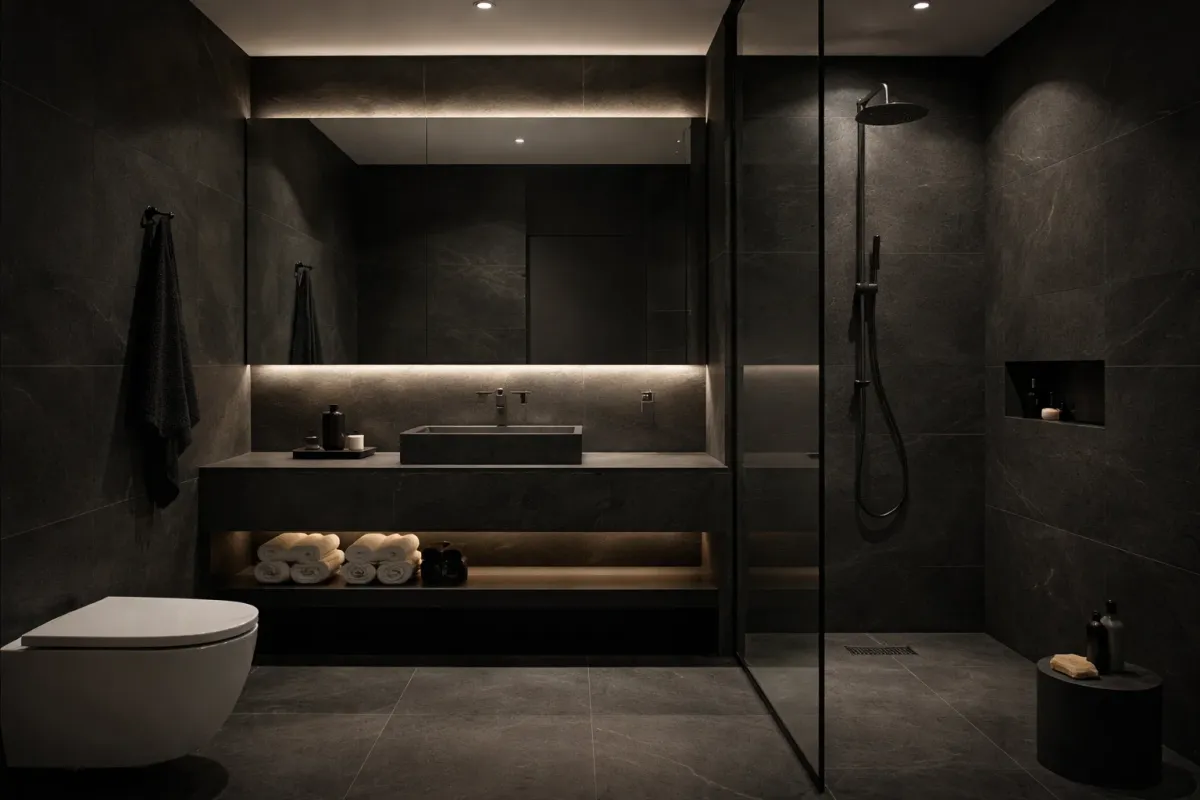
Premium tap brands sell wastes in matching finishes specifically for this reason. Crosswater offers click-clack wastes in six finishes (chrome, brushed brass, matt black, brushed stainless steel, brushed bronze and slate). Vado, JTP and Hudson Reed all provide finish-matched wastes. When buying taps, check whether a matching waste is included in the box. Some taps, especially budget ranges, include a free chrome waste that may not match if you purchased taps in matt black or brushed brass. Our guide to bathroom tap finishes covers the full range of finish options and their maintenance requirements.
Installation: What Goes Where
Basin waste installation is a straightforward job that takes 10 to 15 minutes with basic tools. You need an adjustable spanner, plumber’s putty (preferred over silicone), PTFE tape and the waste kit.
Step 1. Apply a thin ring of plumber’s putty around the underside of the waste flange. Plumber’s putty is preferred over silicone because silicone can attack plastic backnuts over time, causing them to crack. If using silicone, use neutral-cure (not acid-cure, which smells of vinegar and degrades plastic).
Step 2. Insert the waste body from above through the plughole. The flange sits on the basin surface with the putty forming a watertight seal.
Step 3. From below the basin, place the flat rubber washer against the underside of the basin around the waste body. Flat side faces upward against the basin.
Step 4. Thread the hexagonal backnut onto the waste body from below. Hand-tighten firmly, then give it a quarter-turn with an adjustable spanner. Have someone hold the waste from above to prevent it spinning as you tighten. Over-tightening is the most common installation mistake and cracks plastic backnuts.
Step 5. On slotted wastes, ensure the slot aligns with the overflow pipe connection point. Connect the overflow pipe to the slot using the push-fit or compression fitting provided.
Step 6. Wrap PTFE tape around the waste thread below the backnut before connecting the trap. Connect the trap (bottle, P or S type) and hand-tighten the compression nuts.
Step 7. Run water and check every joint for leaks. Tighten any dripping connections by a fraction of a turn.
Common Installation Mistakes
Cross-threading the backnut by forcing the plastic nut onto brass threads at an angle. This destroys the threads and guarantees leaks. Always start the nut by hand to ensure the threads engage correctly before using a spanner.
Not holding the waste from above while tightening below. The waste spins freely, breaking the putty seal and preventing a watertight fit.
Wrong slot type. Using an unslotted waste on a basin with overflow, or slotted on a basin without. Always check the basin before purchasing.
Dirty or wet surfaces. Putty and gaskets will not seal properly on surfaces with moisture or residue. Clean and dry the basin around the plughole before fitting.
Common Problems and How to Fix Them
Slow drainage is almost always hair and debris trapped in the waste or the trap below it. On click-clack wastes, remove the stopper (lift and twist anti-clockwise on most models) and clear the debris. On bottle traps, unscrew the bottom section and clean it out. A monthly clear prevents buildup.
Click-clack mechanism seized or stiff. Limescale around the spring mechanism, particularly common in hard water areas. Remove the stopper, soak the mechanism in white vinegar for an hour, clean all surfaces and apply silicone grease before reassembling. If the spring is broken, replace the entire waste.
Leaking from beneath the waste. The gaskets are compressed or degraded. Remove the backnut, replace both gaskets (above and below the basin), reapply plumber’s putty around the flange and retighten. If the backnut is cracked, replace it or replace the entire waste.
Basin will not hold water. On slotted wastes, water is seeping through the slot. This is normal in small amounts because the slot connects to the overflow. If excessive, check that the waste is the correct type for your basin. On click-clack wastes, debris between the stopper and the seat prevents a complete seal.
Water following the threads. Water can wick along the BSP thread of a slotted waste and drip from the backnut area. Wrap PTFE tape around the threads and ensure plumber’s putty creates a complete seal around the flange above.
When to Replace
Replace a basin waste when the spring mechanism fails and will not respond to cleaning, when the chrome finish is visibly corroded or pitted (common on budget wastes after three to five years), when the backnut has cracked and cannot be replaced separately, or when persistent leaking continues despite re-sealing. Replacement wastes are inexpensive and the job takes the same 10 to 15 minutes as the original installation. For bathroom plumbing issues beyond a simple waste replacement, our team can diagnose and fix the underlying problem.
Quick Comparison
| Waste Type | Mechanism | Drain Speed | Ease of Cleaning | UK Price Range | Best For |
|---|---|---|---|---|---|
| Click-clack | Push to open/close | Moderate | Good (removable top) | £5-£95 | Any basin, any style |
| Flip-top | Rotating disc | Fast | Moderate (fixed disc) | £12-£45 | Contemporary basins |
| Plug and chain | Manual plug | Fastest (full bore) | Excellent (plug lifts clear) | £8-£25 | Traditional/period basins |
| Free-flow | Always open | Continuous | Easy (no moving parts) | £8-£25 | Cloakrooms, commercial |
| Captive | Fixed plug on bar | Moderate | Good | £19-£65 | Commercial, public |
| Pop-up rod | Lever behind tap | Moderate | Difficult (linkage) | Included with tap | Premium mixer taps |
Frequently Asked Questions
How do I know if I need a slotted or unslotted basin waste?
What size basin waste do I need?
Why has my click-clack waste stopped working?
Should I use silicone or plumber's putty when fitting a basin waste?
Does my basin waste need to match my tap finish?
Which basin waste type is easiest to keep clean?
How much does a plumber charge to fit a basin waste?
Past Projects


Get a Free Quote
Book a free, no-obligation site survey. Call us on 07428 653 653 or request a callback.
Book Free SurveyOur Clients' Reviews

5/5

5/5

5/5

5/5

5/5
Based on 453+ verified reviews across all platforms
Related Articles

How Much Does a New Bathroom Cost in 2026? UK Pricing Guide
What a New Bathroom Really Costs in 2026 The question every homeowner asks before a bathroom renovation is the same. How much? The answer depends on what you want, what you have already, and how much of the existing layout you intend to keep. But the data from thousands of UK projects gives us a clear picture.
view this article Read more
Bathroom Renovation Guide: Every Stage From Start to Finish
What a Bathroom Renovation Actually Involves A complete bathroom renovation is one of the most rewarding home improvement projects you can undertake, but it is also one of the most misunderstood. Homeowners frequently picture the finished result without appreciating the sequence of skilled trades and carefully timed stages that make it happen. Every professional bathroom renovation follows a logical order, and understanding that order is the single most important thing you can do before your project begins.
view this article Read more
Bathroom Tiling Styles for Timeless Elegance
Why Layout Matters More Than the Tile Itself
view this article Read more
Quartz, Granite or Porcelain Worktops: Which Suits Your Kitchen?
The Three-Way Decision Most Kitchen Renovations Come Down To
view this article Read more
Ceramic Disc Technology in Bathroom Taps: How It Works
The Technology Inside Almost Every Modern Tap If your bathroom taps turn with a smooth quarter-turn rather than two and a half rotations, they contain ceramic disc cartridges. This technology has become so dominant that it is now difficult to buy a new tap in the UK that does not use it. Yet most homeowners have no idea how it works, why it fails, or what to do when a ceramic disc tap starts dripping.
view this article Read more

How to Choose an Electrical Bathroom Mirror
What an Electrical Bathroom Mirror Actually Does
view this article Read more
Best Bathroom and Toilet Brands in the UK
What Makes a Good Bathroom Brand The brand name on your toilet, basin or shower valve determines far more than the price tag. It affects how long the product lasts, how easy it is to get replacement parts in five or ten years, whether the finish holds up to daily cleaning, and how well the engineering behind the product actually performs in a real bathroom rather than a showroom.
view this article Read more
Bathroom Underfloor Heating: Types, Installation and What to Expect
Why Underfloor Heating Works So Well in Bathrooms Stepping onto a warm bathroom floor on a cold January morning is one of those small luxuries that, once experienced, becomes very difficult to give up. Underfloor heating has grown from a niche luxury into a genuinely practical heating solution for UK bathrooms, and the reasons go well beyond comfort.
view this article Read more
Tools Required for Bathroom Fitting: The Professional Trade Toolkit
The Professional Bathroom Fitter’s Complete Toolkit Every professional bathroom fitter knows that quality tools are an investment, not an expense. The difference between a flawless installation and a problematic one often comes down to having the right equipment for the job. Over years of bathroom fitting projects across Greater Manchester, we have refined our toolkit to include everything a trade professional needs on site.
view this article Read more
What You Need to Know Before Your Kitchen Renovation
The Gap Between Expectation and Reality A kitchen renovation is not a weekend project. The 2025 Houzz UK Kitchen Trends Study found that 71 percent of homeowners change their kitchen layout during a renovation, and the median spend rose 34 percent year on year to £17,500. Those numbers tell you two things. First, most people end up doing more work than they originally planned. Second, the costs are significant enough that poor preparation leads to genuinely painful surprises.
view this article Read more
Accessible Bathroom Design: UK Regulations, Grants and Guide
Why Accessible Bathroom Design Matters Around 16.8 million people in the United Kingdom have a disability. That is one in four of the population, according to the DWP Family Resources Survey 2023/24, and the figure has risen by 4.9 million over the past decade. Among adults over State Pension age, 45 percent are disabled. The most common impairment types for working-age adults are mental health conditions (48 percent) and mobility impairments (42 percent).
view this article Read more