
Kitchen Worktops: The Complete Material Comparison Guide
Complete comparison of 10 kitchen worktop materials covering quartz, granite, sintered stone, solid wood, marble, Corian and laminate with UK prices.
Why the Worktop Decision Matters More Than You Think
The worktop is the hardest-working surface in your kitchen. It takes direct heat, knife cuts, acidic spills, heavy impacts and constant wiping, day after day, for decades. Get the material wrong and you are either living with damage you cannot fix or replacing a surface that should have lasted the life of the kitchen.

The UK worktop market has expanded dramatically. Homeowners choosing a kitchen worktop today face at least ten distinct material categories, from laminate at £35 per square metre to sintered stone at £1,000 or more. Each performs differently against heat, scratches, stains and acids. Each carries different maintenance demands. And each affects your property’s resale value differently. This guide compares every material available in the UK market, with current prices, performance data and honest assessments of where each one falls short. For a focused comparison of the three stone options, our quartz vs granite vs porcelain guide covers those in greater depth.
Laminate
Laminate remains the most affordable kitchen worktop and accounts for a significant share of UK installations, particularly in rental properties and budget renovations. Modern laminate has improved enormously. Duropal, Bushboard Omega, Egger and Axiom (by Formica) all produce ranges that convincingly replicate stone, marble and wood at a fraction of the cost.
Standard laminate consists of a decorative surface bonded to a chipboard core, available in 22mm (contemporary square-edge) and 38mm (standard, with postformed rounded front edges). A 3 metre worktop costs £117 to £209 depending on finish. Supply and fit for a typical 5 linear metres runs £200 to £800.
The weakness is durability. Laminate cannot be repaired once damaged. Burns, deep scratches and chips are permanent. The chipboard core swells irreversibly when moisture penetrates through joints or cutouts, which is why sealing every edge and join is critical. Realistic lifespan is 10 to 15 years.
Compact laminate (Bushboard Zenith, Bushboard Evolve) is a different product entirely. At 12.5mm thick with no chipboard core, it is completely waterproof and dramatically more durable than standard laminate. It costs two to three times more but bridges the gap between budget laminate and entry-level stone.
Solid Wood
Oiled oak is the most popular timber worktop in the UK, followed by walnut, beech and iroko. Solid wood brings warmth and natural character that no engineered material can fully replicate. Each worktop is unique. Oak costs £130 to £200 per linear metre, walnut £200 to £350 and beech £100 to £160. Supply and fit for 5 linear metres runs £720 to £1,350.
The trade-off is maintenance. Solid wood needs oiling every three to six months during the first year and every six to twelve months thereafter. The water droplet test tells you when resealing is needed: if water no longer beads on the surface, it is time to oil. Wood is vulnerable to heat (hot pans leave burn marks), standing water (causes black staining) and knife cuts. The advantage over every stone material is that scratches, dents and stains can be sanded out and refinished indefinitely, giving solid wood a practical lifespan of 20 to 30 years or more.
FSC and PEFC certification is widely available from UK suppliers including Worktop Express and Top Worktops, confirming the timber comes from responsibly managed forests.
Engineered Quartz
Engineered quartz dominates the UK mid-to-premium worktop market. The 2025 Houzz UK Kitchen Trends Study found that 42 percent of homeowners chose quartz for their kitchen renovation, making it the single most popular material. Quartz worktops are manufactured from 90 to 94 percent ground natural quartz crystals bound with polymer resin, creating a surface that combines the visual appeal of natural stone with zero porosity and minimal maintenance.
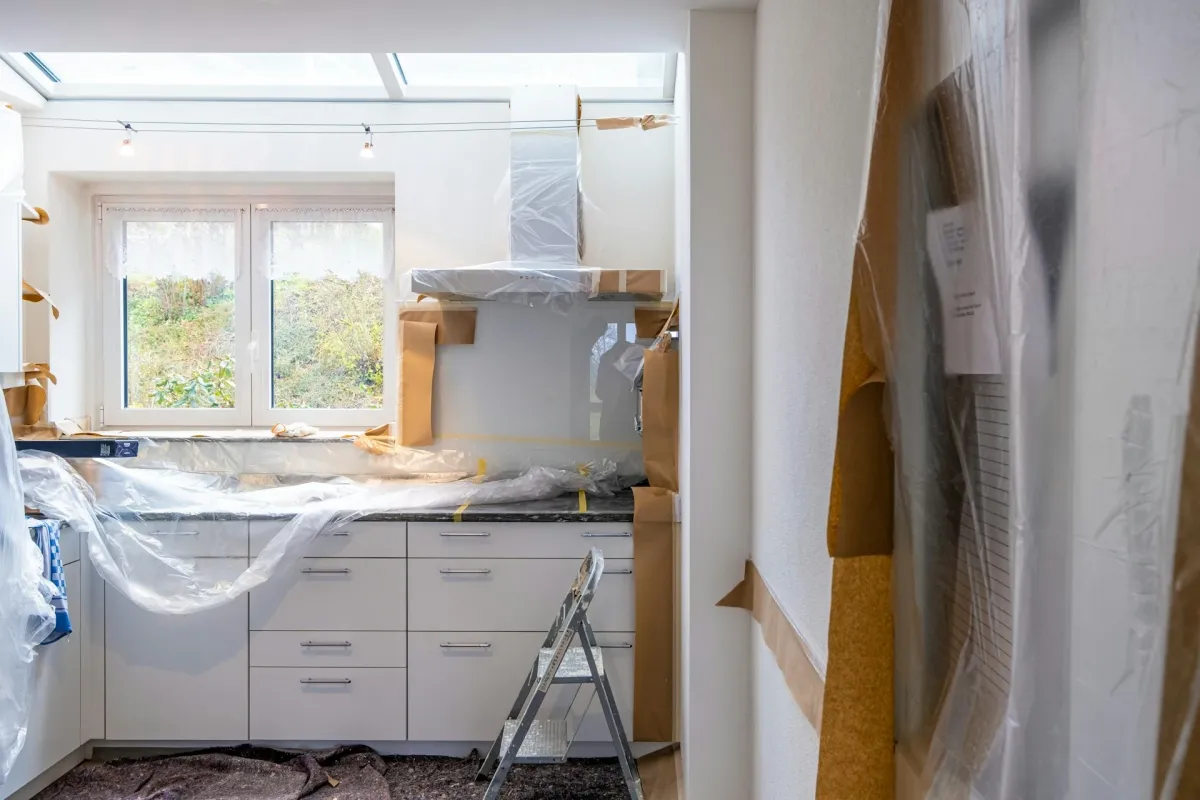
Prices range from £220 to £900 per square metre depending on the brand and finish. Compac starts from around £99 per linear metre for a 20mm polished slab. Caesarstone sits at £149 per linear metre at entry level. Silestone, the market leader, ranges from £449 per square metre installed upward. CRL Quartz offers £399 per square metre including template, fabrication and installation.
Quartz scores 7 on the Mohs hardness scale (the same as granite), resists staining from coffee, wine and turmeric, and never requires sealing. Most major brands offer 25-year transferable warranties. The Calacatta effect (white with grey or gold veining mimicking Italian marble) is the single most popular worktop design in the UK right now.
The main limitation is heat. Quartz tolerates temperatures up to around 150 degrees Celsius, but the resin can discolour under sustained heat from a pan placed directly on the surface. Trivets are not optional. For a deeper look at quartz performance and how it compares to natural stone, see our kitchen trends guide which covers the latest Houzz data. If you are considering quartz for your kitchen, our quartz worktop fitting service covers precision templating, CNC fabrication and seamless installation.
Granite
Granite was the premium worktop of choice for two decades before quartz overtook it. It remains a strong material with genuine advantages. Every slab is naturally unique, which some homeowners value over quartz’s engineered consistency. Granite handles heat better than quartz (hot pans can go directly on the surface, though thermal shock is theoretically possible in extreme cases) and its Mohs hardness of 6 to 7 makes it virtually scratchproof under normal kitchen use.
Prices range from £250 to £450 or more per square metre before installation. Bianco Sardo granite starts from around £199 per linear metre and Absolute Black from £249 per linear metre. Supply and fit for 5 linear metres runs £1,610 to £2,850.
The key disadvantage is porosity. Granite must be sealed every 6 to 12 months with an impregnating stone sealer. If the seal deteriorates, liquids can penetrate and stain the stone permanently. Weight is also a consideration: a 30mm granite slab weighs approximately 97.5 kilograms per square metre, so base cabinets must be level, rigid and properly connected. Granite’s UK market share has declined as quartz has matured, but homeowners who want the authenticity of natural stone and are willing to maintain it still find granite a compelling choice.
Sintered Stone
Sintered stone is the fastest-growing material in the premium segment. Manufactured by fusing natural minerals under extreme heat (above 1,200 degrees Celsius) and pressure (400 bar or more), it recreates the geological metamorphic process in hours. Dekton (by Cosentino), Neolith and Lapitec are the leading brands in the UK.
The performance data is remarkable. Dekton withstands temperatures up to 300 degrees Celsius. It is virtually unscratchable under normal kitchen use, completely non-porous, UV-resistant (suitable for outdoor kitchens) and offers five times the flexural strength of granite. Large slab sizes (up to 3,200 by 1,600 millimetres) allow seamless islands with fewer joins. Waterfall edges, where the material flows from the worktop down the sides of an island, are a defining design detail for sintered stone.
Prices reflect the performance. Dekton ranges from £250 to £1,000 per square metre, typically landing at £450 to £600 per square metre for popular finishes. Supply and fit for 5 linear metres runs £2,150 to £3,900. The material carries a 25-year warranty.
The drawbacks are brittleness on impact (edges can chip if struck with force, and repairs are difficult) and a more limited colour range than quartz, though this is expanding rapidly. Not all fabricators have experience working with sintered stone, which can affect availability and pricing outside major cities. Our kitchen worktop replacement service includes Dekton and Neolith options for homeowners considering the upgrade.
Marble
Marble is the most beautiful kitchen worktop material. The depth, luminosity and unique veining of Carrara and Calacatta marble create a visual quality that no engineered material has fully replicated. Carrara marble starts from £239 per linear metre, while Calacatta (the most expensive natural stone) ranges from £795 to £1,500 per linear metre.
It is also the least practical for a working kitchen. Marble is calcium carbonate, which reacts chemically with acids including lemon juice, vinegar, wine and tomato sauce. This causes etching (permanent dull spots where the polish has been consumed), which no amount of sealing can prevent. Sealing reduces liquid staining but does nothing against acid etching. Marble also scratches more easily than granite or quartz, requires resealing every 6 to 12 months and will show visible wear sooner than any stone alternative.
Some homeowners embrace the patina as part of marble’s character. For those who want the look without the compromise, Calacatta-effect quartz delivers the aesthetic with zero maintenance. For those committed to real marble, it works best on a butler’s pantry, utility room or display island top rather than the main food preparation area.
Solid Surface
Solid surface materials (Corian by DuPont, Hi-MACS by LG, Staron by Samsung) occupy a distinctive niche. They are the only worktop material that can be fabricated with genuinely invisible joins, thermoformed into curves and repaired to new condition by sanding out scratches and burns. These properties make solid surface the standard in healthcare, laboratory and commercial food service environments where hygiene and seamless surfaces are essential.
Prices range from £300 to £450 per square metre, with an integrated Corian sink adding £600 to £1,600. Supply and fit for 5 linear metres runs £1,200 to £1,850. The main weakness is heat resistance. Solid surface scorches if a hot pan is placed directly on it, and while the damage can be sanded out, prevention is better. Scratch resistance is also lower than stone, though again the repairability compensates. Lifespan is 20 to 30 years, extended significantly by the ability to refinish.
Porcelain Slab
Porcelain slab worktops (Sapienstone, Laminam) are relatively new to the UK residential market but growing rapidly. Fired at temperatures above 1,200 degrees Celsius, they offer exceptional heat resistance (Sapienstone withstands up to 650 degrees), complete non-porosity and very high scratch resistance. Available in 6mm, 12mm and 20mm thicknesses, porcelain slabs are lighter than granite, making them suitable for cantilevered installations and overlay applications.
Sapienstone starts from around £499 per square metre including template, fabrication and installation. Supply and fit for 5 linear metres runs £2,150 to £3,900. The main limitation in the UK is fabricator availability. Fewer workshops have the specialist equipment for porcelain than for quartz or granite, which can affect lead times and pricing outside London and major cities.
Stainless Steel
Stainless steel is the gold standard for food hygiene. Every commercial kitchen and food production facility in the UK uses it, and for good reason. It is 100 percent non-porous, cannot harbour bacteria, withstands any temperature a domestic hob can produce, and is fully recyclable. Made-to-measure stainless steel worktops cost £300 to £450 per linear metre. Supply and fit for 5 linear metres runs £700 to £1,300.
The drawbacks are cosmetic. Stainless steel scratches visibly (brushed finishes hide this better than polished), shows fingerprints constantly, creates a metallic noise when objects are placed on it, and has a cold, industrial aesthetic that divides opinion in a domestic setting. For homeowners who cook seriously and value hygiene above all else, stainless steel is hard to beat. For most households, it suits an island prep area paired with a warmer material on the perimeter worktops.
Sustainable Options
Resilica, based in Hastings, manufactures worktops from 85 percent recycled post-consumer glass, diverting approximately 700 bottles per average kitchen from landfill. Each piece is handmade to order in the UK with zero crystalline silica and FSC certification. Prices land in the premium range at £700 to £1,100 per square metre installed.
Silestone’s HybriQ+ technology uses a minimum of 20 percent recycled glass content, 100 percent renewable energy in manufacture and 99 percent recycled water, available through all Silestone UK distributors at standard quartz pricing. Paper composite worktops (Richlite, PaperStone) use FSC-certified recycled paper bonded with plant-based resins, available through specialist UK suppliers at £500 to £900 per square metre.
The Comparison at a Glance
| Material | Supply per m² | Supply + Fit (5m) | Heat | Scratch | Maintenance | Lifespan | Sealing |
|---|---|---|---|---|---|---|---|
| Laminate | £35-£150 | £200-£800 | Low | Moderate | Very low | 10-15 years | No |
| Solid Wood | £100-£350 | £720-£1,350 | Low | Moderate | High | 20-30+ years | Oil 2-4x/year |
| Quartz | £220-£900 | £1,260-£4,200 | Moderate | High | Very low | 25+ years | No |
| Granite | £250-£450+ | £1,610-£2,850 | High | High | Low-moderate | 50-100+ years | Every 6-12 months |
| Sintered Stone | £300-£1,000 | £2,150-£3,900 | Very high | Very high | Very low | 25+ years | No |
| Marble | £300-£1,500 | £1,700-£2,550 | Moderate | Low-moderate | High | 20+ years | Every 6-12 months |
| Solid Surface | £300-£450 | £1,200-£1,850 | Low | Low-moderate | Low | 20-30 years | No |
| Porcelain Slab | £450-£800 | £2,150-£3,900 | Very high | Very high | Very low | 25+ years | No |
| Stainless Steel | £150-£300 | £700-£1,300 | Very high | Low | Low | 30+ years | No |
| Recycled Glass | £700-£1,100 | Bespoke | Moderate | Moderate | Low | 20+ years | Varies |
Edge Profiles
The edge profile is often overlooked but changes both the appearance and safety of the worktop. Pencil round (a gentle radius on the top edge) is the most popular profile in UK kitchens and suits both contemporary and traditional settings. Square or eased edges suit handleless, minimalist designs. Ogee (an S-shaped decorative curve) works in traditional kitchens. A waterfall edge, where the worktop material continues vertically down the side of an island, is the premium contemporary option, adding £2,000 to £5,000 for quartz and £3,000 to £8,000 for sintered stone or marble.
How Templating Works
Stone, quartz, sintered stone and porcelain worktops cannot be measured from drawings. They are templated on site after every base cabinet is fitted and levelled, because walls are never perfectly straight and cabinets may shift by millimetres during installation.
A trained technician visits the property, typically for one to three hours, using laser digital templating equipment to capture the exact dimensions, angles and curves. Sink type, hob cutout dimensions, tap positions, drainer grooves, upstand heights and join locations are all confirmed during this appointment. The digital template transfers directly to CNC cutting machinery at the fabrication workshop. Fabrication takes 5 to 10 working days for stone and quartz. Installation is typically booked one to two weeks after the template visit.
The critical rule is that cabinets must not be moved after templating. Even a 2 to 3 millimetre shift makes a rigid stone slab impossible to fit correctly. For a detailed look at the worktop installation process, our fitting kitchen worktops guide covers the full workflow from template to final connection.
Which Material Adds the Most Property Value
Kitchen renovations add on average 5.5 percent to UK property value, and the worktop material plays a disproportionate role in the buyer’s first impression. Estate agents consistently report that quartz and granite worktops are perceived as high-end and have a universally positive effect on perceived kitchen quality. Sintered stone is increasingly recognised as ultra-premium by design-conscious buyers. Solid wood appeals to buyers seeking warmth and character, provided it has been well maintained. Standard laminate has a neutral to negative effect on perceived value. Budget laminate can actively reduce the impression of quality, while compact laminate fares better. Our kitchen supply and fit service can advise on material choices that balance your budget with long-term value.
Frequently Asked Questions
What is the most popular kitchen worktop material in the UK?
Which kitchen worktop is most heat resistant?
How much does a quartz worktop cost in the UK?
Does granite need sealing?
Can I put hot pans on a quartz worktop?
What is sintered stone?
Is marble practical for a kitchen worktop?
Past Projects


Get a Free Quote
Book a free, no-obligation site survey. Call us on 07428 653 653 or request a callback.
Book Free SurveyOur Clients' Reviews

5/5

5/5

5/5

5/5

5/5
Based on 453+ verified reviews across all platforms
Related Articles


How Much Does a New Bathroom Cost in 2026? UK Pricing Guide
What a New Bathroom Really Costs in 2026 The question every homeowner asks before a bathroom renovation is the same. How much? The answer depends on what you want, what you have already, and how much of the existing layout you intend to keep. But the data from thousands of UK projects gives us a clear picture.
view this article Read more
Bathroom Renovation Guide: Every Stage From Start to Finish
What a Bathroom Renovation Actually Involves A complete bathroom renovation is one of the most rewarding home improvement projects you can undertake, but it is also one of the most misunderstood. Homeowners frequently picture the finished result without appreciating the sequence of skilled trades and carefully timed stages that make it happen. Every professional bathroom renovation follows a logical order, and understanding that order is the single most important thing you can do before your project begins.
view this article Read more
Bathroom Tiling Styles for Timeless Elegance
Why Layout Matters More Than the Tile Itself
view this article Read more
Quartz, Granite or Porcelain Worktops: Which Suits Your Kitchen?
The Three-Way Decision Most Kitchen Renovations Come Down To
view this article Read more
Ceramic Disc Technology in Bathroom Taps: How It Works
The Technology Inside Almost Every Modern Tap If your bathroom taps turn with a smooth quarter-turn rather than two and a half rotations, they contain ceramic disc cartridges. This technology has become so dominant that it is now difficult to buy a new tap in the UK that does not use it. Yet most homeowners have no idea how it works, why it fails, or what to do when a ceramic disc tap starts dripping.
view this article Read more
How to Choose an Electrical Bathroom Mirror
What an Electrical Bathroom Mirror Actually Does
view this article Read more
Best Bathroom and Toilet Brands in the UK
What Makes a Good Bathroom Brand The brand name on your toilet, basin or shower valve determines far more than the price tag. It affects how long the product lasts, how easy it is to get replacement parts in five or ten years, whether the finish holds up to daily cleaning, and how well the engineering behind the product actually performs in a real bathroom rather than a showroom.
view this article Read more
Bathroom Underfloor Heating: Types, Installation and What to Expect
Why Underfloor Heating Works So Well in Bathrooms Stepping onto a warm bathroom floor on a cold January morning is one of those small luxuries that, once experienced, becomes very difficult to give up. Underfloor heating has grown from a niche luxury into a genuinely practical heating solution for UK bathrooms, and the reasons go well beyond comfort.
view this article Read more
Tools Required for Bathroom Fitting: The Professional Trade Toolkit
The Professional Bathroom Fitter’s Complete Toolkit Every professional bathroom fitter knows that quality tools are an investment, not an expense. The difference between a flawless installation and a problematic one often comes down to having the right equipment for the job. Over years of bathroom fitting projects across Greater Manchester, we have refined our toolkit to include everything a trade professional needs on site.
view this article Read more
What You Need to Know Before Your Kitchen Renovation
The Gap Between Expectation and Reality A kitchen renovation is not a weekend project. The 2025 Houzz UK Kitchen Trends Study found that 71 percent of homeowners change their kitchen layout during a renovation, and the median spend rose 34 percent year on year to £17,500. Those numbers tell you two things. First, most people end up doing more work than they originally planned. Second, the costs are significant enough that poor preparation leads to genuinely painful surprises.
view this article Read more
Accessible Bathroom Design: UK Regulations, Grants and Guide
Why Accessible Bathroom Design Matters Around 16.8 million people in the United Kingdom have a disability. That is one in four of the population, according to the DWP Family Resources Survey 2023/24, and the figure has risen by 4.9 million over the past decade. Among adults over State Pension age, 45 percent are disabled. The most common impairment types for working-age adults are mental health conditions (48 percent) and mobility impairments (42 percent).
view this article Read more