
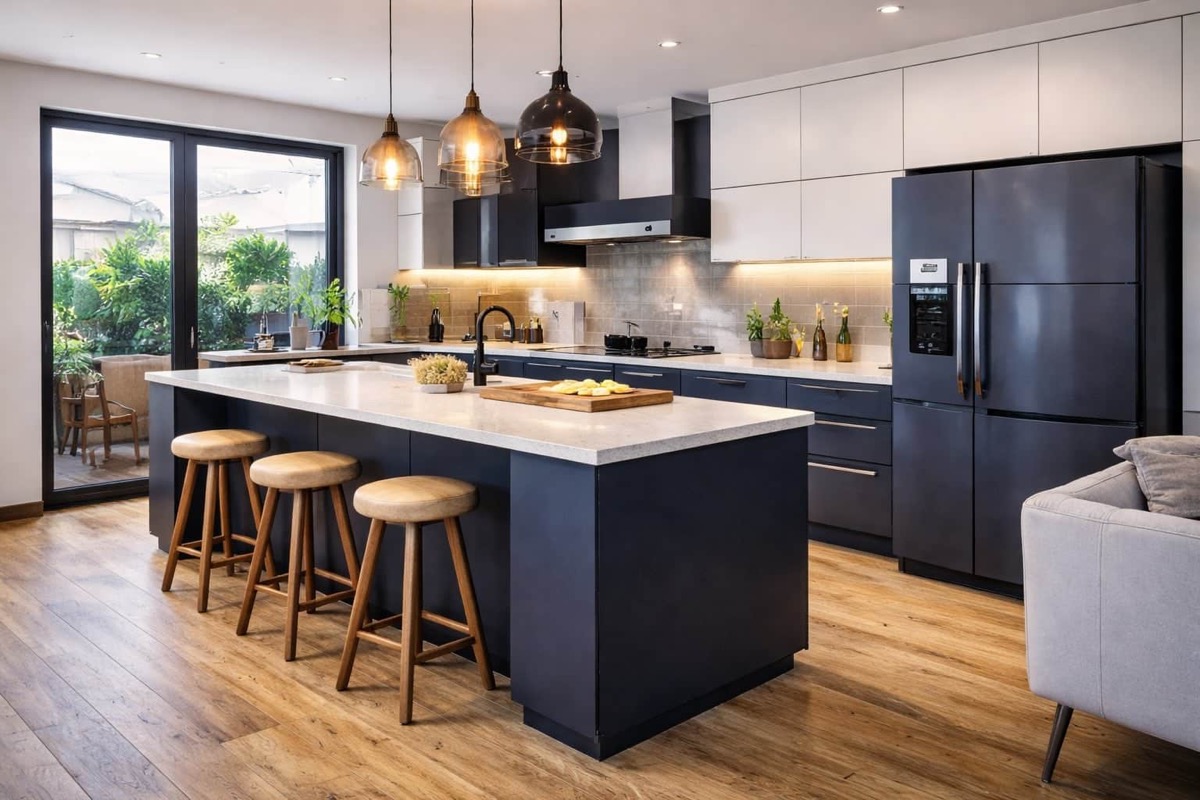
How to Plan a Kitchen Renovation: A Practical UK Guide
Kitchen renovation planning guide: styles, worktops, carcasses, showroom tips, structural costs and budgeting advice from Manchester kitchen fitters.
What Separates a Good Kitchen Renovation From a Costly Mistake

Renovating a kitchen is a construction project, a logistics exercise and a budgeting challenge rolled into one. The homeowners who get the best results are not the ones who spend the most. They are the ones who plan properly, avoid hidden traps and work with experienced kitchen fitters who understand what matters behind the doors and panels.
This guide walks through what to do before you step into a showroom, what to look for when you are there, and how to protect your budget throughout the process. For a closer look at the current direction of kitchen design, our kitchen trends article covers what is genuinely worth considering and what is already fading.
Before You Visit a Showroom: Do Your Homework
The showroom is where decisions feel exciting. Your homework is what prevents expensive mistakes.
Choosing Your Kitchen Style
The style sets the tone, but it also affects cost, durability and long-term satisfaction.
| Style | Look and Feel | Best For | Pros | Cons |
|---|---|---|---|---|
| Modern / Handleless | Sleek, flat, minimalist | New builds, contemporary homes | Easy cleaning, modern aesthetic | Fingerprints on gloss, trend-sensitive |
| Shaker | Framed, classic, timeless | Period or family homes | Never goes out of style, versatile | Slightly harder to clean grooves |
| Traditional | Decorative, ornate | Heritage homes | Elegant appearance | Higher cost, more detailing |
| Industrial | Raw textures, metal accents | Urban interiors | Unique character | Not to everyone’s taste |
| Scandinavian | Light wood, clean lines | Small kitchens | Bright, airy feel | Can look plain if overdone |
If you own a period property, our guide to Victorian kitchens covers how to blend traditional character with modern functionality without compromising either.
Surface Finishes and Textures
- Wood textures are warm and forgiving, hiding marks well
- Matt finishes are modern and soft, less fingerprint-prone
- High gloss is reflective and dramatic but shows every mark
- Handleless is sleek but needs precision fitting
- Handles are practical, customisable and easier to replace later
Trends change. Choose something you will still enjoy in ten years, not just what is fashionable right now.
Kitchen Carcasses: The Hidden Structure That Matters
Carcasses are the skeleton of your kitchen. Cheap carcasses mean a short kitchen lifespan.
| Feature | Recommended Standard | Why It Matters |
|---|---|---|
| Side panel thickness | 18mm minimum | Prevents bowing and sagging |
| Back panel thickness | Solid 18mm preferred | Structural strength |
| Size | Standard modular sizes | Easy future replacement |
| Build type | Assembled preferred | Faster, stronger installation |
Avoid non-standard carcass sizes. If doors ever need replacing in eight to twelve years, mismatched sizes make upgrades difficult and expensive.
Flat Pack vs Assembled
Flat pack is cheaper upfront, but kitchen installers will charge assembly labour on top. Once you factor in the time and the risk of alignment errors, the cost difference often narrows significantly. Assembled carcasses arrive square and true, ready for immediate installation.
Kitchen Front Panels (Doors and Drawer Fronts)
This is where most of your budget goes visually.
| Material | Advantages | Disadvantages |
|---|---|---|
| MDF wrapped | Affordable, smooth finish | Can chip if poor quality |
| Painted MDF | Premium look | Can mark over time |
| Veneer | Natural wood feel | Sensitive to moisture |
| Solid wood | Durable, repairable | Expensive, can warp |
| Laminate | Very durable | Less premium appearance |
Ask what the core material is. A door’s finish means nothing if the internal structure is weak.
Worktops: The Workhorse Surface

Worktops are daily-use surfaces. Do not choose on looks alone. Our detailed worktop comparison guide covers quartz, granite and porcelain in depth, but here is a quick overview of all the main options.
| Type | Pros | Cons |
|---|---|---|
| Laminate | Cheapest, wide choice | Can chip, less durable |
| Quartz | Hygienic, stain resistant, long-lasting | Higher upfront cost |
| Granite | Natural stone beauty | Requires sealing |
| Dekton | Ultra durable | Expensive |
| Ceramic | Heat resistant | Brittle edges |
| Solid wood | Warm look | High maintenance |
Quartz suppliers usually include templating and fitting in their price. When laminate supply plus separate installation labour is added up, quartz often ends up costing a similar amount overall, with far better cleaning performance and longevity. From a hygiene and durability perspective, quartz wins for most households. For guidance on fitting kitchen worktops and what the installation process involves, that companion article covers the practical side.
Structural Changes: The Biggest Budget Trap
Opening walls and moving doors sounds exciting. It is also where budgets explode.
Why structural work increases cost:
- Structural engineer assessment required
- RSJ beam installation plus Building Regulations sign-off
- Typical cost: £2,500 to £7,500 plus VAT
Door and Window Relocation Costs
| Item | Typical Cost |
|---|---|
| PVC double glazed window | £350 to £450 supply |
| PVC panel door | From £450 |
| Composite door | From £850 |
| Aluminium options | Up to three times higher |
Hidden Material Costs
For a standard 10 to 12 square metre kitchen, expect to spend £2,000 to £2,500 on materials alone: damp proofing kit, plasterboards, surface protection, brick repointing, membrane and clips. That is before replastering, ceiling levelling, flooring correction, brick repairs and joist fixes.
Large structural changes also mean larger skip hire. Two skips may be needed for a bigger kitchen. Add pipework relocation, heating system alterations, electrical rewiring and floor strengthening to the list of costs that homeowners frequently overlook. Our article on avoiding costly renovation mistakes covers the most common hidden expenses across all renovation types.
The recommendation is clear: reconsider structural changes unless they are absolutely necessary. You can save thousands.
Finishing Touches
These complete the look and affect daily usability:
- Splashback tiling behind worktops and hobs
- New flooring to tie the room together
- Under-cupboard lighting for task illumination
- Feature lighting zones for atmosphere
Lighting in particular transforms a kitchen. It is one of the most cost-effective upgrades and one of the most frequently skipped.
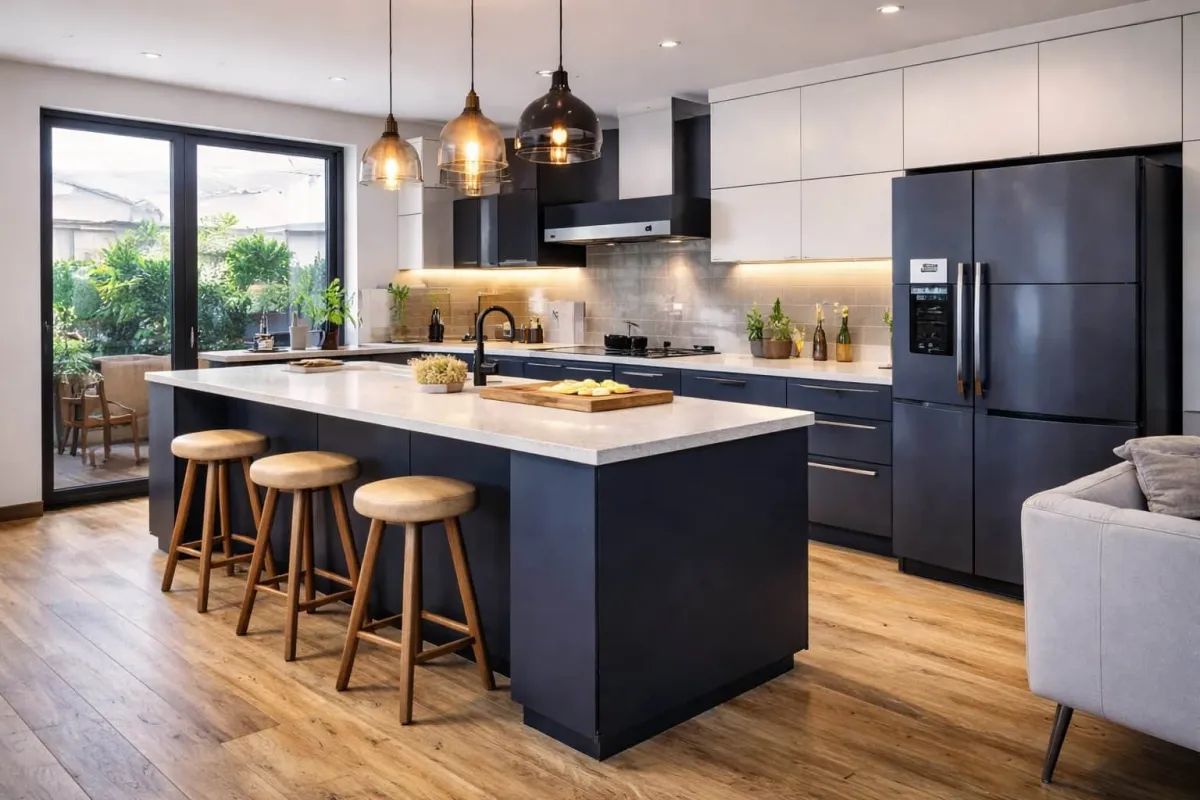
What to Do Inside a Kitchen Showroom
Showrooms are sales environments. Go in informed.
Questions to Ask
| Question | Why It Matters |
|---|---|
| Flat pack or assembled? | Affects labour cost |
| Carcass thickness? | Must be 18mm or more |
| Front material? | Determines durability |
| Plastic caps visible? | Indicates cheaper mass production |
| Worktop type included? | Hidden upgrade costs |
| Payment options? | 0% finance often hides 40 to 60 per cent margins |
| Delivery time? | Long waits delay replacements |
| Appliances bundled? | Usually overpriced |
| Installation included? | Often dry-fit only |
| Warranty details? | Many exclusions exist |
Dry-fit installation means cabinets and panels installed but no plumbing, gas or electrics connected. Always request a full breakdown of what is and is not included.
Showroom Tips
Order sinks, taps and handles yourself rather than through the showroom. Avoid pull-out taps if longevity is a priority, as the pull-out mechanism is a common failure point over time. Double-check showroom designs with your actual kitchen fitter before committing. Always negotiate price, because major retailers carry 30 to 60 per cent margins. Compare multiple offers, and ask installers what they think of the product quality before you buy.
You can download our Kitchen Showroom Checklist to take with you on showroom visits.
General Advice for a Successful Renovation
Avoid structural changes where possible. Inspect older properties for hidden issues like damp, rotten joists and deteriorating brickwork. Keep the design simple and practical. Consider quartz worktops for long-term value. Check existing wiring before choosing appliances, because rewiring is extremely costly if it turns out to be necessary.
Ensure your builder or installer has public liability insurance and sign a clear written contract that specifies scope, materials, payment schedule and completion date. For advice on what to look for when hiring professional kitchen fitters, including how to evaluate quotes and what qualifications matter, that guide covers the full hiring process.
The best kitchen renovations are not the most expensive. They are the best planned. Treat your renovation like a project, not a shopping trip, and you will get a kitchen that works beautifully for decades. When you are ready to discuss your project, get in touch with us for a free, no-obligation quote. Our kitchen remodelling service covers the full programme of work from first fix to snagging.
Frequently Asked Questions
How much does a kitchen renovation cost in the UK?
Should I buy flat pack or assembled kitchen carcasses?
Is quartz worktop worth the extra cost over laminate?
How long does a kitchen renovation take?
What does dry-fit installation mean?
Do I need Building Regulations approval for a kitchen renovation?
Should I do structural changes to open up my kitchen?
Past Projects


Get a Free Quote
Book a free, no-obligation site survey. Call us on +44 7428 653 653 or request a callback.
Book Free SurveyOur Clients' Reviews

5/5

5/5

5/5

5/5
Based on 453+ verified reviews across all platforms
Related Articles

Working With Kitchen Fitters: Costs, Process and Getting It Right
What a Kitchen Fitter Actually Does A kitchen fitter is a specialist carpenter or joiner who takes a designed kitchen layout and physically builds it in your home.
view this article Read more
Smart Toilets and Bidet Toilets: The Future of UK Bathrooms
Smart toilets have been a staple in Japanese and South Korean households for decades, but they are now making serious inroads into British bathrooms.
view this article Read more
Wall-Hung Toilets: Are They Worth It? Complete UK Review
Wall-hung toilets have been standard in much of continental Europe for decades, but they have taken longer to gain traction in British homes.
view this article Read more
Best Close-Coupled Toilets for UK Homes: 2026 Buyer's Guide
If you are planning a bathroom renovation or simply replacing your old toilet, there is a very good chance you will end up choosing a close-coupled model.
view this article Read more
Best Back-to-Wall Toilets for Small Bathrooms
If you have a small bathroom, you already know that every centimetre counts. Choosing the right toilet can make or break your layout, and for compact British bathrooms, back-to-wall (BTW) toilets are quickly becoming the go-to option.
view this article Read more
Rimless Toilets vs Standard: Which Should You Choose?
If you have been shopping for a new toilet recently, you have almost certainly noticed that “rimless” has become one of the biggest selling points in the market.
view this article Read more
GROHE Grohtherm 800 Thermostatic Shower Mixer Review
An Installer’s Honest Assessment We fit dozens of thermostatic shower mixers every year across Greater Manchester bathrooms and shower rooms. Some arrive in impressive packaging and disappoint within months.
view this article Read more
Top 10 Toilets You Can Buy in the UK | Expert Picks
Choosing the Right Toilet for Your Bathroom Choosing a toilet might not seem like a momentous decision, but considering you will use it several times a day for years, getting it right matters more than most people realise.
view this article Read more