
Guide to Bathroom Basin Mixers and Top Brands
Every basin mixer type compared for UK bathrooms. Mono, tall, wall-mounted, three-hole and sensor taps with brand picks and sizing.
Why the Basin Mixer Matters More Than You Think
Walk into any bathroom showroom and you will find hundreds of taps, each promising something slightly different. The reality is that most homeowners pick their basin mixer based on looks alone, then discover it sits too low for the basin, sprays water over the edge, or needs a water pressure system the house cannot provide. The mixer is where your hands go twenty or thirty times a day. It deserves the same thought you give to the basin itself.

This guide breaks down every basin mixer type sold in the UK, explains which basins and plumbing systems they suit, and compares the brands worth considering at each price point. If you are planning a bathroom remodelling project in Greater Manchester, understanding these differences before you visit a showroom will save time, money, and a good deal of frustration.
For a broader look at water pressure, valve technology, and finish selection, see our complete bathroom taps guide. This article focuses specifically on basin mixer configurations, sizing, and the brands that make them.
Basin Mixer Types Explained
Every basin mixer falls into one of several configurations, each designed for a specific basin type and installation scenario. Choosing the wrong configuration is one of the most common fitting mistakes, so let us start with the fundamentals.
Mono Basin Mixer
The mono mixer is the single most popular tap type in UK bathrooms. One lever or handle controls both flow and temperature through a single body that sits in a single tap hole. They work with practically every inset, semi-recessed, and vanity-mounted basin on the market.
Standard mono mixers have a spout height of 100 to 180 mm from the base to the water outlet. That range suits any basin where the rim sits flush with or slightly above the worktop. Most come with a single 35 mm tap hole requirement and include the fixings needed for basins up to 40 mm thick.
UK brand picks at every budget:
- Budget (£40-70): Bristan Clio, Grohe BauEdge, Ideal Standard Ceraflex. All WRAS approved, ceramic disc cartridges, solid brass bodies with chrome finish. The Grohe BauEdge is particularly good value with its SilkMove cartridge.
- Mid-range (£80-150): Roper Rhodes Aim, Crosswater Design+, Hansgrohe Focus 100. These add features like pop-up waste included, longer warranties (typically 10-15 years), and smoother lever action.
- Premium (£150-300+): Crosswater MPRO, Hansgrohe Metris, Grohe Essence. Expect PVD finish options (brushed brass, matt black, gunmetal), EcoSmart water-saving aerators, and the kind of weighty, precision-engineered feel that justifies the price tag.
Tall Basin Mixer
If you have a countertop or vessel basin (the kind that sits on top of the worktop rather than dropping into it), a standard mono mixer will not reach over the rim. Tall basin mixers solve this with an extended body, typically 250 to 350 mm from base to spout outlet.
Getting the height right is critical. Measure from the worktop surface to the top of your basin rim, then add at least 80 mm. A spout that barely clears the rim creates an uncomfortably shallow washing angle and splashes water sideways. Too tall, and the water falls from such a height that it sprays on impact.
Spout reach matters just as much as height. The water stream should land roughly in the centre of the basin bowl. For round vessel basins, a reach of 120 to 150 mm is usually right. For oval or rectangular countertop basins, you may need 150 to 180 mm.
UK brand picks:
- Crosswater MPRO Tall (£160-200): Clean cylindrical design, available in six finishes including brushed brass and matt black. 277 mm height.
- Grohe Essence XL (£180-220): Smooth L-shaped spout, EcoJoy water saving, StarLight chrome or SuperSteel finishes. 310 mm height.
- Hansgrohe Talis E 240 (£150-190): ComfortZone 240 mm height, QuickClean anti-limescale aerator, AirPower technology that mixes air into the water stream for a softer feel.
- Roper Rhodes Hydra Tall (£120-160): Good mid-range option with a click waste included and 10-year guarantee.
Wall-Mounted Basin Mixer
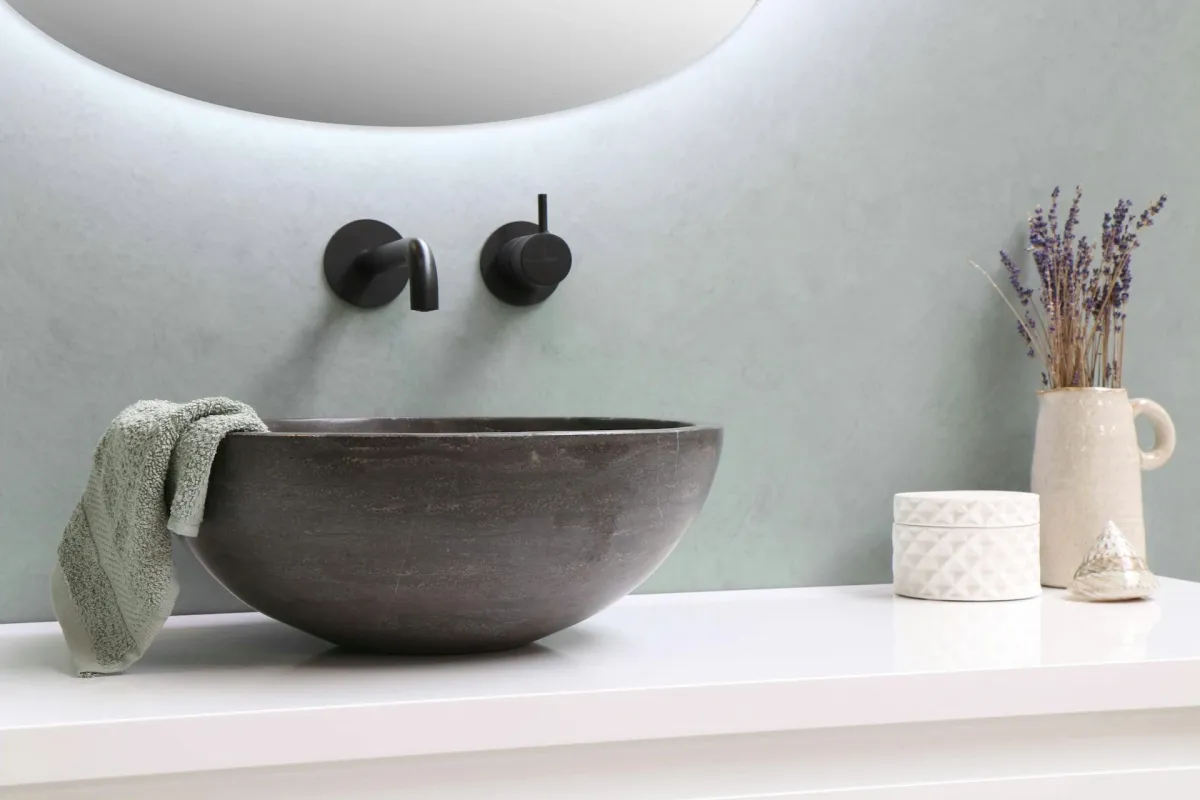
Wall-mounted mixers create the cleanest possible look because there is nothing on the basin or worktop except the bowl itself. The tap body hides behind the wall, with only the spout and handle (or handles) protruding from the tiled surface.
The trade-off is installation complexity. You need either a stud wall with enough depth for the concealed valve body (usually 60-80 mm), or a purpose-built boxing-out behind the tiles. The pipework must be precisely positioned before tiling, which means the basin height and position need to be fixed early in the bathroom fitting process.
Spout projection is the key measurement. It must reach from the wall face to the centre of the basin bowl. Too short and the water hits the near edge. Too long and it overshoots the far side. Most wall-mounted spouts project 150 to 220 mm from the wall, but measure your specific basin position carefully.
UK brand picks:
- Crosswater MPRO Wall-Mounted (£200-280): Separate valve and spout, available in all MPRO finishes. The concealed body is sold separately, which allows flexibility.
- Hansgrohe Metropol (£250+): Zero-handle design with lever on the spout body. Distinctive sculptural appearance.
- Grohe Essence Wall-Mounted (£180-240): Includes concealed body, joystick cartridge, EcoJoy flow limiter.
- Burlington Claremont Wall (£160-220): For traditional bathrooms. Crosshead handles with a curved spout that works beautifully with period-style basins.
Three-Hole Basin Mixer
The classic British arrangement: two handles flanking a central spout, each mounted in its own tap hole. Three-hole mixers suit basins with a standard three-hole drilling (typically on 100 mm or 200 mm centres, known as “mini” and “standard” spacing respectively).
They work particularly well in traditional and period-style bathrooms where the symmetry of two handles adds visual weight. The practical advantage is separate temperature control. Rather than finding the right position on a single lever, you adjust hot and cold independently and can set them to a preferred position.
UK brand picks:
- Burlington Claremont (£200-250): The benchmark for traditional three-hole mixers. Available with crosshead or lever handles in chrome, nickel, or gold finishes.
- Crosswater Belgravia (£180-240): Edwardian-inspired design with ceramic indices. Black or white lever options.
- Hudson Reed Topaz (£80-120): Budget-friendly traditional option with crosshead handles. Good value for the aesthetic.
- Vado Elements (£150-200): More contemporary three-hole option for those who want the handle arrangement without a period look.
Mini Basin Mixer
Cloakroom basins are typically 250 to 400 mm wide, which means a standard mono mixer can look comically oversized. Mini basin mixers scale everything down: shorter spout (80 to 120 mm height), narrower body, and a lever proportioned to suit the smaller space.
Do not confuse small with cheap. A cloakroom mixer needs the same quality cartridge and construction as its full-size counterpart because it gets used just as often, sometimes more.
UK brand picks:
- Grohe Euroeco Cosmopolitan (£50-70): Compact, reliable, WRAS approved. Ideal for rental properties and budget cloakrooms.
- Crosswater Design Mini (£80-100): Clean square lines in a compact package. Includes click-clack waste.
- Roper Rhodes Aim Mini (£70-90): Matching mini version of the full Aim range, useful if you want consistency across your home.
Waterfall Basin Mixer
Waterfall mixers use a wide, flat spout (sometimes open-channel, sometimes a very broad slot) to create a cascading sheet of water rather than a focused stream. The visual effect is striking, and many homeowners find the open-channel design easier to clean because there is no enclosed aerator to descale.
The practical consideration is splash. Because the water sheet is wider and often un-aerated, it can splash more than a standard mixer, particularly at higher flow rates. Pair a waterfall mixer with a generously sized basin to contain the spray.
UK brand picks:
- Vado Synergie Waterfall (£120-160): Open-top channel, chrome or brushed nickel, ceramic disc.
- Hudson Reed Art (£80-120): Budget waterfall option with a glass spout insert.
- Crosswater Water Square (£150-200): Architectural flat-spout design that doubles as a statement piece.
Sensor (Touchless) Basin Mixer
Infrared sensor mixers detect hand movement and start/stop automatically. They are standard in commercial washrooms and increasingly popular in residential bathrooms, especially family homes where hygiene is a priority.
Most residential sensor mixers run on batteries (typically 4x AA, lasting 6-12 months depending on use), though mains-powered options exist. Temperature is usually pre-set via a concealed mixing valve or a small lever on the body. They require a minimum water pressure of around 0.5 bar, which rules them out for some gravity-fed systems without a pump.
UK brand picks:
- Grohe Bau Cosmopolitan E (£180-250): Battery powered, adjustable sensor range, temperature limiter. The most widely specified residential sensor mixer in the UK.
- Armitage Shanks Sensorflow E (£200-300): Mains or battery, built for heavy use. Common in schools and healthcare.
- Crosswater MPRO Sensor (£280-350): Premium residential sensor mixer with the MPRO design language and PVD finish options.
Pull-Out Spray Basin Mixer
Borrowed from kitchen tap design, these mixers feature a spout head that pulls out on a flexible hose, making hair washing over the basin far easier. They also simplify rinsing the basin after cleaning.
The pull-out mechanism adds a braided hose beneath the basin, so check there is enough clearance in your vanity unit or pedestal for the retraction system. Most use a magnetic or weighted dock to snap the head back into place.
UK brand picks:
- Hansgrohe Metris (£200-260): The original and still the best residential pull-out basin mixer. Magnetic docking, select button for spray/stream switching.
- Grohe Europlus (£150-200): Pull-out dual spray with SpeedClean anti-limescale nozzles.
- Crosswater Design+ Pull-Out (£160-210): Minimalist design, smooth extraction, click-clack waste included.
Pillar Taps
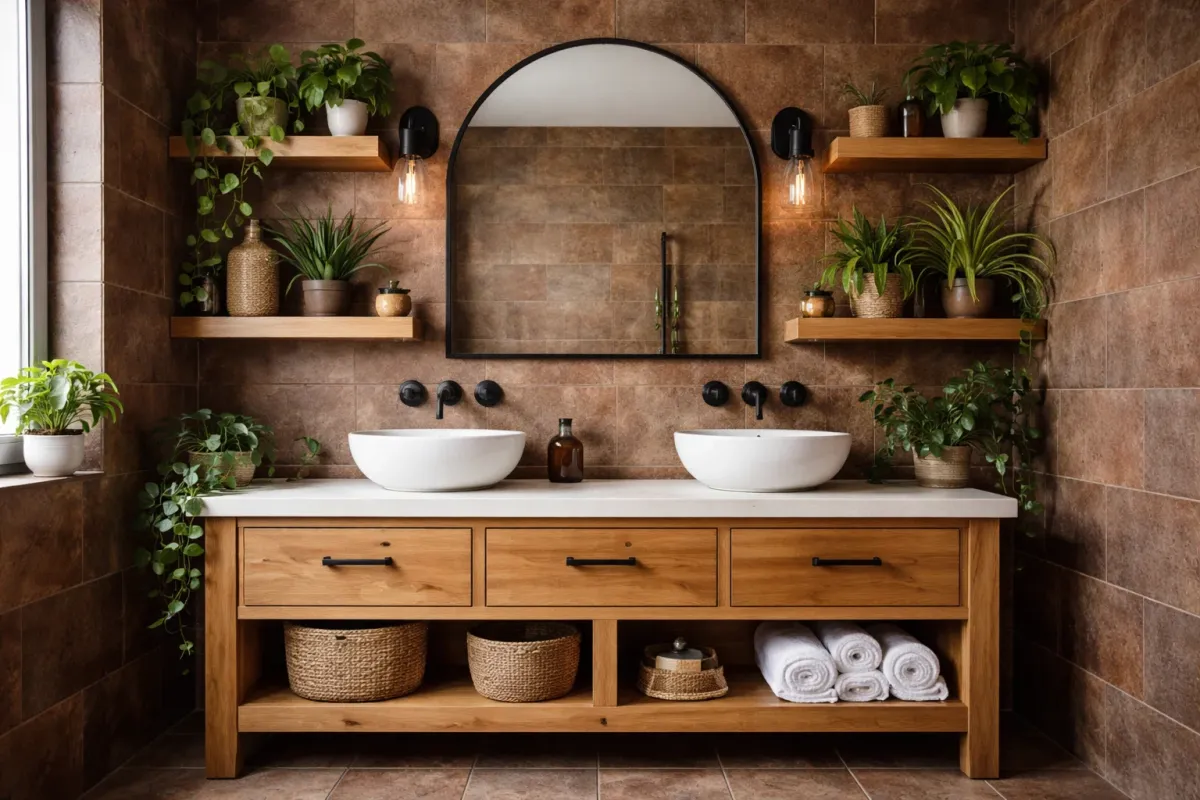
While not technically a “mixer,” pillar taps remain common in older British homes and are still chosen for period restorations. Two separate taps deliver hot and cold water into the basin independently. They require a two-hole basin.
If you are keeping pillar taps for aesthetic reasons but want mixed water, consider fitting them with a basin waste that incorporates a mixing valve, or better still, switching to a three-hole basin mixer that gives the same visual symmetry with the convenience of mixed water.
UK brand picks:
- Burlington Claremont Pillar (£100-150): Traditional crosshead pillar taps in chrome or nickel, ideal for Victorian and Edwardian restoration.
- Bristan 1901 (£40-60): Budget period-style pillar taps, surprisingly well made for the price.
Choosing the Right Configuration for Your Basin
The basin you have (or plan to buy) dictates which mixer types will work. Here is a quick reference.
| Basin Type | Suitable Mixer Types | Tap Holes Needed | Spout Height Range |
|---|---|---|---|
| Standard inset (drop-in) | Mono, three-hole, pillar taps | 1, 2, or 3 | 100-180 mm |
| Semi-recessed | Mono, mini (if small) | 1 | 100-160 mm |
| Countertop / vessel | Tall mono, wall-mounted | 1 or 0 (wall) | 250-350 mm (tall) |
| Cloakroom | Mini mono | 1 | 80-120 mm |
| Vanity unit | Mono, waterfall, pull-out spray | 1 | 100-200 mm |
| Wall-hung | Mono, wall-mounted | 1 or 0 (wall) | 100-180 mm (mono) |
| Freestanding pedestal | Mono, three-hole, pillar | 1, 2, or 3 | 100-180 mm |
What to Check Before You Buy
Beyond the mixer type, several practical factors determine whether a specific tap will actually work in your bathroom.
Water Pressure Compatibility
Every mixer has a minimum operating pressure, measured in bar. UK homes typically fall into three plumbing scenarios:
- Gravity-fed (tank in loft): 0.1 to 0.3 bar. The lowest pressure. Many standard mixers require at least 0.2 bar, and some premium models need 0.5 bar or more. Check the specification sheet carefully, or consider a shower pump if pressure is consistently below 0.2 bar.
- Combi boiler: 1.0 to 2.0 bar. Sufficient for virtually all basin mixers, including sensor taps and pull-out sprays.
- Unvented cylinder (pressurised system): 1.0 to 3.0 bar. Ideal for any mixer type, including rain-style waterfall spouts that need volume to create the cascade effect.
For a deeper dive into water pressure and how it affects every tap in your bathroom, read our tap buying guide.
WRAS Approval
The Water Regulations Advisory Scheme (WRAS) tests and approves products for use within UK water supplies. A WRAS-approved mixer has been independently verified to meet the requirements of the Water Supply (Water Fittings) Regulations 1999. It is not a legal requirement to fit only WRAS-approved products, but it is strongly recommended. If a non-approved fitting causes contamination of the water supply, you could be liable.
Every brand recommended in this guide offers WRAS-approved models. Check for the WRAS logo on the product packaging or search the WRAS product directory online.
Aerator Type
The aerator screws into the spout tip and mixes air into the water stream. Different aerators change the feel and flow rate.
- Standard aerator (6-8 L/min): Full flow, bubbly stream. The default on most mixers.
- Eco aerator (4-5 L/min): Reduces water consumption by 30-40% without a noticeable drop in perceived pressure. Grohe calls theirs EcoJoy, Hansgrohe uses EcoSmart.
- Laminar flow (non-aerated): A clear, crystal-like stream with no air mixed in. Mainly used in healthcare settings where legionella risk from aerosol is a concern.
Most eco aerators are retrofit. Even if your mixer comes with a standard aerator, you can swap in a water-saving version for a few pounds.
Pop-Up Waste
Some mixers include a pop-up or click-clack waste in the box; others sell it separately. If yours includes one, check whether it is slotted (for basins with an overflow) or unslotted (for basins without). Fitting the wrong type can cause leaks or prevent the basin from draining properly. Our complete guide to basin wastes covers this in detail.
Basin Mixer Comparison Table
| Feature | Mono | Tall Mono | Wall-Mounted | Three-Hole | Mini | Waterfall | Sensor | Pull-Out |
|---|---|---|---|---|---|---|---|---|
| Tap holes required | 1 | 1 | 0 (basin) | 3 | 1 | 1 | 1 | 1 |
| Best basin type | Inset, vanity | Countertop | Any | Traditional | Cloakroom | Large vanity | Any | Vanity |
| Installation difficulty | Easy | Easy | Hard | Easy | Easy | Easy | Medium | Medium |
| Typical UK price | £40-300 | £120-350 | £180-350 | £80-250 | £50-100 | £80-200 | £180-350 | £150-260 |
| Min. pressure (bar) | 0.2 | 0.2 | 0.5 | 0.2 | 0.2 | 0.5 | 0.5 | 0.3 |
| Period style available | Some | Rare | Yes | Yes | Rare | No | No | No |
| Water saving option | Yes | Yes | Yes | Some | Yes | Limited | Built-in | Yes |
| Waste included | Often | Often | Rarely | Sometimes | Often | Sometimes | Rarely | Often |
UK Brand Directory
Dozens of brands sell basin mixers in the UK, but these consistently appear in professional specifications and trade supply catalogues.
Grohe (Germany) occupies a unique position: high enough quality for architects and specifiers, affordable enough for standard bathroom refurbishments. Their SilkMove ceramic disc cartridge is one of the smoothest on the market, and the StarLight chrome finish carries a lifetime warranty against tarnishing. Available through most UK bathroom suppliers.
Hansgrohe (Germany) is a separate company from Grohe, despite the similar name and shared family history. Hansgrohe tends to sit slightly higher in both price and design ambition. The Select technology (push-button flow control) and ComfortZone sizing system make specification straightforward. Their EcoSmart aerators are among the most effective water-saving devices available.
Crosswater (UK-designed, manufactured in partnership) has become the go-to for contemporary British bathrooms. The MPRO range, available in six PVD finishes, is one of the most specified collections in UK interior design. All Crosswater products come with a 15-year guarantee.
Roper Rhodes (Bath, UK) offers excellent mid-range mixers with a focus on practical features like click-clack wastes and matching accessories. Their 10-year guarantee and UK-based customer service make them popular with both fitters and homeowners.
Burlington (UK) dominates the traditional and period bathroom sector. If you are restoring a Victorian or Edwardian bathroom, Burlington’s crosshead mixers and pillar taps set the standard. See our Victorian kitchens guide for period design inspiration that extends to the bathroom.
Bristan (UK) is the workhorse brand of the British plumbing trade. Affordable, reliable, and stocked by every plumbers’ merchant in the country. Not the most exciting designs, but the quality-to-price ratio is hard to beat.
Vado (UK) sits between Crosswater and Roper Rhodes, offering distinctive designs (particularly their Notion and Life ranges) with solid engineering. Strong in the waterfall mixer category.
Hudson Reed (UK) focuses on online retail with competitive pricing. Good for budget-conscious projects, though the range can be inconsistent in build quality across different collections.
Installation Considerations
A basin mixer is only as good as its installation. These practical points come up regularly on our bathroom fitting projects across Manchester.
Flexible tap connectors are standard in modern installations, connecting the mixer to the 15 mm copper or plastic supply pipes. Use braided stainless steel hoses (BS EN 13618 compliant), not the cheaper rubber versions that can perish within a few years.
Tap hole size is almost universally 35 mm in the UK, but check your basin. Some older basins use 28 mm holes, and some continental imports use 32 mm. Mixer mounting kits usually accommodate a range, but it is worth verifying before you order.
Basin thickness affects the mounting stud length. Most mixers accommodate basins up to 40 mm thick, but some chunky stone or concrete basins can exceed this. Extended fixings are available from most manufacturers.
Isolation valves should be fitted on both hot and cold supply pipes beneath every basin. They allow you to service the mixer without shutting down the entire house supply. Mini quarter-turn ball valves are the standard choice and cost very little. If your current installation lacks them, ask your plumber to add them during the refit.
Common Mistakes to Avoid
Buying a standard-height mixer for a countertop basin. The spout will sit below or barely above the basin rim, making hand washing impractical. Always match spout height to basin type.
Ignoring spout reach. A mixer with the right height but insufficient reach will direct water onto the near wall of the basin, causing splash and limescale build-up in one spot. Aim for the water stream to land in the centre of the bowl.
Fitting a high-pressure mixer on a gravity system. The tap will dribble rather than flow. Always check the minimum operating pressure in the product specification.
Choosing wall-mounted taps as an afterthought. The concealed valve body and pipework must be installed before the wall is tiled. Retrofitting wall-mounted taps to a finished bathroom means ripping out tiles and replastering.
Mixing brands across a room. Different manufacturers use slightly different shades of chrome and subtly different design languages. Stick to one brand per bathroom (or at least per fixture cluster) for a cohesive look. For more on coordinating finishes, see our bathroom finish materials guide.
Frequently Asked Questions
What is the difference between a mono mixer and a three-hole mixer?
How tall should a basin mixer be for a countertop basin?
Do I need a WRAS-approved basin mixer?
Can I fit a wall-mounted mixer to any bathroom?
What minimum water pressure do basin mixers need?
Should I choose a mixer with an included pop-up waste?
How long do basin mixers typically last?
Past Projects


Get a Free Quote
Book a free, no-obligation site survey. Call us on 07428 653 653 or request a callback.
Book Free SurveyOur Clients' Reviews

5/5

5/5

5/5

5/5

5/5
Based on 453+ verified reviews across all platforms
Related Articles

How Much Does a New Bathroom Cost in 2026? UK Pricing Guide
What a New Bathroom Really Costs in 2026 The question every homeowner asks before a bathroom renovation is the same. How much? The answer depends on what you want, what you have already, and how much of the existing layout you intend to keep. But the data from thousands of UK projects gives us a clear picture.
view this article Read more
Bathroom Renovation Guide: Every Stage From Start to Finish
What a Bathroom Renovation Actually Involves A complete bathroom renovation is one of the most rewarding home improvement projects you can undertake, but it is also one of the most misunderstood. Homeowners frequently picture the finished result without appreciating the sequence of skilled trades and carefully timed stages that make it happen. Every professional bathroom renovation follows a logical order, and understanding that order is the single most important thing you can do before your project begins.
view this article Read more
Bathroom Tiling Styles for Timeless Elegance
Why Layout Matters More Than the Tile Itself
view this article Read more
Quartz, Granite or Porcelain Worktops: Which Suits Your Kitchen?
The Three-Way Decision Most Kitchen Renovations Come Down To
view this article Read more
Ceramic Disc Technology in Bathroom Taps: How It Works
The Technology Inside Almost Every Modern Tap If your bathroom taps turn with a smooth quarter-turn rather than two and a half rotations, they contain ceramic disc cartridges. This technology has become so dominant that it is now difficult to buy a new tap in the UK that does not use it. Yet most homeowners have no idea how it works, why it fails, or what to do when a ceramic disc tap starts dripping.
view this article Read more

How to Choose an Electrical Bathroom Mirror
What an Electrical Bathroom Mirror Actually Does
view this article Read more
Best Bathroom and Toilet Brands in the UK
What Makes a Good Bathroom Brand The brand name on your toilet, basin or shower valve determines far more than the price tag. It affects how long the product lasts, how easy it is to get replacement parts in five or ten years, whether the finish holds up to daily cleaning, and how well the engineering behind the product actually performs in a real bathroom rather than a showroom.
view this article Read more
Bathroom Underfloor Heating: Types, Installation and What to Expect
Why Underfloor Heating Works So Well in Bathrooms Stepping onto a warm bathroom floor on a cold January morning is one of those small luxuries that, once experienced, becomes very difficult to give up. Underfloor heating has grown from a niche luxury into a genuinely practical heating solution for UK bathrooms, and the reasons go well beyond comfort.
view this article Read more
Tools Required for Bathroom Fitting: The Professional Trade Toolkit
The Professional Bathroom Fitter’s Complete Toolkit Every professional bathroom fitter knows that quality tools are an investment, not an expense. The difference between a flawless installation and a problematic one often comes down to having the right equipment for the job. Over years of bathroom fitting projects across Greater Manchester, we have refined our toolkit to include everything a trade professional needs on site.
view this article Read more
What You Need to Know Before Your Kitchen Renovation
The Gap Between Expectation and Reality A kitchen renovation is not a weekend project. The 2025 Houzz UK Kitchen Trends Study found that 71 percent of homeowners change their kitchen layout during a renovation, and the median spend rose 34 percent year on year to £17,500. Those numbers tell you two things. First, most people end up doing more work than they originally planned. Second, the costs are significant enough that poor preparation leads to genuinely painful surprises.
view this article Read more
Accessible Bathroom Design: UK Regulations, Grants and Guide
Why Accessible Bathroom Design Matters Around 16.8 million people in the United Kingdom have a disability. That is one in four of the population, according to the DWP Family Resources Survey 2023/24, and the figure has risen by 4.9 million over the past decade. Among adults over State Pension age, 45 percent are disabled. The most common impairment types for working-age adults are mental health conditions (48 percent) and mobility impairments (42 percent).
view this article Read more