
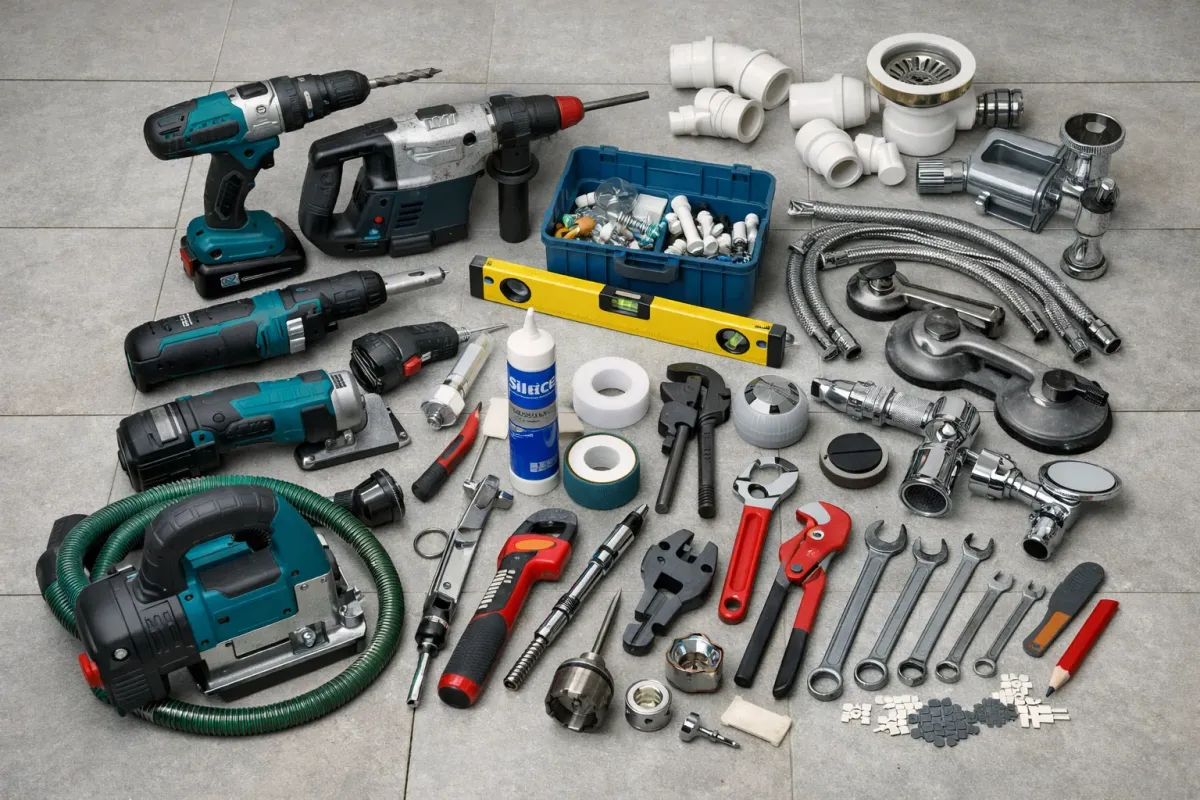
Essential Tools Required for Bathroom Fitting: A DIY Homeowner's Guide
Essential bathroom fitting tools for DIY homeowners. Beginner-friendly guide covering tiling, plumbing, carpentry and safety basics for your renovation.
Getting Started with DIY Bathroom Tools

Tackling a bathroom project yourself can save significant money, but only if you have the right tools for the job. You do not need a van full of professional equipment to handle common bathroom tasks. A sensible selection of quality basic tools will see you through most DIY bathroom work, from changing taps and re-sealing a shower tray to laying new floor tiles.
This guide focuses on the tools a homeowner needs for typical DIY bathroom projects. If you are a working tradesperson looking for a comprehensive professional toolkit, our professional bathroom fitting tools guide covers the specialist equipment used on trade installations.
Some bathroom tasks are best left to professionals. Anything involving gas, most electrical work in bathroom zones, and structural modifications should always be handled by qualified tradespeople. For a full bathroom renovation, professional bathroom fitters bring both expertise and specialist tools that make the difference between a lasting installation and costly problems down the line.
Measuring and Marking Tools
Every bathroom project starts with accurate measurements. Mistakes here waste materials and time.
- Tape measure (5m) — The foundation of any toolkit. A 5-metre tape handles all domestic bathroom measurements. Choose one with a lock button and a clear, easy-to-read blade.
- Spirit level (600mm) — Essential for checking that shelves, mirrors, towel rails and tile rows are straight. A 600mm level is the most versatile size for bathroom work.
- Pencil and marker — For marking cut lines, fixing positions and tile layouts. A carpenter’s pencil is better than a standard pencil because it holds its point longer and makes visible lines on most surfaces.
- Combination square — Useful for marking 90-degree lines across tiles and boards. Also helps check that corners are truly square.
Basic Power Tools
A few quality power tools make bathroom DIY dramatically easier. These are worth owning even if you only use them occasionally.
- Cordless drill/driver — The single most useful power tool for any homeowner. Drills holes in walls for fixings and drives screws for mounting cabinets, mirrors, toilet roll holders and towel rails. An 18V combi drill handles both wood and masonry. Makita, Bosch and DeWalt offer excellent mid-range options.
- Jigsaw — Cuts curves and straight lines in wooden panels, laminate and worktops. Useful for cutting notches around pipework when fitting bath panels or vanity units.
- Multi-tool — An oscillating multi-tool cuts, sands and scrapes. Brilliant for removing old sealant, trimming door frames to fit new flooring, and cutting flush against walls. If you buy one new tool for a bathroom project, make it this.
Tiling Tools
Tiling is one of the most common DIY bathroom tasks, and a few specific tools make all the difference between neat results and frustration. Our guide on bathroom tiles types can help you choose the right tiles before you start.
- Manual tile cutter — A quality manual cutter handles straight cuts on ceramic and porcelain wall tiles cleanly and quickly. Vitrex and Rubi make reliable budget options. For a small bathroom, this is all the tile cutting kit you need.
- Tile nippers — Small plier-like tools for nibbling away small amounts of tile to fit around pipes, outlets and corners. They create rough edges, so use them where cuts will be hidden behind accessories.
- Tile spacers — Small plastic crosses that maintain even gaps between tiles. Buy the size recommended for your chosen tiles, typically 2mm or 3mm for wall tiles.
- Notched trowel — Spreads tile adhesive in even ridges. A 6mm notched trowel suits most standard wall tiles.
- Grout float — A rubber-faced float for pressing grout into tile joints evenly.
- Sponge and bucket — For cleaning excess grout and adhesive from tile surfaces before it sets. Two buckets are better than one, as clean water makes a significant difference.
Basic Plumbing Tools
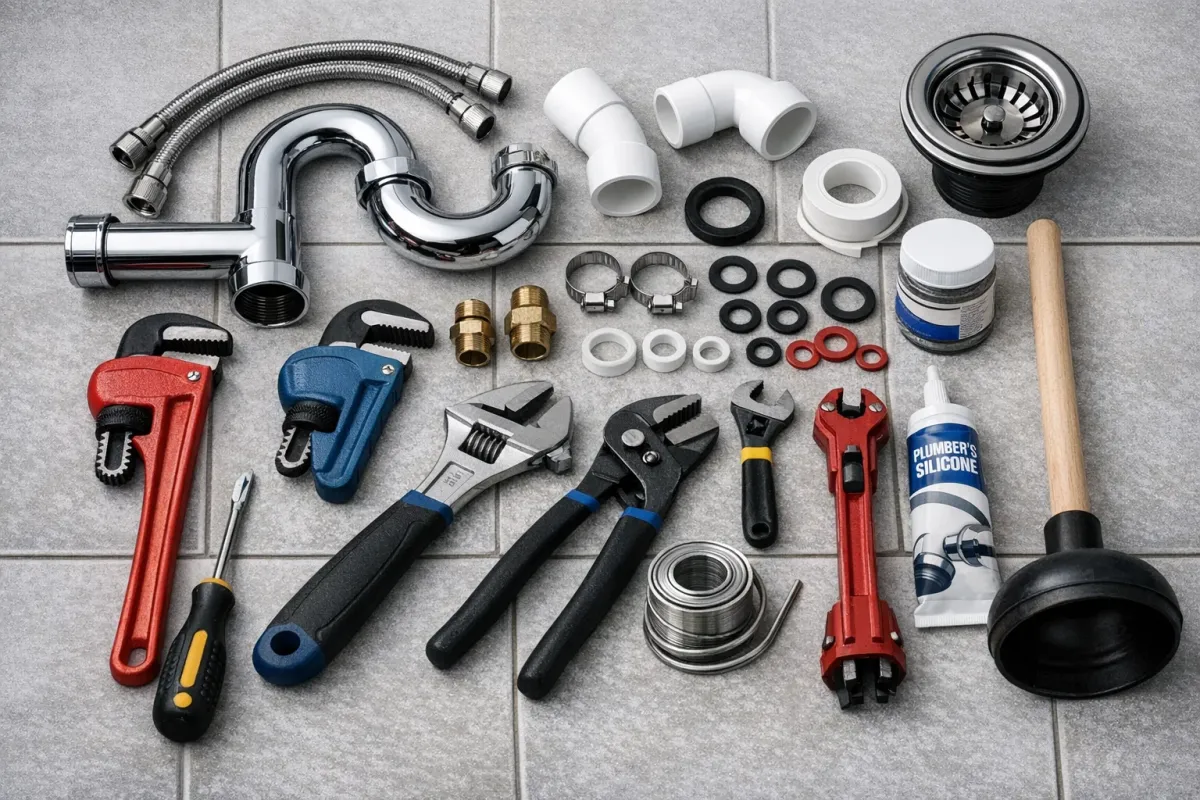
Swapping taps, replacing a toilet cistern mechanism, or fitting a new shower hose are all achievable for a competent DIYer. For anything beyond basic plumbing, our bathroom plumbing services team can help.
- Adjustable spanner (two sizes) — A medium and a large adjustable spanner handle most tap connectors, compression fittings and waste traps found in domestic bathrooms.
- Basin wrench — A long-reach tool designed specifically for tightening or loosening tap connectors in the tight space behind a basin. Worth buying for any tap replacement job.
- Pipe cutter (15mm) — If you need to shorten or modify any copper pipes, a small rotary pipe cutter gives a clean, square cut without the mess of a hacksaw. Available for under ten pounds.
- PTFE tape — Thin white tape wrapped around threaded connections to create a watertight seal. Cheap, essential, and every homeowner should have a roll.
- Plunger — Not glamorous, but essential for clearing minor blockages before they become major problems.
- Silicone sealant and gun — For sealing around baths, shower trays, basins and worktops. Buy a quality sanitary-grade silicone in white or clear. A basic skeleton gun applies it, and a smoothing tool (or a wet finger) creates a neat finish.
Carpentry and General Fixing Tools
Most bathroom projects involve some amount of fixing things to walls, assembling flat-pack furniture, or fitting accessories.
- Hammer — A 16oz claw hammer handles fixings, gentle persuasion and occasional nail removal.
- Screwdriver set — Both flathead and Philips, in multiple sizes. Even with a cordless drill, hand screwdrivers are needed for delicate work and tight spaces.
- Hacksaw — Cuts plastic waste pipe, threaded bar and small metal sections. A junior hacksaw reaches into tighter spaces.
- Craft knife or utility knife — For trimming sealant, cutting packaging, scoring materials and dozens of other tasks. Keep spare blades handy.
- Wall plug assortment — Different walls need different fixings. Standard red and brown wall plugs suit solid masonry. Plasterboard fixings (spring toggles or self-drill anchors) are needed for stud walls. Knowing your wall type before you start saves frustration and trips to the hardware shop.
- Drill bit set — A basic set of masonry bits (5mm, 6mm, 7mm, 8mm) and HSS bits for wood and metal covers most domestic drilling tasks.
Safety Equipment
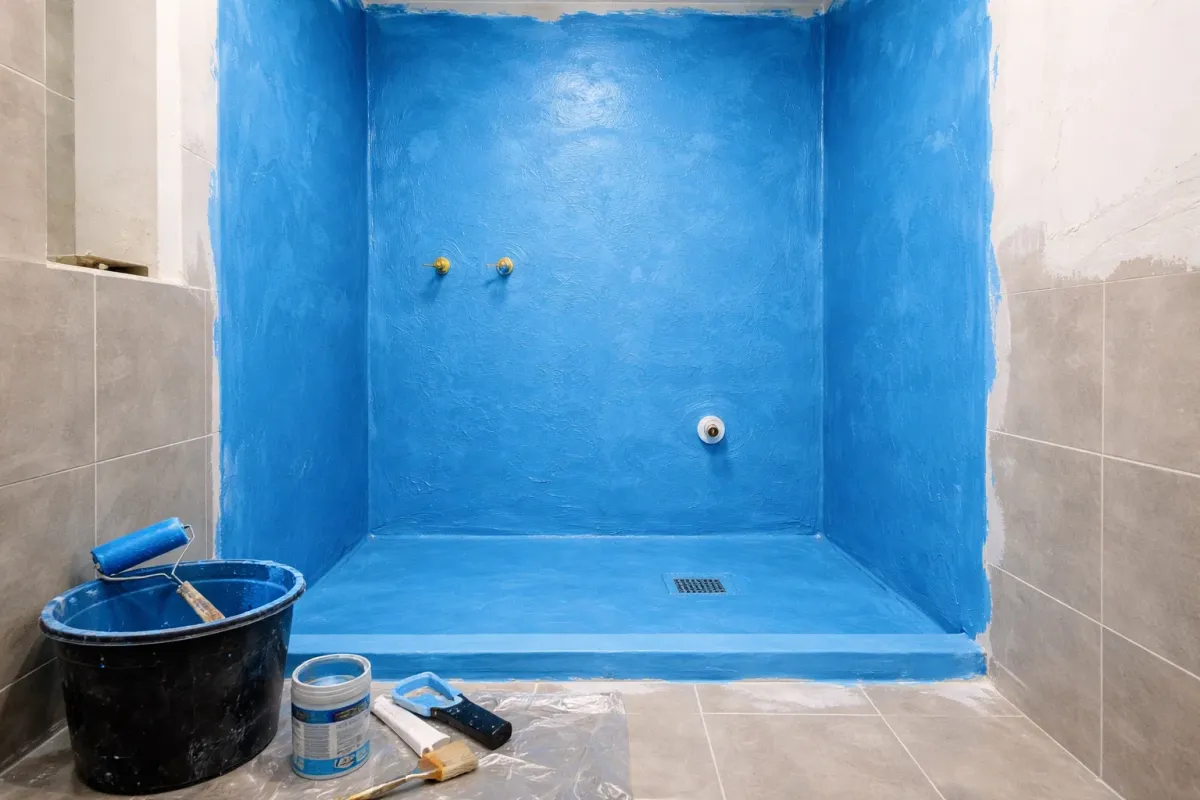
Bathroom DIY involves dust, sharp edges, chemicals and water near electrical fittings. Basic safety equipment is not optional.
- Safety goggles — Protect your eyes when drilling, cutting tiles or working overhead. A pair costs a few pounds but could prevent a serious injury.
- Dust mask (FFP2) — Cutting tiles and drilling into masonry generates fine dust. An FFP2 disposable mask provides adequate protection for occasional DIY work.
- Gloves — Tile edges are razor-sharp. Latex or nitrile gloves protect your hands when grouting, and leather gloves are better for handling cut tiles and rough materials.
- Knee pads — If you are tiling a floor or working at low level for any length of time, gel knee pads save your joints.
- Old clothes and dust sheets — Protect yourself and your home. Tile adhesive and grout stain everything they touch.
Materials and Consumables Checklist
Having these consumables ready before you start prevents frustrating mid-project trips to the shops.
- Tile adhesive (ready-mixed for small areas, powder for larger areas)
- Grout (colour matched to your tiles)
- Sanitary silicone sealant
- PTFE tape
- Wall plugs and screws in assorted sizes
- Masking tape (for neat sealant lines)
- Cleaning cloths and sponges
- Waste bags for demolished materials
Frequently Asked Questions
What is the minimum toolkit needed to retile a bathroom splashback?
Can I replace bathroom taps myself without a plumber?
Should I buy cheap tools or invest in quality brands?
What bathroom tasks should I never attempt as a DIY project?
Do I need an electric tile cutter for a small bathroom?
How do I know which wall fixings to use in my bathroom?
Where can I get a professional quote for bathroom work in Manchester?
Past Projects


Get a Free Quote
Book a free, no-obligation site survey. Call us on +44 7428 653 653 or request a callback.
Book Free SurveyOur Clients' Reviews

5/5

5/5

5/5

5/5
Based on 453+ verified reviews across all platforms
Related Articles

Tools Required for Bathroom Fitting: The Professional Trade Toolkit
The Professional Bathroom Fitter’s Complete Toolkit Every professional bathroom fitter knows that quality tools are an investment, not an expense. The difference between a flawless installation and a problematic one often comes down to having the right equipment for the job.
view this article Read more
Bathroom Tap Finishes: Chrome, Brass, Matt Black and Beyond
The Finish You Choose Outlasts Every Other Bathroom Decision Tiles can be re-grouted. Paint can be refreshed in a weekend. But the finish on your taps, shower valves and accessories is permanent for the life of the fitting.
view this article Read more
Top 10 Shower Mixers You Can Buy in the UK
Why Your Shower Mixer Matters The shower mixer is the heart of your shower system. A good one delivers stable temperature, consistent flow and reliable performance for years.
view this article Read more
Bathroom Renovation Mistakes and How to Avoid Them
Why Bathroom Renovations Go Wrong Most bathroom renovations that end badly were doomed before the first tile came off the wall.
view this article Read more
Electric Shower Not Working? Expert Troubleshooting Guide
Why Electric Showers Fail and What You Can Do About It Electric showers heat water on demand using a powerful element, drawing between 7.
view this article Read more
How Small Businesses Are Being Targeted by Fake Negative Reviews
What Fake Reviews Look Like Fake negative reviews usually follow a recognisable pattern. Some common red flags include: Vague or generic complaints – Reviews that lack specific details about the service, product, or experience.
view this article Read more
Asbestos in Bathrooms and Kitchens: Risks, Safety and UK Law
What Is Asbestos? Asbestos refers to a group of six naturally occurring silicate minerals made up of fine, durable fibres. Because of its strength and fire resistance, it was commonly used in insulation materials, roofing and flooring products, cement compounds, automotive parts and fireproof textiles.
view this article Read more
Hiring Bathroom Fitters in Manchester: Costs, Process and Advice
What Manchester Homeowners Need to Know Before Hiring Renovating a bathroom is one of the most rewarding home improvements you can make, and one of the easiest to get wrong if you hire the wrong people.
view this article Read more
The Best Toilet Brands for Your Home: A UK Buyer's Guide
Choosing a Toilet Brand: What Actually Matters Selecting a toilet brand might seem less important than choosing a specific model, but the manufacturer behind your toilet determines the quality of the ceramic, the reliability of the flush mechanism, the availability of spare parts years down the line, and the level of after-sales support when something eventually needs attention.
view this article Read more
Bathroom Remodelling Ideas for Greater Manchester Homeowners
Remodelling Ideas That Work for Manchester Homes Greater Manchester homes come with character. Victorian terraces in Didsbury, semi-detached houses in Prestwich, post-war estates in Salford, new builds in Trafford.
view this article Read more
How to Replace a Shower with a Bath
Replacing a shower with a bath is an excellent way to enhance both the functionality and comfort of your bathroom, especially if you’re accommodating a growing family.
view this article Read more
How to Find the Best Bathroom Fitters Near You
Finding a Bathroom Fitter You Can Trust Searching for “bathroom fitters near me” returns dozens of results, but a Google listing tells you almost nothing about whether a contractor will deliver quality work on time, stay within budget, and stand behind their installation for years to come.
view this article Read more