
Cool Bathroom Ideas That Actually Work in Real Homes
Cool bathroom ideas that work in real UK homes. Research-backed trends for 2026 with honest installation advice from professional bathroom fitters.
Ideas Worth Installing, Not Just Pinning
Every bathroom renovation starts with inspiration. The problem is that most online inspiration comes from product retailers and design magazines showing rooms that cost five times your budget, in houses that look nothing like yours. The gap between a curated photo on a mood board and a functioning bathroom in a Manchester semi is filled with plumbing constraints, building regulations, hard water, and the reality of a room that gets used by a whole household every single morning.

This guide covers the bathroom ideas and trends that are shaping UK renovations right now, based on the 2025 Houzz UK Bathroom Trends Study, current forecasts from manufacturers like Roper Rhodes and Grohe, and our own experience fitting bathrooms across Greater Manchester. For every idea, we include the practical reality alongside the design appeal, because a bathroom that looks stunning in a showroom but falls apart within two years is not a cool idea. It is a costly mistake.
If you are working with a smaller room, our guide to small bathroom ideas for British homes covers space-specific solutions. For a full renovation walkthrough, see our comprehensive bathroom renovation guide.
Warm Colour Palettes
The all-white bathroom is losing ground. According to the 2025 Houzz UK study, white remains the most chosen colour in practice, but the direction of travel is firmly away from clinical brightness toward warmth and character. If you are renovating in 2026, the palette has shifted.
Warm neutrals dominate. Sandstone, greige, soft taupe, oat and biscuit tones are replacing the cold whites and greys that defined bathroom design for the past decade. These colours work particularly well in UK bathrooms with limited natural light, adding warmth that the British climate rarely provides through the window.
Green has established itself as the most versatile bathroom accent colour, appearing in everything from soft sage vanity units to deep forest-green feature walls. The 2025 Houzz UK study found green was the preferred choice for 17 percent of accent walls. It reads well in British homes because it echoes the landscape outside and feels seasonless rather than tied to a specific year’s trend cycle.
Earthy tones are gaining momentum too. Terracotta, clay, muted ochre and butter yellow all pair naturally with wooden vanity units and stone-effect tiles. For bolder statements, navy, deep sapphire and burgundy work as feature wall colours rather than whole-room applications.
The technique is shifting from colour drenching (entire room in one shade) toward colour blocking, where two distinct but related tones divide different zones. A darker vanity wall against lighter surrounding walls, or a contrasting floor and wall tile palette. Both approaches work. The key is committing to a warm palette and staying within it.
Walk-In Showers and Wet Rooms
The enclosed shower cubicle with a pivot door is giving way to open, frameless designs. The 2025 Houzz UK study found that 58 percent of renovating homeowners enlarged their primary shower, with 25 percent expanding it by more than half. Walk-in showers with no threshold grew from 12 to 14 percent year on year.
The appeal is obvious. A frameless glass panel with a continuous tiled floor creates a seamless, spacious feel that transforms even a modest bathroom. Linear drains replace the traditional shower tray waste, and the floor tiles run uninterrupted from the bathroom into the shower zone.
Full wet rooms take this further, waterproofing the entire room so the shower area has no boundary at all. They are moving from specialist installations into mainstream renovation projects, particularly for accessible bathrooms and compact spaces where a separate tray would feel cramped.
The installation reality matters here. A wet room floor must fall at a precise gradient toward the drain, typically around 1:80. The entire room needs a continuous tanked waterproofing membrane. The substrate preparation is more involved than a standard shower installation, and getting it wrong leads to pooling water and, eventually, leaks into the structure below. This is not a weekend project. But done properly, a wet room is one of the most transformative upgrades you can make. Our guide to wet rooms vs shower rooms covers the practical differences in detail.
Freestanding Baths
Freestanding baths have returned as a genuine design centrepiece rather than a retro novelty. The Houzz UK study recorded a year-on-year increase in both freestanding flat-bottomed and deck-mounted bath choices, with couples choosing a bath sized for two rising from 33 to 50 percent.
The options span from contemporary flat-bottomed designs in matt stone resin to traditional roll-top slipper baths with ornate feet. Burlington and Heritage Bathrooms lead the traditional market, while brands like Clearwater and Bette offer modern sculptural forms. A well-positioned freestanding bath becomes the focal point of the room, and floor-mounted or wall-mounted taps complete the look.
The practical caveat is important. Freestanding baths need waste pipe routing planned before the floor is tiled. The bath itself is heavy, and a stone or cast-iron model may need floor strengthening in an upper-storey bathroom. In a compact room, a freestanding bath can dominate the space and make the rest of the bathroom feel cramped rather than luxurious. If your bathroom is under six square metres, a well-designed built-in bath or a generous walk-in shower will usually serve you better. See our bathroom remodelling ideas for Manchester homeowners for layout guidance tailored to local property types.
Brushed Brass, Nickel and Gunmetal Brassware
Chrome is no longer the default aspirational finish. The shift toward warmer, more characterful brassware finishes is one of the most visible trends in current UK bathroom design, and it has practical benefits beyond appearance.
Brushed brass is the leading premium finish for 2026, appearing across taps, shower valves, towel rails and accessories. The soft, non-reflective warmth reads as luxurious without the harshness of polished gold. Manufacturers like Grohe, Hansgrohe and Crosswater all offer brushed brass ranges.
Brushed nickel sits between chrome and brass, offering a cooler but still warm tone that suits contemporary and Japandi-influenced bathrooms. Some industry commentators position it as the finish most likely to overtake chrome as the default choice.
Gunmetal occupies similar territory. Closer to a warm charcoal than true black, it reads as sophisticated and modern. Trade press reports from KBBFocus suggest gunmetal is now the most requested finish in UK bathroom showrooms.
The hard water advantage is worth noting for Manchester homeowners. Chrome shows limescale deposits prominently. Brushed and matt finishes are far more forgiving, hiding water marks and mineral deposits between cleans. Modern PVD (Physical Vapour Deposition) coatings on coloured brassware also resist tarnishing and corrosion significantly better than older electroplated finishes. A PVD brushed brass tap will not corrode or flake the way gold-effect fittings did a generation ago.
One important rule when mixing finishes: source all visible brassware from the same manufacturer where possible. Warm chrome and cool chrome look noticeably different side by side. Brands like Crosswater solve this with coordinated ranges spanning taps, showers and accessories in identical finishes. Our guide to choosing bathroom taps covers brassware selection in more detail.
Textured Tiles and Large Format
Tiles set the character of a bathroom more than almost any other element, and the trends for 2026 reward bold choices. Our bathroom tile trends guide covers the full picture, but the headline developments deserve a place here.
Large-format tiles continue to dominate. Fewer grout lines mean less visual noise, less maintenance, and a hotel-like seamlessness that makes rooms feel larger. In compact UK bathrooms where grout lines can make the space feel cluttered, going large pays off. Floor-to-ceiling large-format tiles in a warm neutral shade will make a modest bathroom read as significantly bigger than it is.
Handcrafted and zellige tiles are a standout for feature walls and niches. These Moroccan-origin tiles have a slightly uneven, glossy surface that catches light differently throughout the day. The imperfections are intentional and give the wall a depth and character that machine-made tiles cannot replicate. They work beautifully in small doses around basins, in shower niches, or as a splashback.
Fluted and three-dimensional tiles add tactile depth to surfaces and are increasingly popular for feature walls. One practical caveat that design articles rarely mention: fluted tiles inside a shower zone collect soap scum and limescale in the grooves, making them significantly harder to clean than flat tiles. Deploy them on dry walls adjacent to the shower, on vanity surrounds, or as an accent outside the wet zone. Inside the shower, stick with smooth surfaces.
Stone-effect porcelain offers the look of limestone, travertine or marble without the maintenance demands. No sealing required, resistant to hard water staining, and far more practical in a British bathroom than genuine natural stone. For a broader comparison of surface options, see our panels vs tiles guide and our complete tile types guide.
Layered Lighting
The single ceiling downlighter as the sole bathroom light source is going out of fashion, and for good reason. It provides flat, unflattering illumination with hard shadows that make grooming difficult and the room feel uninviting.
The replacement is layered lighting across three levels. Ambient lighting sets the overall brightness, typically through recessed ceiling spots or a flush-mounted fitting. Task lighting goes beside or into the mirror, providing shadow-free, colour-accurate light for shaving, make-up and skincare. Accent lighting adds depth and mood through backlit mirrors, LED strips inside niches, or toe-kick lighting under vanity units.
Illuminated mirrors with built-in demisting have become the practical standard. The 2025 Houzz UK study found adoption rising from 38 to 42 percent, with 66 percent of those choosing anti-fog heated models. In poorly ventilated UK bathrooms where steaming up is a genuine daily frustration, a heated mirror solves the problem permanently. Modern models offer colour temperature control, shifting from warm light for evening bathing to cool daylight for morning routines. Our guide to choosing electrical bathroom mirrors covers the options.
Statement pendant lights over freestanding baths or vanity areas are also gaining traction. One UK-specific consideration: any light fitting within defined bathroom zones must meet minimum IP (Ingress Protection) ratings under BS 7671 electrical regulations. Zone 1 above a bath or shower requires IP65 minimum. This limits product choice, so check ratings before falling in love with a specific fitting.
Smart Showers and Digital Controls
Digital shower technology is more established in the UK than in many other markets, led by three brands: Aqualisa, Mira and Grohe. The benefits go beyond gadgetry.
A digital shower lets you set an exact temperature, eliminating the morning shuffle between scalding and freezing. Pre-set profiles mean different household members get their preferred temperature at the push of a button. The warm-up function runs water to temperature before you step in, saving the water wasted while waiting. Eco modes limit flow rates without compromising the showering experience.
Aqualisa’s Optic Q range connects to Wi-Fi and works with Alexa and Google Nest. Mira’s Platinum Dual offers wireless digital control with a warm-up mode that prevents cold starts. Grohe’s SmartControl system uses push-and-turn buttons with memory functions for multiple users.
The 2025 Houzz UK study found thermostatic mixers already adopted by 65 percent of renovating homeowners, up from 58 percent the year before. Digital controls represent the next step for homeowners who want precision without complexity. For a comparison of available models, see our top 10 shower mixers guide.
Underfloor Heating
In a UK climate, cold bathroom tiles in winter are a genuine deterrent to early-morning bathroom use. Underfloor heating transforms the experience. It is no longer a luxury add-on. It has become a standard feature of well-planned bathroom renovations.
Electric underfloor heating mats are the practical choice for most bathroom projects. They sit beneath the tile adhesive, add minimal floor height, and are accessible at modest price points. The 2025 Houzz UK study found 57 percent of respondents with heated floors chose non-slip porcelain or ceramic, confirming that the combination of warm floors and practical tile surfaces is the mainstream approach.
Beyond comfort, underfloor heating raises surface temperatures above the dew point, reducing condensation on tiles and mirrors. In a country where bathroom ventilation is frequently inadequate, this helps the room dry faster after use and discourages mould growth. It is not a substitute for proper mechanical ventilation, but it makes a noticeable difference. Our bathroom underfloor heating guide covers electric and water systems, installation methods and running costs.
Floating Vanities and Concealed Storage
Wall-hung vanity units are the dominant furniture choice in UK bathroom renovations. The 2025 Houzz UK study found 53 percent of renovating homeowners chose floating vanities, drawn by the sense of floor space they create. In UK bathrooms where the median renovated room is under ten square metres, every visible inch of floor matters.
Matt finishes have overtaken gloss as the preferred surface, and with good reason. Fingermarks and water spots are far less visible on a matt vanity front, reducing the frequency of wiping down. Warm wood tones like sand oak and walnut are popular, alongside coloured options in sage green, slate grey and navy.
Drawer-based units have replaced traditional cupboard doors for under-basin storage. Drawers are easier to organise and retrieve items from than deep cupboards where everything migrates to the back. Bamboo drawer inserts and organisers are a practical addition that keeps toiletries and cleaning products accessible.
Recessed wall niches in shower areas eliminate the need for surface-mounted caddies and bottle racks. They keep shampoo bottles off the floor and out of sight, maintaining the clean lines that define a modern bathroom. The key consideration is planning them at the structural stage. In older UK properties, stud or blockwork walls may limit recess depth, and adding a niche after the walls are tiled means stripping tiles, cutting into the substrate, waterproofing the new opening, and retiling around it.
What Looks Great Online But Fails in Practice
Not every trend survives contact with a real bathroom. Some of the most popular ideas on social media cause problems that only become apparent months after installation.
Dark colour drenching in windowless rooms. A deep green or navy bathroom looks atmospheric in a professionally lit photograph. In a small, windowless bathroom with a single overhead light, the same colours create a cave. If you want dark walls, make sure the room has good natural light or invest heavily in layered artificial lighting to compensate.
White grout on white tiles. The look is crisp and clean on installation day. Six months later, grout lines in the shower zone are grey, and the areas around the base of the toilet are worse. Epoxy grout helps, but it costs more, is harder to apply, and still requires regular cleaning. If you want a clean white look, consider large-format tiles with minimal grout joints, or look at bathroom wall panels that avoid grout entirely.
Fluted tiles inside shower enclosures. Covered above, but worth repeating. The grooves trap soap residue and limescale. In a hard-water area like Greater Manchester, you will spend more time cleaning fluted shower tiles than enjoying the way they look.
Freestanding baths in tiny bathrooms. A freestanding tub needs breathing room around all four sides to achieve the effect. Wedging one into a room where it barely fits defeats the purpose and makes the rest of the bathroom unusable. If the room is tight, a built-in bath with a tiled surround and a generous shower overhead may be more practical and still look excellent.
Trends at a Glance: What Is In, What Is Out
| Category | In for 2026 | Fading Out |
|---|---|---|
| Colour | Warm greige, sage green, terracotta, navy | Cold grey, clinical white |
| Tiles | Large format, zellige, stone-effect, heritage patterns | High-gloss ceramic, basic white subway |
| Brassware | Brushed brass, nickel, gunmetal | Chrome as sole finish |
| Vanity | Floating, matt finish, warm wood tones | Gloss-fronted freestanding units |
| Shower | Walk-in, wet room, frameless glass | Pivot-door enclosed cubicles |
| Bath | Freestanding centrepiece, roll-top | Builder-grade alcove acrylic |
| Lighting | Layered: backlit mirror + ambient + accent | Single ceiling downlighter |
| Storage | Recessed niches, drawer-based vanities, mirror cabinets | Surface-mounted wire shelving |
| Technology | Digital showers, heated mirrors, underfloor heating | Manual single-function controls |
Making These Ideas Work for Your Home
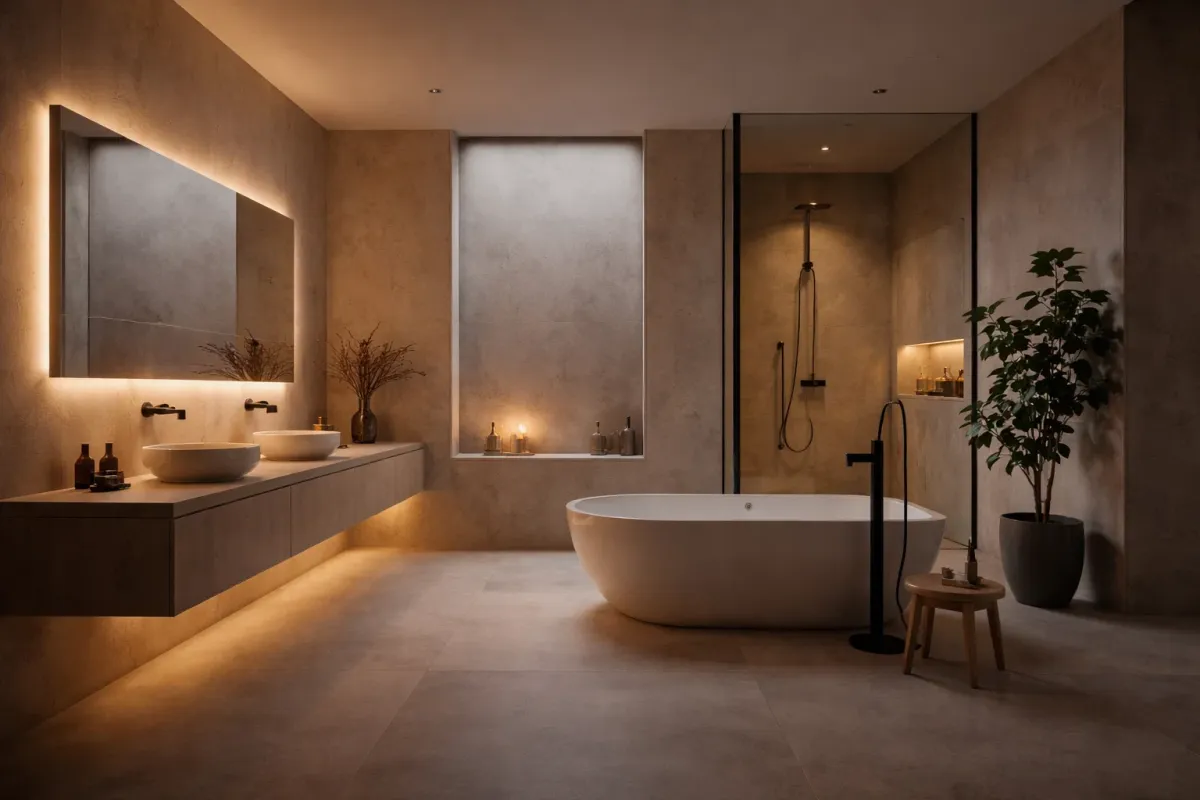
The best bathroom renovations combine several of these ideas into a cohesive design rather than chasing every trend at once. A warm colour palette, brushed brass brassware, large-format stone-effect tiles and a frameless walk-in shower will create a contemporary, spa-like bathroom that feels current without dating within a few years.
Start with the practical decisions. What is the drainage route for your shower or bath? What can your water system deliver in terms of pressure and flow? How will you ventilate the room properly? Once those fundamentals are resolved, the design choices become much easier.
If you are planning a bathroom renovation and want to explore which of these ideas will work in your home, our team provides free, no-obligation site surveys across Greater Manchester. We can assess your existing space, talk through the options, and give you an honest picture of what each idea involves before any work starts. Our bathroom remodelling service covers the full process from design through to completion.
Frequently Asked Questions
What makes a bathroom look luxurious on a realistic budget?
What colour is best for a bathroom in 2026?
Are freestanding baths going out of fashion?
Is chrome going out of fashion in bathrooms?
What is the difference between a wet room and a walk-in shower?
What bathroom trends should I avoid?
How do I make my bathroom feel like a spa?
Past Projects


Get a Free Quote
Book a free, no-obligation site survey. Call us on 07428 653 653 or request a callback.
Book Free SurveyOur Clients' Reviews

5/5

5/5

5/5

5/5

5/5
Based on 453+ verified reviews across all platforms
Related Articles

How Much Does a New Bathroom Cost in 2026? UK Pricing Guide
What a New Bathroom Really Costs in 2026 The question every homeowner asks before a bathroom renovation is the same. How much? The answer depends on what you want, what you have already, and how much of the existing layout you intend to keep. But the data from thousands of UK projects gives us a clear picture.
view this article Read more
Bathroom Renovation Guide: Every Stage From Start to Finish
What a Bathroom Renovation Actually Involves A complete bathroom renovation is one of the most rewarding home improvement projects you can undertake, but it is also one of the most misunderstood. Homeowners frequently picture the finished result without appreciating the sequence of skilled trades and carefully timed stages that make it happen. Every professional bathroom renovation follows a logical order, and understanding that order is the single most important thing you can do before your project begins.
view this article Read more
Bathroom Tiling Styles for Timeless Elegance
Why Layout Matters More Than the Tile Itself
view this article Read more
Quartz, Granite or Porcelain Worktops: Which Suits Your Kitchen?
The Three-Way Decision Most Kitchen Renovations Come Down To
view this article Read more
Ceramic Disc Technology in Bathroom Taps: How It Works
The Technology Inside Almost Every Modern Tap If your bathroom taps turn with a smooth quarter-turn rather than two and a half rotations, they contain ceramic disc cartridges. This technology has become so dominant that it is now difficult to buy a new tap in the UK that does not use it. Yet most homeowners have no idea how it works, why it fails, or what to do when a ceramic disc tap starts dripping.
view this article Read more

How to Choose an Electrical Bathroom Mirror
What an Electrical Bathroom Mirror Actually Does
view this article Read more
Best Bathroom and Toilet Brands in the UK
What Makes a Good Bathroom Brand The brand name on your toilet, basin or shower valve determines far more than the price tag. It affects how long the product lasts, how easy it is to get replacement parts in five or ten years, whether the finish holds up to daily cleaning, and how well the engineering behind the product actually performs in a real bathroom rather than a showroom.
view this article Read more
Bathroom Underfloor Heating: Types, Installation and What to Expect
Why Underfloor Heating Works So Well in Bathrooms Stepping onto a warm bathroom floor on a cold January morning is one of those small luxuries that, once experienced, becomes very difficult to give up. Underfloor heating has grown from a niche luxury into a genuinely practical heating solution for UK bathrooms, and the reasons go well beyond comfort.
view this article Read more
Tools Required for Bathroom Fitting: The Professional Trade Toolkit
The Professional Bathroom Fitter’s Complete Toolkit Every professional bathroom fitter knows that quality tools are an investment, not an expense. The difference between a flawless installation and a problematic one often comes down to having the right equipment for the job. Over years of bathroom fitting projects across Greater Manchester, we have refined our toolkit to include everything a trade professional needs on site.
view this article Read more
What You Need to Know Before Your Kitchen Renovation
The Gap Between Expectation and Reality A kitchen renovation is not a weekend project. The 2025 Houzz UK Kitchen Trends Study found that 71 percent of homeowners change their kitchen layout during a renovation, and the median spend rose 34 percent year on year to £17,500. Those numbers tell you two things. First, most people end up doing more work than they originally planned. Second, the costs are significant enough that poor preparation leads to genuinely painful surprises.
view this article Read more
Accessible Bathroom Design: UK Regulations, Grants and Guide
Why Accessible Bathroom Design Matters Around 16.8 million people in the United Kingdom have a disability. That is one in four of the population, according to the DWP Family Resources Survey 2023/24, and the figure has risen by 4.9 million over the past decade. Among adults over State Pension age, 45 percent are disabled. The most common impairment types for working-age adults are mental health conditions (48 percent) and mobility impairments (42 percent).
view this article Read more