
Bathroom Tiling Styles for Timeless Elegance
Bathroom tile layout patterns and design styles explained. Herringbone, chevron, subway, Zellige, hexagonal and large format with UK costs.
Why Layout Matters More Than the Tile Itself

A bathroom tile is a raw ingredient. The layout pattern is the recipe. Two identical metro tiles look completely different when one is laid in a simple brick bond and the other in a tight herringbone. The pattern changes the visual rhythm, the perceived size of the room, and the overall character of the space in ways that colour alone cannot achieve.
Houzz UK’s annual bathroom trends study found that 34% of homeowners who renovated chose a patterned feature wall as their focal point, and herringbone was the most popular layout at 28% of all tiled bathrooms. Metro and subway came second at 24%. Those numbers reflect something designers have long understood: the arrangement of tiles carries as much visual weight as the tiles themselves.
This guide covers the layout patterns, tile shapes, and design styles that define contemporary British bathrooms. For advice on tile materials and their physical properties, see our bathroom tiles types guide. For what is trending right now in colour and finish, our bathroom tile trends article covers the latest movements.
Classic Layout Patterns That Never Date
Herringbone
Herringbone arranges rectangular tiles at 45-degree angles to create a continuous V-shaped zigzag. The pattern has been used in European architecture since Roman road building and remains the most requested layout in UK bathroom renovations.
The visual effect is striking without being aggressive. Herringbone draws the eye along its diagonal lines, making narrow bathrooms feel wider and short walls feel taller depending on orientation. Horizontal herringbone on a shower back wall creates a sense of breadth. Vertical herringbone on a narrow wall adds perceived height. The pattern works with any rectangular tile from 75x150mm metro formats up to 100x300mm planks, though the smaller the tile, the busier the finished result.
Labour costs for herringbone run 15-25% higher than a standard brick bond because of the additional cutting at edges and the precision needed to keep lines straight across a full wall. A skilled tiler will set out from the centre line and work outward to ensure symmetrical cuts at both ends.
Chevron
Chevron looks similar to herringbone at first glance, but the tiles are cut at an angle so that the edges meet in a clean, continuous zigzag rather than the staggered step of herringbone. The result is sharper and more geometric. Chevron suits contemporary bathrooms where clean lines are the priority, while herringbone carries a warmer, more traditional character.
Chevron tiles come pre-cut with angled ends, so they cannot be improvised from standard rectangular tiles. They are typically available from specialist suppliers like Mandarin Stone and Fired Earth, with prices starting around £45 per square metre for porcelain and rising above £90 for natural stone.
Brick Bond
Brick bond, also called running bond or offset bond, is the most common tile layout in British bathrooms. Each row is offset by half a tile width from the row below, creating the familiar staggered pattern seen in brickwork. It is forgiving of slight imperfections in wall flatness, straightforward to lay, and works with almost any tile format.
The pattern has a horizontal emphasis that makes rooms feel wider. Variations include third-offset (each row shifted by a third rather than a half) which creates a more elongated, flowing rhythm, and vertical brick bond where the tiles run top to bottom. Vertical brick bond on a shower wall is a simple way to add height without changing the tile or adding any labour premium.
Stack Bond
Stack bond aligns every tile in a strict grid with no offset. The result is clean, modern, and slightly austere. It suits minimalist bathrooms and works particularly well with square tiles (200x200mm or 300x300mm) or with vertical rectangular tiles stacked in columns.
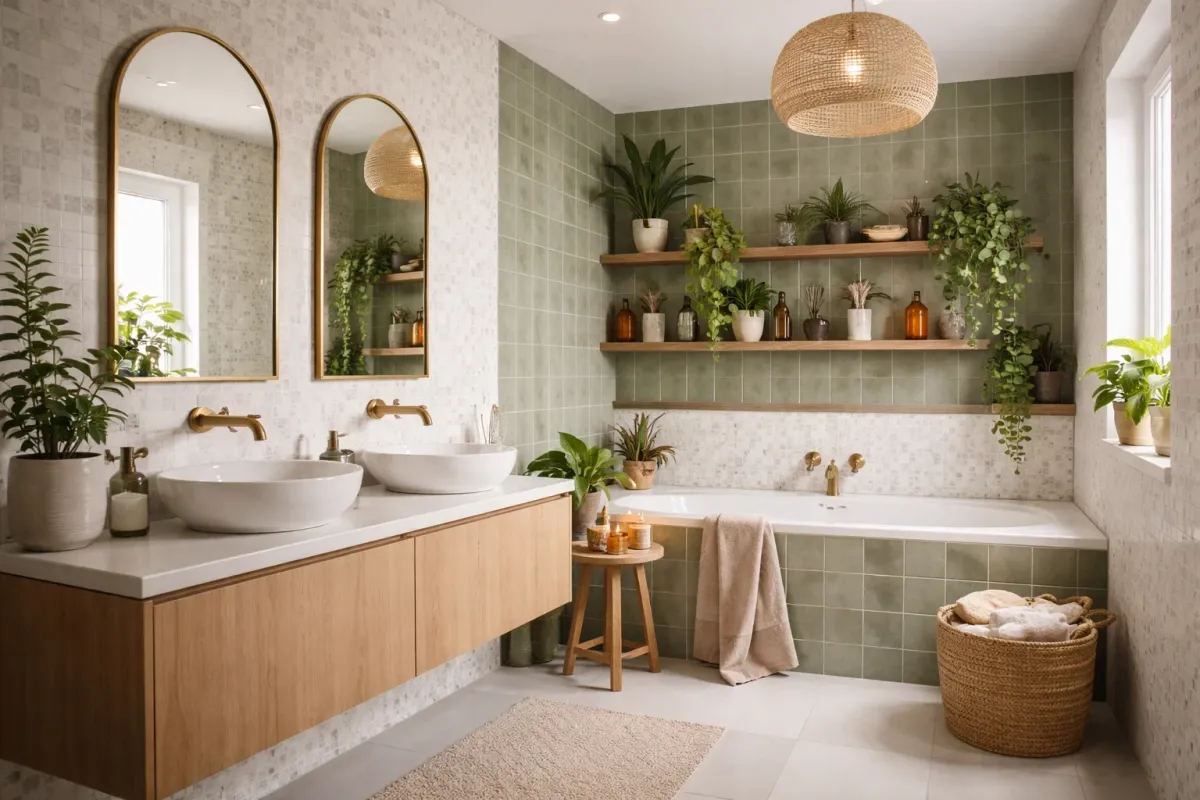
Vertical stack bond has become one of the defining looks of contemporary British bathroom design. The vertical lines lengthen walls and create a calm, orderly backdrop that lets statement fixtures and fittings take centre stage. The pattern demands precision because there is nowhere for misalignment to hide. Grout lines must be perfectly straight, and wall preparation must be immaculate. Any bow or undulation in the substrate shows immediately.
Diagonal and Diamond
Laying square tiles at a 45-degree angle to the wall or floor creates a diamond pattern that adds visual energy to simple tiles. The technique is particularly effective on floors, where the diagonal lines break up the boxy feel of a small bathroom and guide the eye toward the corners, making the room feel larger.
Diagonal layouts increase material waste by 10-15% because of the additional angled cuts at every edge. Factor this into your tile order - our tile and grout calculator adjusts the offcut percentage automatically for each pattern.
Basket Weave
Basket weave alternates pairs of rectangular tiles in horizontal and vertical orientations to create a woven texture. The effect is subtle, textured, and distinctly traditional. It suits period properties and works best on floors where the pattern can be appreciated from above. Basket weave is rarely seen on walls because the visual busyness can overwhelm a vertical surface.
Statement Tile Shapes
Metro and Subway
The 75x150mm metro tile is the backbone of British bathroom design. Its proportions are versatile enough to work in herringbone, brick bond, stack bond, and diagonal layouts. Traditional bevelled-edge metro tiles carry a slight Art Deco character, while flat-edge versions feel more contemporary.
Pricing makes metro tiles accessible for any budget. Topps Tiles and Porcelain Superstore stock bevelled white metro tiles from £18 to £25 per square metre. Coloured, crackle-glazed, and handmade versions from suppliers like Bert and May or Fired Earth range from £60 to over £120 per square metre.
Hexagonal
Hexagonal tiles create organic, honeycomb-like surfaces that soften the hard geometry of a bathroom. They are most effective on floors, where the tessellating pattern flows naturally around curves and into corners. On walls, hexagons work best as a contained feature rather than a full surface covering.
Sizes range from 50mm mosaics on mesh sheets (ideal for shower floors because the number of grout lines improves grip) up to 200mm hexagons for floors and feature walls. Large-format hexagonal floor tiles in concrete-effect porcelain are a popular choice for industrial-style bathrooms, with prices starting around £30 per square metre from Walls and Floors.
Fish Scale and Fan
Fish scale tiles, also called scallop or fan tiles, create a flowing, wave-like surface that is immediately distinctive. The organic curves suit coastal, Art Deco, and Mediterranean-inspired bathrooms. They work best as a feature wall or shower niche accent rather than covering every surface, because the visual density of the pattern can become overwhelming in a small room.
Installation is slower than standard formats because each tile must be carefully aligned to maintain the fan rhythm. Expect a labour premium of 20-30% over standard tiling. Prices for ceramic fish scale tiles start around £40 per square metre, with handmade versions from £80 upward.
Zellige
Zellige tiles are handmade Moroccan glazed terracotta with a characteristically uneven, light-catching surface. No two tiles are identical, and the slight variations in colour, thickness, and texture create a rich, artisanal quality that factory-produced tiles cannot replicate.
The imperfections are the point. Zellige surfaces shimmer as light moves across them, picking up different tones depending on the angle. They suit bathrooms that aim for warmth and character over clinical precision. In the UK, Zellige tiles are available from specialist suppliers including Bert and May (from £95/m²), Mandarin Stone (from £85/m²), and Tiles of Ezra. Standard Zellige tiles measure 100x100mm, though rectangular formats are increasingly available.
Zellige requires experienced installation. The tiles must be individually checked for flatness, and wider grout joints (3-5mm rather than the usual 1.5-2mm) are needed to accommodate the variation. Sealing is essential because the porous terracotta body absorbs moisture without it.
Design Styles and How to Tile Them
Minimalist Contemporary
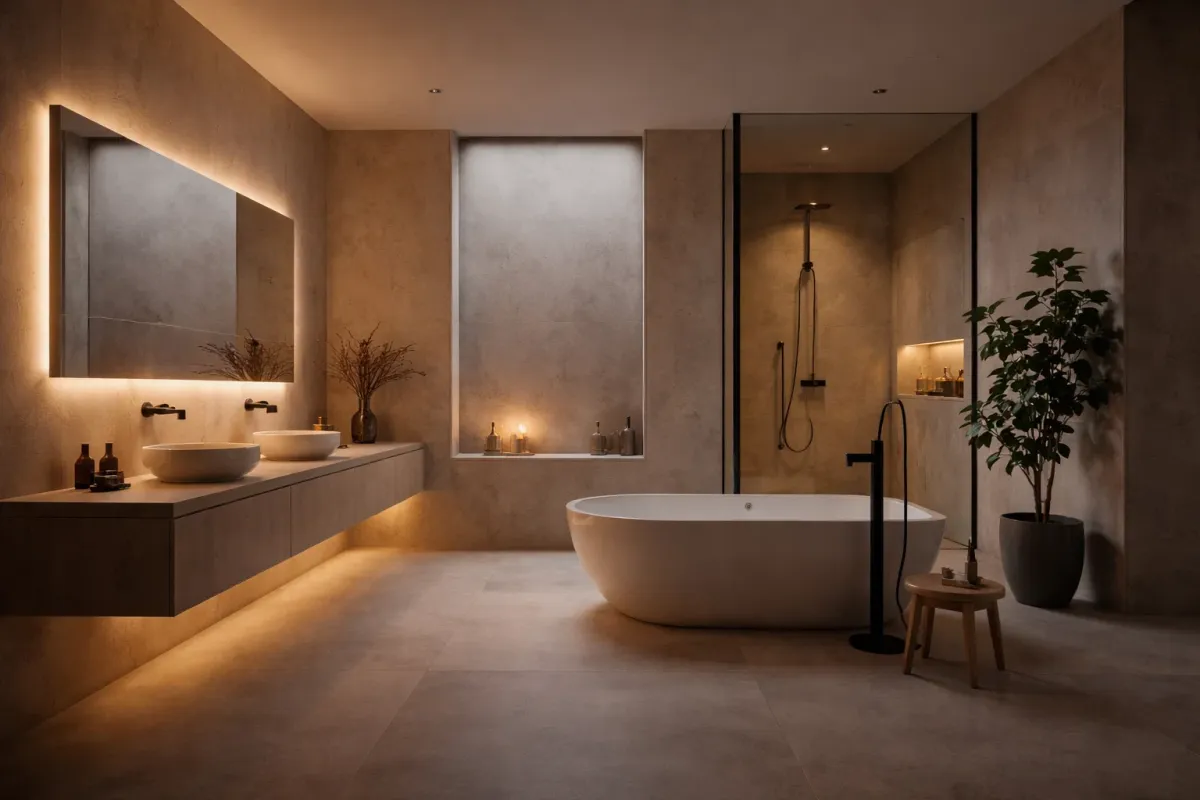
Minimalist bathrooms rely on large format tiles (600x600mm or larger) in muted tones with thin grout lines. The goal is to reduce visual noise. Rectified porcelain tiles allow grout joints as narrow as 1.5mm, creating an almost seamless surface. Neutral palettes dominate: warm greys, soft whites, greige, and pale concrete effects.
Walls and floors in the same tile and the same format create continuity that makes small bathrooms feel more spacious. The fewer the transitions, the calmer the room. A single large-format tile running from floor to ceiling in a walk-in shower, with the same tile continuing onto the bathroom floor, is the purest expression of this approach.
Victorian Heritage
Victorian bathroom tiling is experiencing a significant revival, particularly in terraced houses and period conversions across Manchester, Leeds, and London. The style uses geometric encaustic floor tiles in two to four colours, arranged in repeating patterns. Original Style, one of the UK’s leading manufacturers of Victorian geometric tiles, produces faithful reproductions of original patterns starting from £85 per square metre.
Walls in a Victorian-style bathroom typically feature plain white or cream metro tiles in a brick bond layout, sometimes with a contrasting border tile at dado height. The contrast between the ornate floor and the simple walls is fundamental to the style. Attempting to pattern-match walls and floors creates visual chaos rather than period authenticity.
For homes with original Victorian tiling, restoration is often preferable to replacement. Specialist companies can source matching tiles and repair damaged sections, preserving both the heritage value and the property’s character.
Industrial and Urban
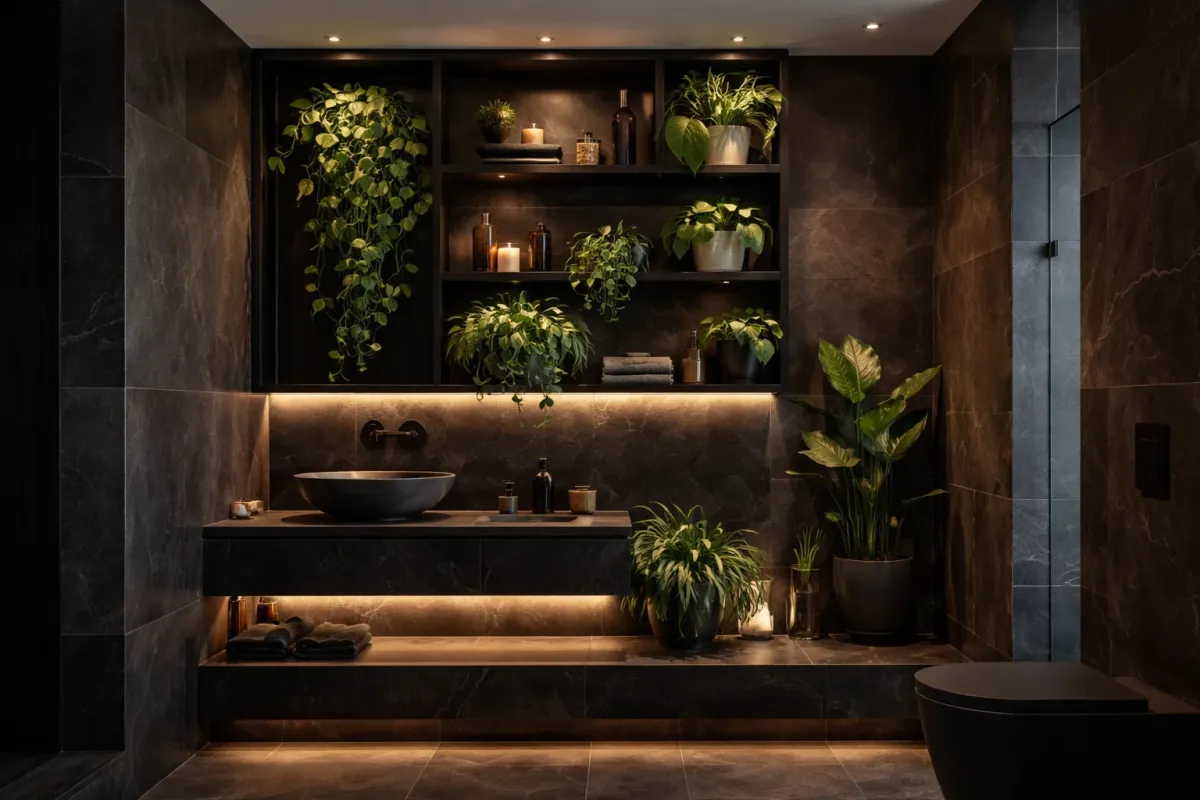
Industrial bathrooms pair raw, textured materials with exposed services and utilitarian fittings. Concrete-effect porcelain tiles in large formats (600x1200mm or 800x800mm) form the foundation. Darker tones work best: charcoal, anthracite, rusted iron, and oxidised copper effects.
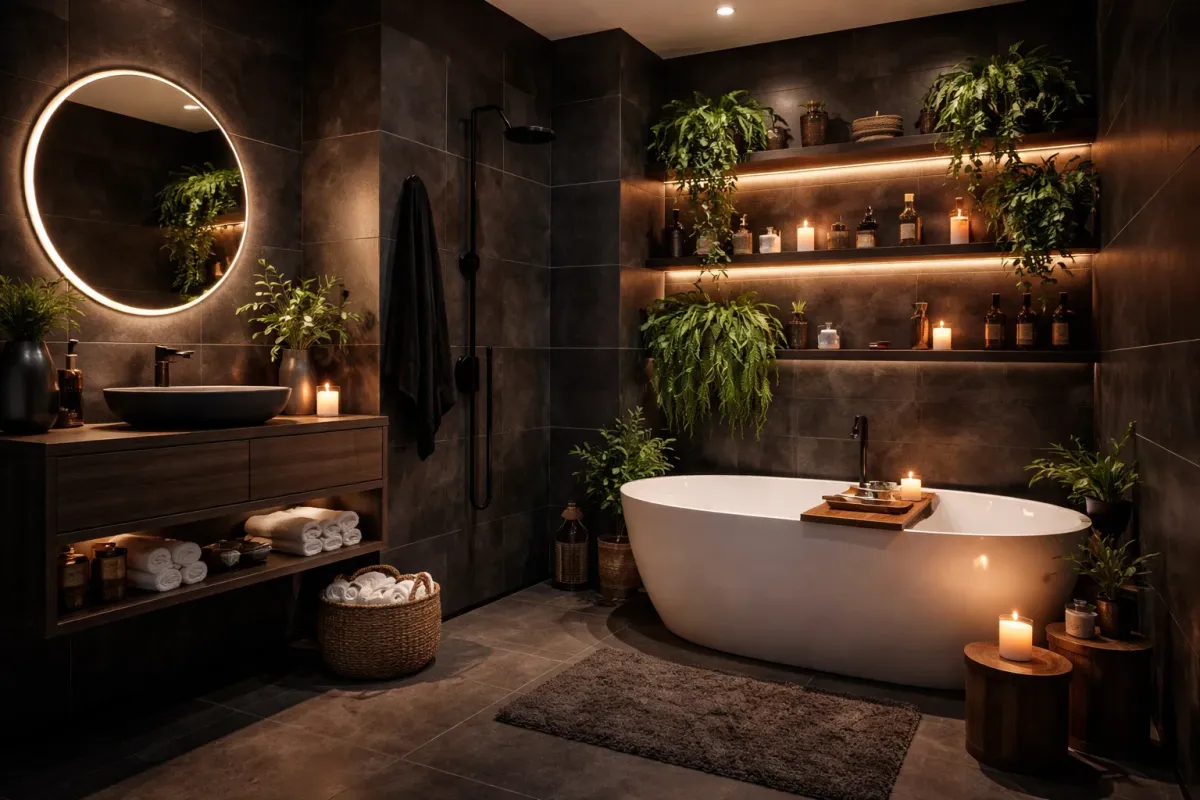
Brick-slip tiles on a feature wall add authentic texture. Metro tiles in dark colours (forest green, midnight blue, or matt black) laid in a stack bond provide an urban edge without the weight and thickness of real brick. The key is restraint. One textured or patterned surface against a plain backdrop. Industrial style fails when every surface competes for attention.
Scandinavian and Hygge
Scandinavian bathroom design prioritises light, warmth, and natural materials. Tiles in soft, muted tones form the base: sage green, dusty pink, warm white, and pale blue-grey. Wood-effect porcelain planks on the floor add organic warmth without the moisture risk of real timber.
Vertical stack bond in a single soft colour is the signature Scandinavian wall treatment. The regularity of the pattern creates calm, while the colour adds just enough personality to prevent sterility. Brass or brushed gold fixtures against soft-toned tiles are a hallmark combination. The aim is a bathroom that feels like a warm, quiet retreat rather than a clinical wet room.
Mediterranean
Mediterranean-style bathrooms embrace colour, pattern, and handcraft. Zellige tiles, hand-painted ceramics, and patterned encaustic cement tiles are the core materials. Colour palettes draw from the landscape: terracotta, cobalt blue, olive green, sun-bleached white, and warm ochre.
The style works best when the tilework is concentrated on one or two surfaces, with painted or plastered walls providing breathing space. A shower enclosure fully tiled in hand-painted Andalusian tiles, set against simple white walls, captures the Mediterranean spirit far more effectively than covering every surface in pattern.
Art Deco
Art Deco bathrooms use geometric shapes, metallic accents, and high-contrast colour schemes. Fan tiles, chevron patterns, and geometric borders are signature elements. Black and white is the classic Deco colour pairing, but deep jewel tones (emerald, sapphire, gold) are equally authentic.
Bevelled metro tiles in a brick bond, combined with a geometric mosaic floor border, create an Art Deco look that is achievable on a moderate budget. The bevelled edge catches light and adds a subtle glamour that flat tiles lack. Brass or chrome fittings complete the period reference.
Practical Decisions That Affect the Finished Look
Large Format vs Small Format
Large format tiles (600x600mm and above) reduce grout lines and create a cleaner, more expansive feel. They are ideal for small bathroom renovations where visual simplicity helps the room feel larger. Slabs up to 1200x2400mm can now cover entire walls with just one or two grout joints.
Small format tiles (under 200x200mm) create more visual texture and work better for curved surfaces like shower niches and arched alcoves. The increased number of grout lines also improves grip underfoot, which is why small-format mosaics remain the preferred choice for wet room and shower floors.
Large format tiles demand perfectly flat substrates. Any undulation shows as lippage (a step between adjacent tile edges) that catches light and looks amateur. Professional floor levelling and careful wall preparation are non-negotiable when working with large formats. For guidance on the full preparation process, see our bathroom renovation guide.
Grout Colour and Width
Grout has a far greater impact on the finished appearance than most homeowners expect. Matching grout (same colour as the tile) creates a seamless, monolithic surface where individual tiles dissolve into the whole. Contrasting grout emphasises the pattern and shape of each tile, making layouts like herringbone and hexagonal far more graphic and pronounced.
Standard cement grout joints run 2-3mm wide. Rectified tiles allow joints as narrow as 1.5mm. Epoxy grout costs two to three times more than cement grout but is waterproof, stain-resistant, and does not require sealing. For wet areas like showers and bath surrounds, epoxy grout is worth the premium because it eliminates the mould and discolouration that plague cement grout within two to three years.
Feature Walls vs Full Tiling
A single feature wall is the most cost-effective way to introduce a statement tile. Houzz UK found that 34% of renovating homeowners chose this approach. The feature wall is typically the shower back wall or the wall behind the basin, while the remaining surfaces use a complementary plain tile.
This strategy lets you spend more per square metre on a premium tile (handmade Zellige, artisan encaustic, natural stone) without the cost of covering the entire room. Three square metres of Zellige at £95/m² costs £285. Fifteen square metres costs £1,425. The feature wall approach delivers 80% of the visual impact at 20% of the premium tile cost.
Anti-Slip Ratings for Wet Areas
All floor tiles in bathrooms should meet minimum slip-resistance standards, particularly in showers and wet rooms. The three main rating systems used in the UK are:
| Rating System | Test Method | Bathroom Minimum |
|---|---|---|
| R Rating (DIN 51130) | Inclined platform with oil | R10 (bathrooms), R11 (wet rooms) |
| ABC Barefoot (DIN 51097) | Inclined platform barefoot | B (wet areas), C (pool surrounds) |
| PTV Pendulum (BS 7976) | Portable friction tester | 36+ (low slip potential) |
Polished porcelain and high-gloss ceramic tiles are beautiful on walls but dangerous on wet floors. Matt, textured, and lappato (semi-polished) finishes provide adequate grip for bathroom floors. Mosaic tiles with their dense grout network offer inherently good slip resistance, which is why they remain the go-to for shower trays and wet room floors.
For a complete guide to bathroom underfloor heating compatibility with different tile types, see our dedicated article.
UK Tile Costs and Where to Source Them
| Tile Type | Price Range (per m²) | Recommended Suppliers |
|---|---|---|
| Standard ceramic metro | £18 - £30 | Topps Tiles, Porcelain Superstore, Wickes |
| Porcelain large format | £25 - £60 | Porcelain Superstore, Walls and Floors, Topps Tiles |
| Encaustic cement | £55 - £120 | Bert and May, Fired Earth, Original Style |
| Zellige (handmade) | £85 - £130 | Bert and May, Mandarin Stone, Tiles of Ezra |
| Victorian geometric | £85 - £150 | Original Style, London Mosaic, Olde English Tiles |
| Natural stone (marble/slate) | £50 - £200+ | Mandarin Stone, Fired Earth, Stone Superstore |
| Hexagonal porcelain | £30 - £65 | Walls and Floors, Topps Tiles, Tile Mountain |
| Fish scale/fan ceramic | £40 - £90 | Fired Earth, Tile Mountain, Walls and Floors |
Professional tiling labour in Greater Manchester runs £150 to £220 per day, with most bathrooms requiring three to five days of tiling depending on the layout complexity and tile format. Herringbone and chevron patterns add approximately one extra day compared to a standard brick bond.
Always order 10-15% more tiles than the measured area to allow for cuts, breakage, and future repairs. Diagonal and herringbone layouts require 15% overage rather than the standard 10% because of the additional waste at edges.
For help choosing the right tiles and layout for your bathroom, get in touch with our Manchester tiling team. We can advise on tile selection, layout options, and provide a free, no-obligation quote for your project. Our bathroom panels vs tiles guide is also worth reading if you are weighing up alternatives to traditional tiling.
Frequently Asked Questions
What is the most popular bathroom tile layout in the UK?
Are large format tiles suitable for small bathrooms?
How much does herringbone tiling cost compared to standard brick bond?
What grout colour should I choose for bathroom tiles?
What anti-slip rating do bathroom floor tiles need?
Are Zellige tiles worth the cost for a bathroom?
How do I choose between herringbone and chevron patterns?
Past Projects


Get a Free Quote
Book a free, no-obligation site survey. Call us on 07428 653 653 or request a callback.
Book Free SurveyOur Clients' Reviews

5/5

5/5
5/5

5/5

5/5
Based on 453+ verified reviews across all platforms
Related Articles

How Much Does a New Bathroom Cost in 2026? UK Pricing Guide
What a New Bathroom Really Costs in 2026 The question every homeowner asks before a bathroom renovation is the same. How much? The answer depends on what you want, what you have already, and how much of the existing layout you intend to keep. But the data from thousands of UK projects gives us a clear picture.
view this article Read more
Bathroom Renovation Guide: Every Stage From Start to Finish
What a Bathroom Renovation Actually Involves A complete bathroom renovation is one of the most rewarding home improvement projects you can undertake, but it is also one of the most misunderstood. Homeowners frequently picture the finished result without appreciating the sequence of skilled trades and carefully timed stages that make it happen. Every professional bathroom renovation follows a logical order, and understanding that order is the single most important thing you can do before your project begins.
view this article Read more
Quartz, Granite or Porcelain Worktops: Which Suits Your Kitchen?
The Three-Way Decision Most Kitchen Renovations Come Down To
view this article Read more
Ceramic Disc Technology in Bathroom Taps: How It Works
The Technology Inside Almost Every Modern Tap If your bathroom taps turn with a smooth quarter-turn rather than two and a half rotations, they contain ceramic disc cartridges. This technology has become so dominant that it is now difficult to buy a new tap in the UK that does not use it. Yet most homeowners have no idea how it works, why it fails, or what to do when a ceramic disc tap starts dripping.
view this article Read more

How to Choose an Electrical Bathroom Mirror
What an Electrical Bathroom Mirror Actually Does
view this article Read more
Best Bathroom and Toilet Brands in the UK
What Makes a Good Bathroom Brand The brand name on your toilet, basin or shower valve determines far more than the price tag. It affects how long the product lasts, how easy it is to get replacement parts in five or ten years, whether the finish holds up to daily cleaning, and how well the engineering behind the product actually performs in a real bathroom rather than a showroom.
view this article Read more
Bathroom Underfloor Heating: Types, Installation and What to Expect
Why Underfloor Heating Works So Well in Bathrooms Stepping onto a warm bathroom floor on a cold January morning is one of those small luxuries that, once experienced, becomes very difficult to give up. Underfloor heating has grown from a niche luxury into a genuinely practical heating solution for UK bathrooms, and the reasons go well beyond comfort.
view this article Read more
Tools Required for Bathroom Fitting: The Professional Trade Toolkit
The Professional Bathroom Fitter’s Complete Toolkit Every professional bathroom fitter knows that quality tools are an investment, not an expense. The difference between a flawless installation and a problematic one often comes down to having the right equipment for the job. Over years of bathroom fitting projects across Greater Manchester, we have refined our toolkit to include everything a trade professional needs on site.
view this article Read more
What You Need to Know Before Your Kitchen Renovation
The Gap Between Expectation and Reality A kitchen renovation is not a weekend project. The 2025 Houzz UK Kitchen Trends Study found that 71 percent of homeowners change their kitchen layout during a renovation, and the median spend rose 34 percent year on year to £17,500. Those numbers tell you two things. First, most people end up doing more work than they originally planned. Second, the costs are significant enough that poor preparation leads to genuinely painful surprises.
view this article Read more
Accessible Bathroom Design: UK Regulations, Grants and Guide
Why Accessible Bathroom Design Matters Around 16.8 million people in the United Kingdom have a disability. That is one in four of the population, according to the DWP Family Resources Survey 2023/24, and the figure has risen by 4.9 million over the past decade. Among adults over State Pension age, 45 percent are disabled. The most common impairment types for working-age adults are mental health conditions (48 percent) and mobility impairments (42 percent).
view this article Read more
Bathroom Renovation Environmental Impact: Water, Energy and Waste
Why Your Bathroom Renovation Has a Bigger Environmental Footprint Than You Think
view this article Read more