
Choosing the Right Bathroom Taps: A Practical Buying Guide
How to choose bathroom taps for your water pressure, basin type and budget. UK buying guide covering valve types, finishes and common mistakes.
Why the Right Tap Matters More Than You Think
Taps are the most-used fixtures in any bathroom. You turn them on and off dozens of times a day, and over a decade that adds up to tens of thousands of operations. A poorly chosen tap drips, dribbles, stiffens, corrodes or simply looks wrong against the basin it sits on. A well-chosen one works invisibly for years.

The problem most homeowners face is not a shortage of options. Walk into any bathroom showroom or scroll through Victorian Plumbing and you will find hundreds of taps at every price point. The real challenge is knowing which questions to ask before you buy. Water pressure, tap hole count, valve type, spout projection and finish all need to align with your bathroom, your plumbing system and your budget. Get any one of those wrong and the tap either will not fit, will not perform or will not last.
This guide covers the decision process step by step. If you already know what type of tap you want and need specific product recommendations, we have dedicated guides for basin mixers and top brands and shower mixers.
Check Your Water Pressure First
This is the single most important factor in choosing bathroom taps, and it is the one most frequently ignored. Every tap has a minimum operating pressure, and if your system cannot deliver it, the tap will barely trickle regardless of how much you spent on it.
UK homes run on three main plumbing systems, each delivering very different pressures.
Gravity-fed systems use a cold water tank in the loft and a hot water cylinder, typically in the airing cupboard. Water pressure depends entirely on the vertical distance between the tank and the tap outlet. One metre of drop produces roughly 0.1 bar. A typical Victorian terrace in Manchester with a loft tank sitting two metres above the bathroom delivers approximately 0.2 bar upstairs and 0.5 bar at ground floor level. Many older properties across Prestwich, Salford and wider Greater Manchester still use this system.
Combi boiler systems heat water on demand directly from the mains. They eliminate both the loft tank and the hot water cylinder, and they typically deliver 1.0 to 1.5 bar throughout the house. Most modern builds and boiler conversions use this setup.
Unvented systems use a pressurised hot water cylinder fed directly from the mains. They deliver 1.5 to 3.0 bar and provide the strongest, most consistent flow of the three systems.
A standard mixer tap requires a minimum of 0.5 bar to function properly. If your home runs on a gravity-fed system with only 0.2 bar available upstairs, you need taps specifically rated for low pressure, or you need to address the pressure at source by fitting a pump or converting to a combi boiler. Brands like Roper Rhodes design all their taps to work from 0.1 bar, making them a reliable choice for older properties. Bristan and Ideal Standard also offer low-pressure ranges.
Ask your bathroom plumber to test the static pressure at the tap position before you commit to any purchase. It takes five minutes with a pressure gauge and saves the cost of returning incompatible taps.
Tap Hole Configurations
Before choosing a tap style, count the holes in your basin or check the specification of the basin you are buying. The tap and the basin must match.
One tap hole (1TH) is the modern standard. A single central hole takes a monobloc mixer tap that blends hot and cold water through one spout with a single lever or paired handles. This is the most common configuration in contemporary bathrooms and cloakrooms. Nearly all wall-hung and countertop basins sold in the UK today are drilled for a single tap hole.
Two tap holes (2TH) accommodate a pair of pillar taps, one hot and one cold. This is the traditional British arrangement and remains common in period properties, particularly with crosshead or capstan-style handles. Two-hole basins can also accept certain mixer tap sets designed for dual-hole mounting.
Three tap holes (3TH) take a three-piece mixer set with a central spout and separate hot and cold handles spaced apart. This creates a symmetrical, traditional look and suits larger basins in period-style bathrooms. Burlington and Perrin and Rowe produce some of the finest three-hole sets available in the UK market.
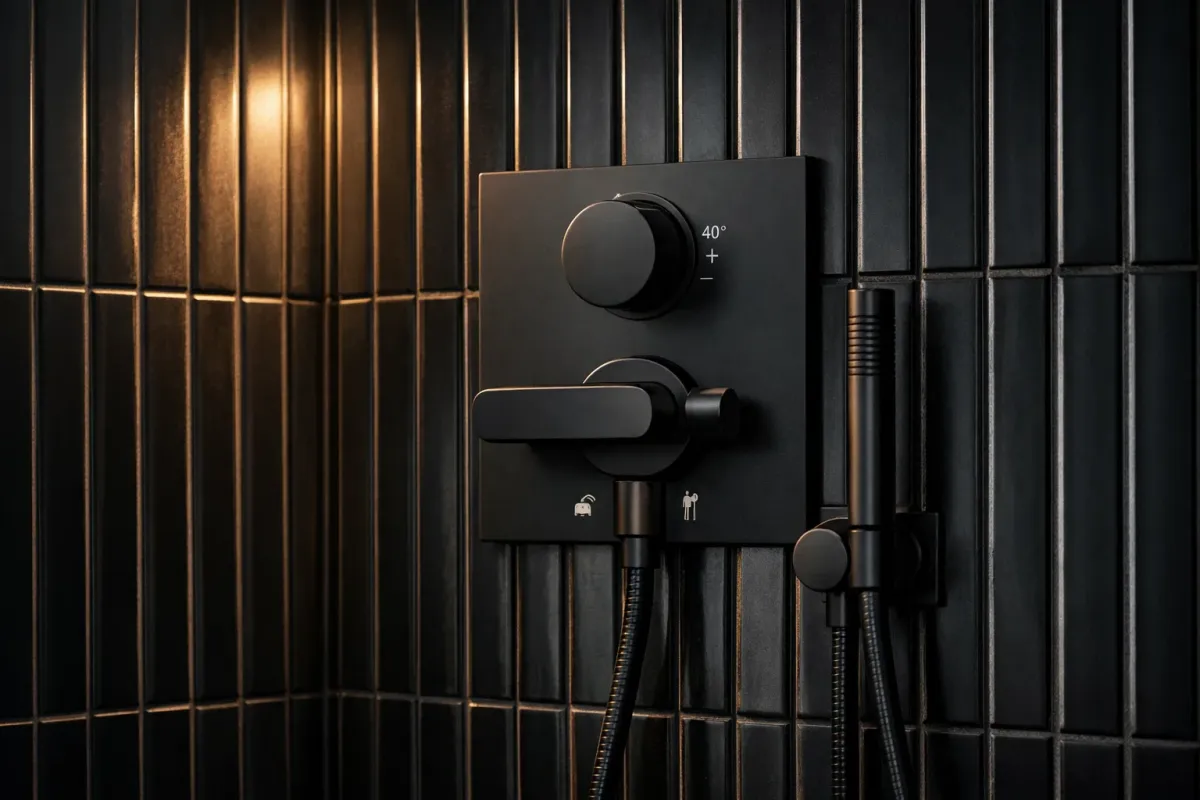
No tap holes means wall-mounted taps. The spout and controls are fixed to the wall above the basin, with all pipework concealed behind the tiles. This creates a clean, contemporary look and makes cleaning the basin surface easier. The critical point is that wall-mounted taps require first-fix pipework before the walls are plastered and tiled. Deciding on wall-mounted taps after the walls are finished means stripping tiles and starting again.
Valve Types and Why They Matter
The valve is the mechanical heart of every tap. It controls the flow of water and determines how the tap feels to operate, how long it lasts and how much maintenance it needs.
Ceramic disc valves are the modern standard for good reason. Two polished ceramic discs rotate against each other, and water flows when the openings in the discs align. Factory-tested to withstand 500,000 or more open-close cycles, ceramic disc valves are designed to last decades without dripping. They require no rubber washers, resist corrosion, and operate with a smooth quarter-turn action from off to full flow. Every reputable tap brand now uses ceramic disc cartridges across their ranges.
Compression valves are the traditional alternative. A rubber washer is pressed against a metal seat by screwing the handle down through multiple turns. Both the washer and the seat degrade over time, which means these taps will eventually drip and need servicing every one to three years depending on water hardness. They still appear in traditional-style pillar taps and can be appropriate for a period bathroom where the authentic multi-turn handle operation is part of the design intent. For a deeper comparison, see our article on ceramic disc technology in bathrooms.
When shopping, look for taps described as “quarter-turn” in the specifications. This confirms a ceramic disc valve and also indicates easier operation for anyone with limited hand strength or mobility.
Basin Taps
Basin taps are where most of the decision-making happens, because the basin is the fixture you interact with most frequently.
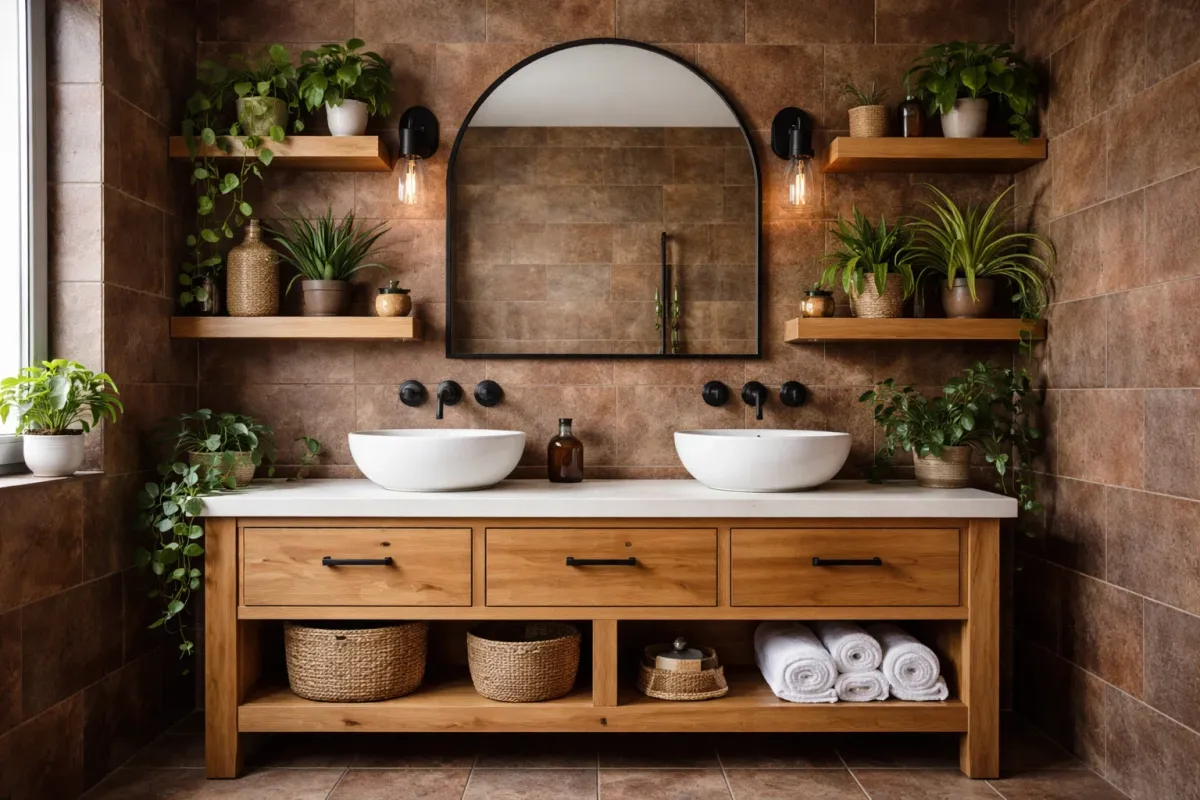
A monobloc basin mixer with a single lever is the default choice for modern bathrooms. One lever controls both temperature and flow, making it intuitive and quick. For families, look for models with an eco-click cartridge that creates a resistance point at half flow, reducing water consumption during routine hand washing.
Spout reach and height are details that many homeowners overlook until the tap is installed. A high-arc spout on a shallow cloakroom basin will splash water onto the vanity and the user. A short spout on a deep countertop basin will not direct water into the bowl properly. The spout should project far enough to deliver water over the plughole without extending beyond the far edge of the basin. Hansgrohe publishes detailed combination guides for matching spout dimensions to basin depths, and any decent showroom will let you test the pairing before purchase.
Countertop basins sit on top of the vanity surface rather than dropping into it. They are taller than inset basins, which means a standard basin mixer will not reach over the rim. Extended or tall basin mixers are designed specifically for this application. Check the overall height in the product specification and compare it against your basin rim height before ordering.
For detailed brand comparisons and specific basin mixer recommendations, see our guide to bathroom basin mixers and top brands.
Bath Taps and Bath-Shower Mixers
Bath taps need to deliver a higher flow rate than basin taps because filling a bath at a trickle is painfully slow. A standard 170-litre bath takes around eight to ten minutes to fill at a reasonable flow rate, and a low-pressure gravity-fed system can struggle with this.
A bath-shower mixer is the most practical choice for family bathrooms. It combines a bath filler with a diverter valve that redirects water to a handset shower. This eliminates the need for a separate shower installation and costs far less than a standalone shower valve and enclosure. Most bath-shower mixers require a minimum of 0.5 to 1.0 bar.
For families with young children, a TMV2-certified thermostatic bath-shower mixer is strongly recommended. Building Regulations Part G requires bath outlets in new-build homes to be limited to a maximum of 48 degrees Celsius through a thermostatic mixing valve. The regulation technically applies only to new builds and change-of-use conversions, but the safety logic applies everywhere a child uses a bath. Over 2,000 people are admitted to UK hospitals each year from hot water scalds, and children under five account for nearly half of those injuries. For more on bath safety, see our guide to family-friendly bathroom design.
Freestanding bath fillers are floor-mounted taps that stand beside a freestanding bath. They make a dramatic visual statement but require pipework routed through the floor, which must be planned during the bathroom build phase. Quality floor-standing fillers from Crosswater or Burlington typically range from £500 to well over £2,000.
Finishes: Pick One and Commit
Chrome remains the dominant finish for bathroom taps in the UK, accounting for roughly 42 percent of the global brassware market. It is durable, easy to clean, matches everything, and typically carries the longest manufacturer warranty.
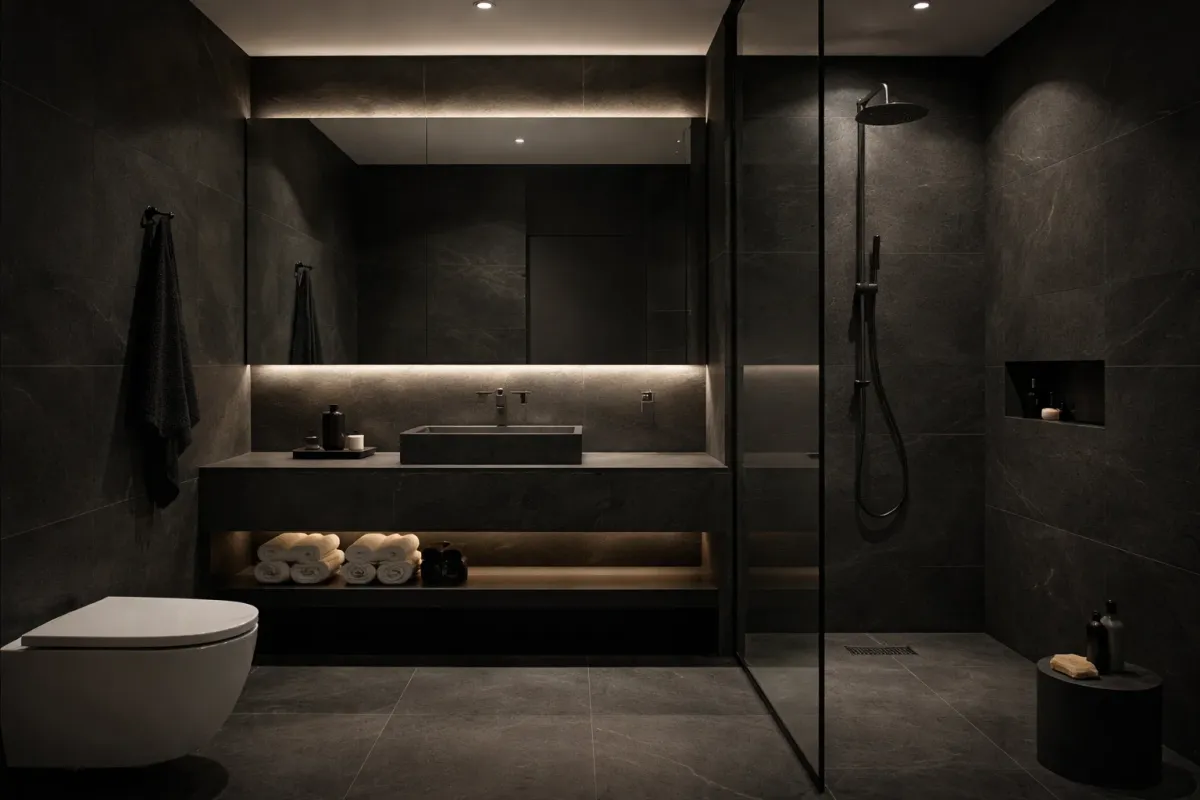
Brushed brass has become the most popular alternative finish for 2025 and into 2026, offering warmth and a modern edge that works particularly well against neutral wall colours and textured vanity surfaces. Matt black, which dominated trend articles for several years, is now used more as an accent than a full-scheme finish.
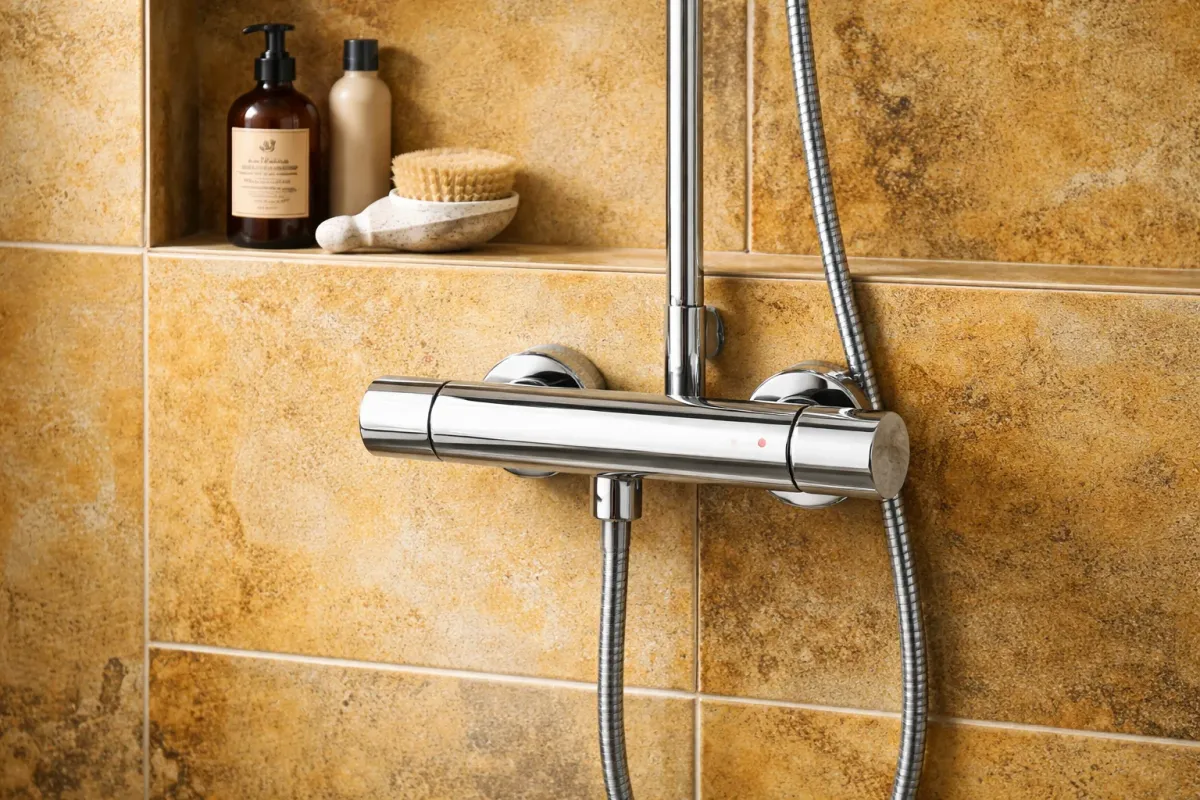
The design rule for 2026 is straightforward. Pick one metallic finish and use it consistently across every touchpoint: basin tap, shower controls, bath filler and key accessories. Consistency is what makes a bathroom look cohesive rather than assembled from leftover parts.
One practical warning: special finishes often carry shorter warranties than chrome. Bristan offers 10 years on chrome taps but only three years on brushed brass, black and gunmetal finishes. Crosswater is an exception, offering 15 years across all finishes including their speciality ranges. For an in-depth comparison of chrome, brass and matt black, see our guide to bathroom fixture materials.
Water Efficiency
A standard basin tap flows at 6 to 8 litres per minute. An unrestricted older tap can push through 12 to 15 litres per minute. Water-efficient taps reduce this to 5 litres per minute or less without a noticeable drop in perceived pressure, thanks to built-in aerators that mix air into the water stream.
Hansgrohe’s EcoSmart technology limits basin taps to 5 litres per minute, with their EcoSmart+ range dropping further to 4 litres per minute. Grohe’s EcoJoy system achieves similar reductions. At 4 litres per minute, a basin tap still delivers more than enough flow for hand washing, teeth brushing and face washing.
The UK government is introducing a mandatory water efficiency labelling scheme (A to F rating, similar to energy labels) that will cover basin taps, shower outlets and toilets. The 2025 Houzz UK Bathroom Trends Study found that 42 percent of renovating homeowners added water-efficient fixtures, with 73 percent motivated by lower bills and 65 percent by environmental concerns.
If your existing taps are wasteful but otherwise functional, a retrofittable aerator (£3 to £10 per tap) can cut flow rates significantly without replacing the tap itself.
WRAS Approval
WRAS stands for the Water Regulations Advisory Scheme. A tap with WRAS approval has been independently tested and certified to comply with the Water Supply (Water Fittings) Regulations 1999. This means it will not cause waste, contamination or misuse of the water supply.
For new builds, water companies will not connect the mains supply without proof that every product in the plumbing system is WRAS-approved. For renovations, WRAS approval is not legally mandatory but it is the clearest indicator that a tap meets UK water quality and safety standards. Every major brand sold through reputable UK retailers carries WRAS approval. Unbranded imports from marketplace sellers frequently do not.
Common Mistakes to Avoid
Ignoring water pressure. The most expensive tap in the showroom will barely trickle if your gravity-fed system delivers 0.2 bar and the tap needs 1.0 bar. Always test pressure before buying.
Wrong tap hole count. A three-hole mixer set will not fit a single-hole basin. Count the holes or confirm the basin specification before ordering.
Spout too tall for a shallow basin. High-arc taps look striking in a showroom but cause splashing in compact basins. Match spout projection and height to basin depth.
Cheap cartridges in unbranded taps. The cartridge determines how long a tap lasts. A £25 unbranded tap with a poor cartridge that drips within months is worse value than a £60 Bristan with a 10-year guarantee.
Planning wall-mounted taps too late. Concealed pipework must be installed before plastering and tiling. Late decisions mean expensive rework.
Mixing finishes across the room. Chrome taps with brushed brass shower controls and a matt black towel rail creates visual chaos. One finish, used consistently, always looks better.
Forgetting the waste. Basin taps and wastes need to match in finish. Check whether the tap includes a waste or whether you need to buy one separately, and confirm whether your basin requires a slotted (with overflow) or unslotted (without overflow) waste.
What to Spend: UK Price Guide
| Price Band | Cost | What You Get | Brands |
|---|---|---|---|
| Budget | £25–60 | Chrome, brass body, ceramic disc, 5–10yr warranty | Bristan, Hudson Reed |
| Mid-range | £65–150 | Smoother operation, finish options, 10–15yr warranty | Roper Rhodes, Ideal Standard, Grohe |
| Premium | £150–400 | Water-saving tech, designer aesthetics | Hansgrohe, Crosswater, Grohe |
| Luxury | £400+ | Handcrafted, British-made, heritage design | Perrin and Rowe, Burlington, Axor |
For a full bathroom renovation budget breakdown including taps and all fittings, our cost guide covers what to expect at each price level.
The sweet spot for most family bathrooms sits in the mid-range. A Roper Rhodes basin mixer at around £80 with a 10-year guarantee (including the cartridge) represents excellent value, as does a Bristan Prism at roughly £105. Both are designed for UK water systems, both are WRAS-approved, and both offer reliable parts supply through any plumber’s merchant.
Frequently Asked Questions
What bar pressure do bathroom taps need?
How do I know if my taps are WRAS approved?
Are ceramic disc taps better than traditional compression taps?
Can I fit a mixer tap to a gravity-fed system?
What is the best tap finish for durability?
How much should I spend on bathroom taps?
Do I need a thermostatic mixing valve on bath taps?
Past Projects


Get a Free Quote
Book a free, no-obligation site survey. Call us on +44 7428 653 653 or request a callback.
Book Free SurveyOur Clients' Reviews

5/5

5/5

5/5

5/5
Based on 453+ verified reviews across all platforms
Related Articles
How Much Does a New Bathroom Cost in 2026? UK Pricing Guide
What a New Bathroom Really Costs in 2026 The question every homeowner asks before a bathroom renovation is the same. How much?
view this article Read more
Bathroom Renovation Guide: Every Stage From Start to Finish
What a Bathroom Renovation Actually Involves A complete bathroom renovation is one of the most rewarding home improvement projects you can undertake, but it is also one of the most misunderstood.
view this article Read more
Bathroom Tiling Styles for Timeless Elegance
Why Layout Matters More Than the Tile Itself A bathroom tile is a raw ingredient. The layout pattern is the recipe.
view this article Read more
Quartz, Granite or Porcelain Worktops: Which Suits Your Kitchen?
The Three-Way Decision Most Kitchen Renovations Come Down To Once you have decided that laminate is not enough and solid wood is not right for your cooking habits, the conversation narrows quickly.
view this article Read more
Ceramic Disc Technology in Bathroom Taps: How It Works
The Technology Inside Almost Every Modern Tap If your bathroom taps turn with a smooth quarter-turn rather than two and a half rotations, they contain ceramic disc cartridges.
view this article Read more
Fitting Kitchen Worktops: The Complete Installation Guide
From Order to Fitted The worktop is one of the last things fitted in a kitchen renovation and one of the first things to go wrong if the process is rushed.
view this article Read more
How to Choose an Electrical Bathroom Mirror
What an Electrical Bathroom Mirror Actually Does An electrical bathroom mirror is a permanently wired fixture that combines a mirror with integrated LED lighting, and often a demister pad, Bluetooth speakers, a shaver socket, or adjustable colour temperature.
view this article Read more
Best Bathroom and Toilet Brands in the UK
What Makes a Good Bathroom Brand The brand name on your toilet, basin or shower valve determines far more than the price tag.
view this article Read more
Bathroom Underfloor Heating: Types, Installation and What to Expect
Why Underfloor Heating Works So Well in Bathrooms Stepping onto a warm bathroom floor on a cold January morning is one of those small luxuries that, once experienced, becomes very difficult to give up.
view this article Read more
Tools Required for Bathroom Fitting: The Professional Trade Toolkit
The Professional Bathroom Fitter’s Complete Toolkit Every professional bathroom fitter knows that quality tools are an investment, not an expense. The difference between a flawless installation and a problematic one often comes down to having the right equipment for the job.
view this article Read more
What You Need to Know Before Your Kitchen Renovation
The Gap Between Expectation and Reality A kitchen renovation is not a weekend project. The 2025 Houzz UK Kitchen Trends Study found that 71 percent of homeowners change their kitchen layout during a renovation, and the median spend rose 34 percent year on year to £17,500.
view this article Read more
Accessible Bathroom Design: UK Regulations, Grants and Guide
Why Accessible Bathroom Design Matters Around 16.8 million people in the United Kingdom have a disability. That is one in four of the population, according to the DWP Family Resources Survey 2023/24, and the figure has risen by 4.
view this article Read more