
Ceramic Disc Technology in Bathroom Taps: How It Works
How ceramic disc tap valves work, why they outlast rubber washers, and how to maintain or replace a cartridge. UK standards, warranties and costs.
The Technology Inside Almost Every Modern Tap
If your bathroom taps turn with a smooth quarter-turn rather than two and a half rotations, they contain ceramic disc cartridges. This technology has become so dominant that it is now difficult to buy a new tap in the UK that does not use it. Yet most homeowners have no idea how it works, why it fails, or what to do when a ceramic disc tap starts dripping.

Understanding the mechanism inside your taps matters for one practical reason. When something goes wrong, a ten-minute cartridge swap can save you a £120 plumber call-out. This guide covers the engineering, the comparison with older valve types, common failure modes, and step-by-step cartridge replacement. If you are choosing new taps rather than maintaining existing ones, our bathroom taps buying guide covers the selection process in detail.
How Ceramic Disc Cartridges Actually Work
The engineering is elegant and surprisingly simple. Two circular plates made from aluminium oxide (alumina) sit stacked inside a brass cartridge housing about the size of a cotton reel. The ceramic rates 9 on the Mohs hardness scale, one step below diamond, and the discs are ground and polished to sub-micron flatness during manufacture.
The lower disc is fixed in the housing. The upper disc connects to the tap handle and rotates above it. Both discs have precisely cut channels corresponding to the hot water inlet, the cold water inlet and a single outlet to the spout. When the channels in the two discs align, water flows through. Rotating the upper disc progressively misaligns the channels, reducing flow until the solid ceramic surfaces overlap completely and block all water.
The seal between the two discs is created by their extreme flatness rather than by compression. Water pressure beneath the cartridge pushes the discs together, and the polished surfaces are so precisely matched that water cannot pass between them when closed. No rubber washer, no deformable seal, no wear surface that degrades with every use.
For mixer taps with a single lever, one cartridge handles everything. Moving the lever up and down controls flow volume. Moving it left and right adjusts the proportional mix of hot and cold water before it exits the spout. The whole mechanism has fewer moving parts than a ballpoint pen.
Five Valve Types Compared
Ceramic disc cartridges replaced several older technologies that are still found in UK bathrooms, particularly in period properties. Knowing which type you have determines how you maintain or repair it.
Ceramic Disc
The modern standard. Two polished alumina discs control flow through aligned channels. Quarter-turn or half-turn operation from fully closed to fully open. Laboratory tested to 500,000 or more operation cycles, far exceeding the 200,000-cycle requirement of BS EN 817. Found in virtually all new taps sold in the UK above the budget tier.
Compression (Rising Spindle)
The traditional mechanism that dominated UK plumbing for over a century. A threaded spindle screws down to compress a rubber washer against a metal valve seat, physically blocking the water. Requires two and a half or more full rotations from closed to open. The rubber washer is the wear part, and it degrades predictably. Hot water washers fail faster than cold because heat accelerates rubber deterioration. Replacement washers cost pennies but need changing every one to three years depending on use. Still found in traditional pillar taps and some heritage-style ranges.
Ball Valve
A steel or brass ball with grooves and holes sits inside the tap body. Rotating the handle adjusts the ball’s position to control temperature and flow. Multiple small parts including springs, O-rings and rubber seats make this the most complex mechanism to repair. Primarily a North American design and rare in UK domestic taps, though some imported kitchen taps use ball valves.
Non-Ceramic Cartridge
A self-contained cartridge with rubber or plastic internal components. Single-lever operation similar to ceramic disc but with softer, less durable internals. The entire cartridge swaps as one unit when it wears out, typically every five to ten years. Found in budget single-lever mixer taps where the ceramic disc price premium was avoided.
Thermostatic (Shower Valves)
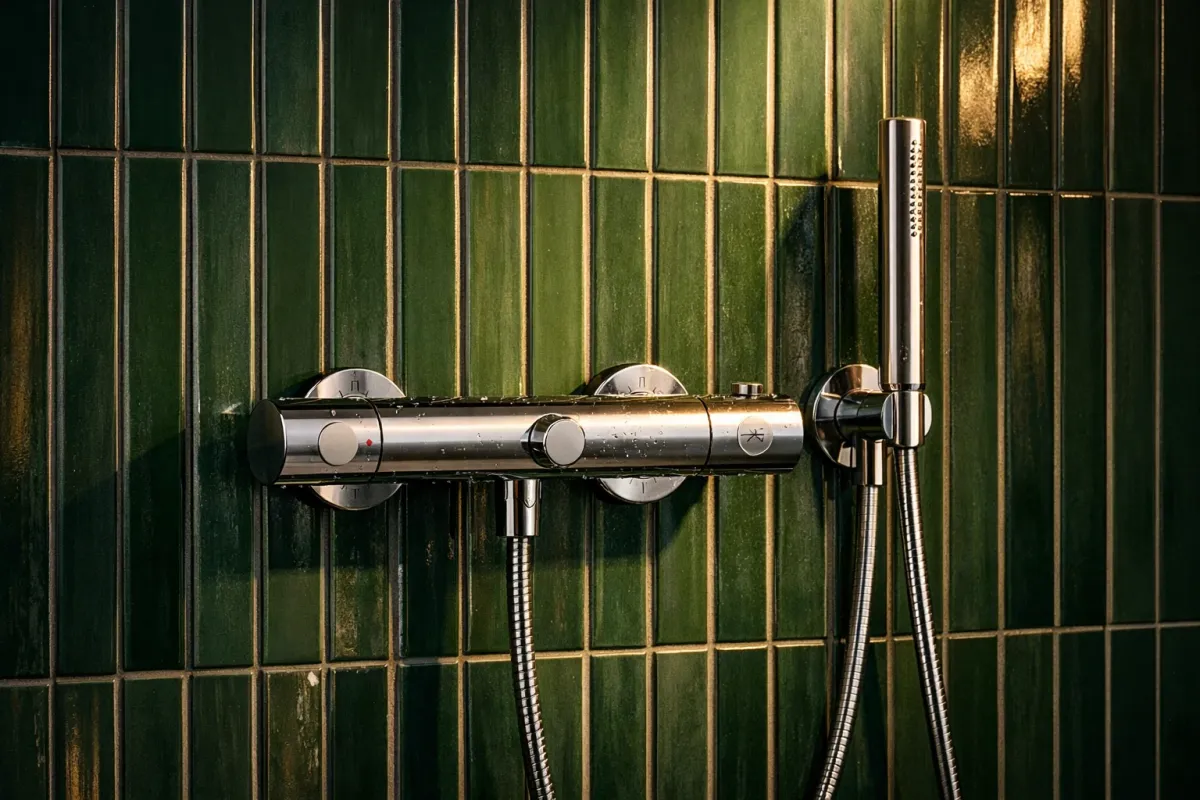
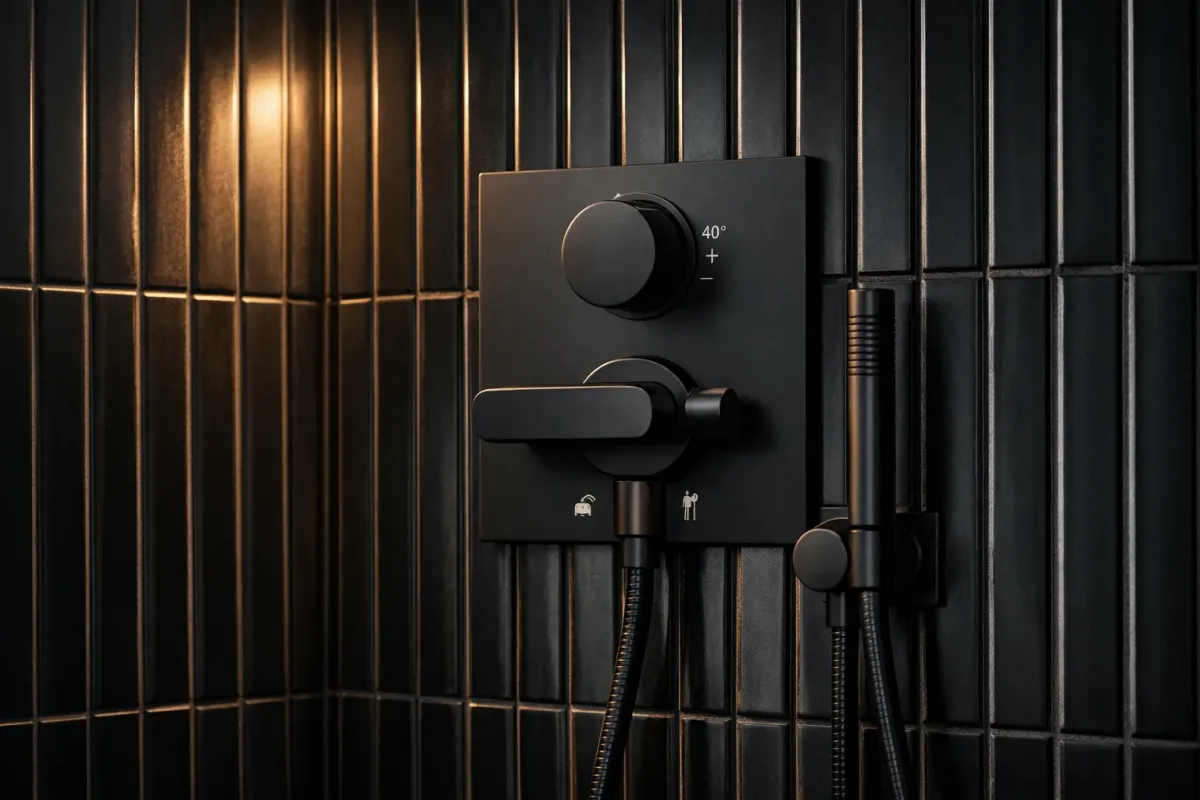
A specialised mechanism containing a wax thermostat element made from copper powder and paraffin. The wax expands when heated and contracts when cooled, moving a piston that automatically adjusts the hot-to-cold ratio to maintain a pre-set temperature. If one supply fails, the element detects the sudden temperature change and shuts off flow to prevent scalding. Thermostatic shower valves typically pair a ceramic disc cartridge for flow control with a separate thermostatic element for temperature, giving you the durability of ceramic disc operation with automatic scald protection.
How They Compare
| Feature | Ceramic Disc | Compression | Ball Valve | Thermostatic |
|---|---|---|---|---|
| Operation | Quarter or half turn | 2.5+ full turns | Single lever | Dial + lever |
| Lab-tested cycles | 500,000+ | Not rated | Not rated | 50,000 (wax element) |
| Real-world lifespan | 10-20 years | 1-3 years per washer | 5-10 years | 5-10 years (element) |
| Repair complexity | Moderate (cartridge swap) | Easy (washer change) | Complex (many parts) | Professional recommended |
| Repair cost (DIY) | £8-£25 cartridge | Under £1 washer | £10-£20 parts kit | £25-£80 cartridge |
| BS EN standard | EN 817 / EN 200 | EN 200 | EN 200 | EN 1111 |
Quarter-Turn vs Half-Turn
Both use identical ceramic disc technology. The difference is the degree of rotation required to go from closed to full flow.
Quarter-turn taps reach maximum flow in a single 90-degree rotation. The action is fast and can be operated with an elbow, the back of a hand or a wrist with limited grip strength. This makes quarter-turn the default choice for accessible bathrooms and for anyone with arthritis or reduced hand mobility. The trade-off is that flow goes from nothing to full very quickly, which can make precise adjustment harder when filling a glass or rinsing a razor.
Half-turn taps spread the same range across 180 degrees. The water comes on more gradually, giving finer control over low flow rates. Some manufacturers also produce three-quarter-turn variants as a middle ground.
Quarter-turn is the most common format in the UK market. If your taps turn with a single flick of the wrist, they are quarter-turn ceramic disc.
Where Ceramic Disc Technology Appears
Ceramic disc cartridges are not limited to basin taps. The same fundamental mechanism appears across every tap type in a modern bathroom.
Basin mixers use a single 35mm or 40mm cartridge that controls both flow and temperature from one lever. These are the most common application and the cartridge most homeowners will eventually need to replace.
Pillar taps (the traditional two-tap arrangement) use separate ceramic disc cartridges in each handle, typically 20mm to 25mm diameter with half-inch BSP threads. They are sold in handed pairs, one opening clockwise (hot) and the other anti-clockwise (cold).
Bath fillers use larger three-quarter-inch BSP cartridges with wider channels to deliver the higher flow rates needed to fill a bath in reasonable time.
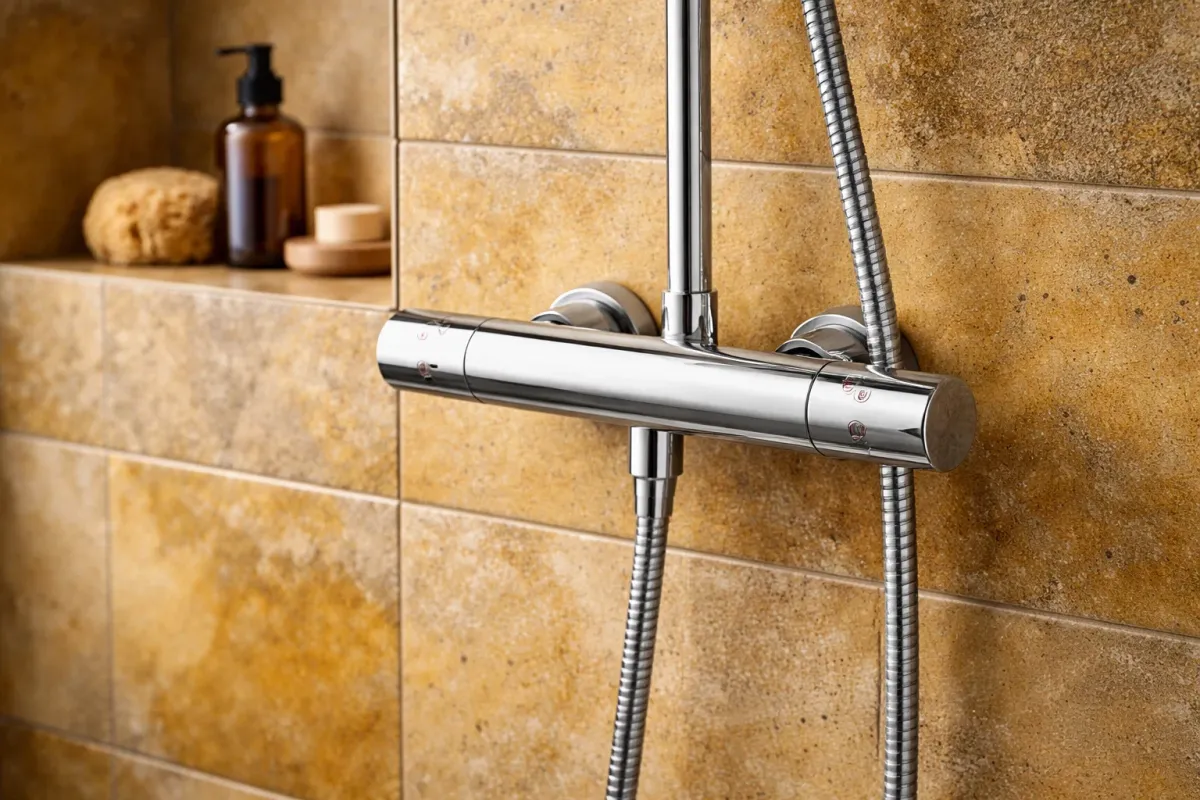
Shower valves rely on ceramic disc for the flow control side. In exposed bar mixers like those from Bristan, Grohe and Hansgrohe, one end of the bar houses a ceramic disc flow cartridge and the other houses the thermostatic temperature element.
Kitchen taps have used ceramic disc as standard for years. Pull-out spray taps, boiling water taps and mono mixers all contain the same basic ceramic disc cartridge as bathroom basin mixers.
For guidance on choosing between basin mixer styles and tap configurations for your bathroom, the basin mixers guide covers single-hole, three-hole and wall-mounted options.
UK Water Systems and Ceramic Disc Performance
Your home’s water system affects how ceramic disc taps perform and how long they last. The UK has three main domestic water system types, and each delivers different pressure to the taps.
Gravity-fed systems with a cold water tank in the loft deliver the lowest pressure, typically 0.1 to 0.3 bar. Every metre of vertical drop from the tank to the tap generates roughly 0.1 bar. Ceramic disc taps work well on gravity-fed systems provided you choose taps rated for a minimum of 0.1 bar, which most modern taps are. Flow rates will be lower than on pressurised systems, but the valve mechanism operates identically.
Combi boiler systems deliver mains-pressure water to both hot and cold taps, typically 1.0 to 2.0 bar at the tap. This is the sweet spot for ceramic disc performance, and most taps are designed around this pressure range.
Unvented (pressurised) systems with a mains-pressure hot water cylinder deliver 1.0 to 3.0 bar or more. Ceramic disc taps perform at their best on these systems, with strong, responsive flow from every outlet.
Water Hardness and Cartridge Longevity
Manchester and the North West benefits from soft water supplied by United Utilities, typically measuring 30 to 50 parts per million. This is among the softest mains water in England and is genuinely favourable for ceramic disc longevity. In soft water areas, cartridges routinely last 15 to 20 years without any maintenance.
The picture changes dramatically in hard water areas. Across London, the South East and East Anglia, water hardness regularly exceeds 200 to 350 ppm. Limescale accumulates on the contact surfaces between the two ceramic discs, creating micro-channels that allow water to seep through when the tap is closed. The same deposits restrict flow through the cartridge channels and can eventually bond the cartridge into the tap body so firmly that removal becomes extremely difficult. Expected lifespan drops to five to seven years without regular descaling.
If you live in a hard water area, removing the cartridge every six to twelve months and soaking it in white vinegar for two to four hours dissolves mineral buildup before it becomes a problem. Silicone grease applied to the O-rings during reassembly keeps the mechanism turning smoothly.
Common Problems and What Causes Them
Ceramic disc taps are remarkably reliable, but they do develop faults. The important point is that the ceramic discs themselves rarely fail. The problems almost always involve the surrounding components or external contaminants.
Dripping when closed is the most common complaint. In hard water areas, limescale on the disc surfaces creates gaps in the seal. In any area, grit or debris lodged between the discs prevents them from closing completely. After any plumbing work on your home, flush all taps for 30 seconds before normal use to clear particulate debris from the supply lines. If dripping persists, removing and cleaning the cartridge usually resolves it. If the polished disc surfaces are visibly scratched or chipped (rare but possible from hard grit), the cartridge needs replacing.
Stiff handle operation develops when limescale builds up around the cartridge body or between the discs. The tap becomes progressively harder to turn. Remove the cartridge, soak in white vinegar, clean all surfaces, apply silicone grease and reinstall. This restores smooth operation in most cases.
Leaking from the base of the handle or around the spout usually indicates worn O-rings rather than disc failure. The rubber O-rings that seal the cartridge body against the tap housing degrade over time, particularly on hot taps. Replacing the O-rings is a pennies fix and does not require a new cartridge.
Inconsistent temperature on mixer taps can mean the cartridge is worn and the discs no longer align correctly, or that debris is restricting one of the inlet channels (usually the hot side). Clean or replace the cartridge.
Cartridge seized in the tap body happens when limescale or corrosion bonds the brass cartridge to the brass tap body. Penetrating oil left to soak overnight helps. For badly seized cartridges, a cartridge puller tool (around £15 from plumbing suppliers) provides the leverage needed without damaging the tap.
Replacing a Ceramic Disc Cartridge
This is a straightforward job that takes 15 to 30 minutes with basic tools. You need an adjustable spanner, a set of Allen keys, a flat-head screwdriver, silicone grease and the replacement cartridge.
Step 1. Turn off the water supply at the isolating valves beneath the tap. If there are no isolating valves, turn off the mains stopcock. Open the tap to release residual pressure.
Step 2. Remove the tap handle. Most modern taps have a small grub screw hidden beneath a decorative cap (prise it off with a flat-head screwdriver) or behind the handle. An Allen key (usually 2.5mm or 3mm) loosens the grub screw. The handle then lifts or pulls off.
Step 3. Unscrew the retaining nut or bonnet that holds the cartridge in position. An adjustable spanner works here. Wrap the nut in a cloth to avoid scratching the finish.
Step 4. Lift out the old cartridge. This is the critical moment. Take the old cartridge with you when buying a replacement because there are approximately 4,000 cartridge variations on the market. The key measurements are diameter (common sizes: 25mm, 28mm, 35mm, 40mm, 45mm), height, spline count (the teeth on the spindle, typically 20), turn direction (clockwise or anti-clockwise close) and thread size (half-inch BSP for basins, three-quarter-inch for baths).
Step 5. Apply a thin film of silicone grease to the O-rings and seals on the new cartridge. This ensures a watertight fit and makes future removal easier.
Step 6. Insert the new cartridge, ensuring correct orientation. Hot and cold sides are usually colour-coded red and blue. Tighten the retaining nut firmly but not excessively.
Step 7. Refit the handle and decorative cap. Turn the water supply back on and test for leaks.
What It Costs
A replacement ceramic disc cartridge costs £8 to £25 depending on brand and specification. Generic universal cartridges start from £5 to £12 per pair. Branded cartridges from Grohe, Bristan or Hansgrohe run £15 to £30 each. Thermostatic shower cartridges are more expensive at £25 to £80.
If you prefer to call a plumber, expect to pay £80 to £150 for the job including labour and parts. A worthwhile investment if the cartridge is seized, the tap is in an awkward location, or you are uncomfortable working with the water supply. For larger bathroom plumbing issues, our bathroom plumbing team can help.
UK Brand Warranties on Ceramic Disc Products
The warranty a manufacturer offers on its ceramic components is a genuine indicator of confidence in the product. The differences between brands are significant.
| Brand | Tap Warranty | Ceramic-Specific | Notable Technology |
|---|---|---|---|
| Hansgrohe | 5 years general | 20 years on ceramic components | Industry-leading ceramic guarantee |
| Crosswater | 15 years | Included in main warranty | WRAS approved across range |
| Bristan | 10 years standard finishes | Included in main warranty | UK’s largest tap brand, own cartridge production |
| Roper Rhodes | 10 years | Included in main warranty | WRAS approved, strong UK distribution |
| Hudson Reed | 10 years | Included in main warranty | Extensive replacement cartridge availability |
| Grohe | 5 years | Included in main warranty | Proprietary SilkMove Teflon-coated ceramic discs |
Hansgrohe’s 20-year ceramic-specific warranty stands apart. It reflects genuine durability, not marketing, and it applies specifically to the ceramic disc components rather than the tap body, finish or seals. Grohe’s SilkMove technology uses Teflon-coated ceramic discs manufactured in-house for exceptionally smooth lever operation. Bristan, as the UK’s largest tap brand, manufactures its own cartridges and maintains an extensive spare parts network through suppliers like The Shower Doctor.
When budgeting for a bathroom renovation, the tap warranty should factor into the decision alongside finish and style. A tap with a 10 or 15-year warranty on its ceramic disc cartridge represents genuine long-term value compared to a cheaper tap that may need cartridge replacement within five years.
British Standards for Tap Valves
Two European standards, adopted as British Standards, govern the performance requirements for taps sold in the UK.
BS EN 200:2008 covers single taps and combination taps. It specifies requirements for dimensional accuracy, leaktightness, pressure resistance, hydraulic performance, mechanical strength and endurance. The endurance test requires the cartridge to complete 70,000 opening and closing cycles without failure.
BS EN 817:2008 covers mechanical mixing valves, the single-lever mixers that dominate modern bathrooms. The endurance requirement is more demanding: 200,000 cycles at 65 degrees Celsius hot water temperature, with cold water below 30 degrees Celsius, at a flow rate of six litres per minute. Quality ceramic disc cartridges routinely exceed this threshold by a factor of two or more in laboratory testing.
WRAS approval (Water Regulations Advisory Scheme) confirms that a tap meets UK water quality and safety regulations. Premium brands prominently display WRAS certification, and it is worth checking when purchasing taps for any bathroom project. WRAS-approved taps have been tested to ensure they do not contaminate the water supply and that all materials in contact with drinking water are safe.
Frequently Asked Questions
How do I know if my taps have ceramic disc cartridges?
Why is my ceramic disc tap dripping?
How long do ceramic disc tap cartridges last?
Can I replace a ceramic disc cartridge myself?
Are ceramic disc taps suitable for low pressure systems?
Does hard water damage ceramic disc cartridges?
What is the difference between ceramic disc and thermostatic valves?
Past Projects


Get a Free Quote
Book a free, no-obligation site survey. Call us on 07428 653 653 or request a callback.
Book Free SurveyOur Clients' Reviews

5/5

5/5

5/5

5/5

5/5
Based on 453+ verified reviews across all platforms
Related Articles

How Much Does a New Bathroom Cost in 2026? UK Pricing Guide
What a New Bathroom Really Costs in 2026 The question every homeowner asks before a bathroom renovation is the same. How much? The answer depends on what you want, what you have already, and how much of the existing layout you intend to keep. But the data from thousands of UK projects gives us a clear picture.
view this article Read more
Bathroom Renovation Guide: Every Stage From Start to Finish
What a Bathroom Renovation Actually Involves A complete bathroom renovation is one of the most rewarding home improvement projects you can undertake, but it is also one of the most misunderstood. Homeowners frequently picture the finished result without appreciating the sequence of skilled trades and carefully timed stages that make it happen. Every professional bathroom renovation follows a logical order, and understanding that order is the single most important thing you can do before your project begins.
view this article Read more
Bathroom Tiling Styles for Timeless Elegance
Why Layout Matters More Than the Tile Itself
view this article Read more
Quartz, Granite or Porcelain Worktops: Which Suits Your Kitchen?
The Three-Way Decision Most Kitchen Renovations Come Down To
view this article Read more

How to Choose an Electrical Bathroom Mirror
What an Electrical Bathroom Mirror Actually Does
view this article Read more
Best Bathroom and Toilet Brands in the UK
What Makes a Good Bathroom Brand The brand name on your toilet, basin or shower valve determines far more than the price tag. It affects how long the product lasts, how easy it is to get replacement parts in five or ten years, whether the finish holds up to daily cleaning, and how well the engineering behind the product actually performs in a real bathroom rather than a showroom.
view this article Read more
Bathroom Underfloor Heating: Types, Installation and What to Expect
Why Underfloor Heating Works So Well in Bathrooms Stepping onto a warm bathroom floor on a cold January morning is one of those small luxuries that, once experienced, becomes very difficult to give up. Underfloor heating has grown from a niche luxury into a genuinely practical heating solution for UK bathrooms, and the reasons go well beyond comfort.
view this article Read more
Tools Required for Bathroom Fitting: The Professional Trade Toolkit
The Professional Bathroom Fitter’s Complete Toolkit Every professional bathroom fitter knows that quality tools are an investment, not an expense. The difference between a flawless installation and a problematic one often comes down to having the right equipment for the job. Over years of bathroom fitting projects across Greater Manchester, we have refined our toolkit to include everything a trade professional needs on site.
view this article Read more
What You Need to Know Before Your Kitchen Renovation
The Gap Between Expectation and Reality A kitchen renovation is not a weekend project. The 2025 Houzz UK Kitchen Trends Study found that 71 percent of homeowners change their kitchen layout during a renovation, and the median spend rose 34 percent year on year to £17,500. Those numbers tell you two things. First, most people end up doing more work than they originally planned. Second, the costs are significant enough that poor preparation leads to genuinely painful surprises.
view this article Read more
Accessible Bathroom Design: UK Regulations, Grants and Guide
Why Accessible Bathroom Design Matters Around 16.8 million people in the United Kingdom have a disability. That is one in four of the population, according to the DWP Family Resources Survey 2023/24, and the figure has risen by 4.9 million over the past decade. Among adults over State Pension age, 45 percent are disabled. The most common impairment types for working-age adults are mental health conditions (48 percent) and mobility impairments (42 percent).
view this article Read more
Bathroom Renovation Environmental Impact: Water, Energy and Waste
Why Your Bathroom Renovation Has a Bigger Environmental Footprint Than You Think
view this article Read more