
Best Close-Coupled Toilets for UK Homes: 2026 Buyer's Guide
Best close-coupled toilets for UK homes in 2026. Expert reviews, technical specs, pros and cons from professional bathroom fitters in Manchester.
If you are planning a bathroom renovation or simply replacing your old toilet, there is a very good chance you will end up choosing a close-coupled model. It is the most popular toilet type in British homes for good reason: they are reliable, straightforward to install, widely available, and come in a huge range of styles and budgets. But with dozens of brands and hundreds of models on the market, narrowing down the right one can feel surprisingly overwhelming.
As professional bathroom fitters in Manchester, we install close-coupled toilets every single week. We have seen which models perform brilliantly over the years and which ones cause headaches within months. This guide shares that hands-on experience so you can make a confident, informed decision.
What Is a Close-Coupled Toilet?
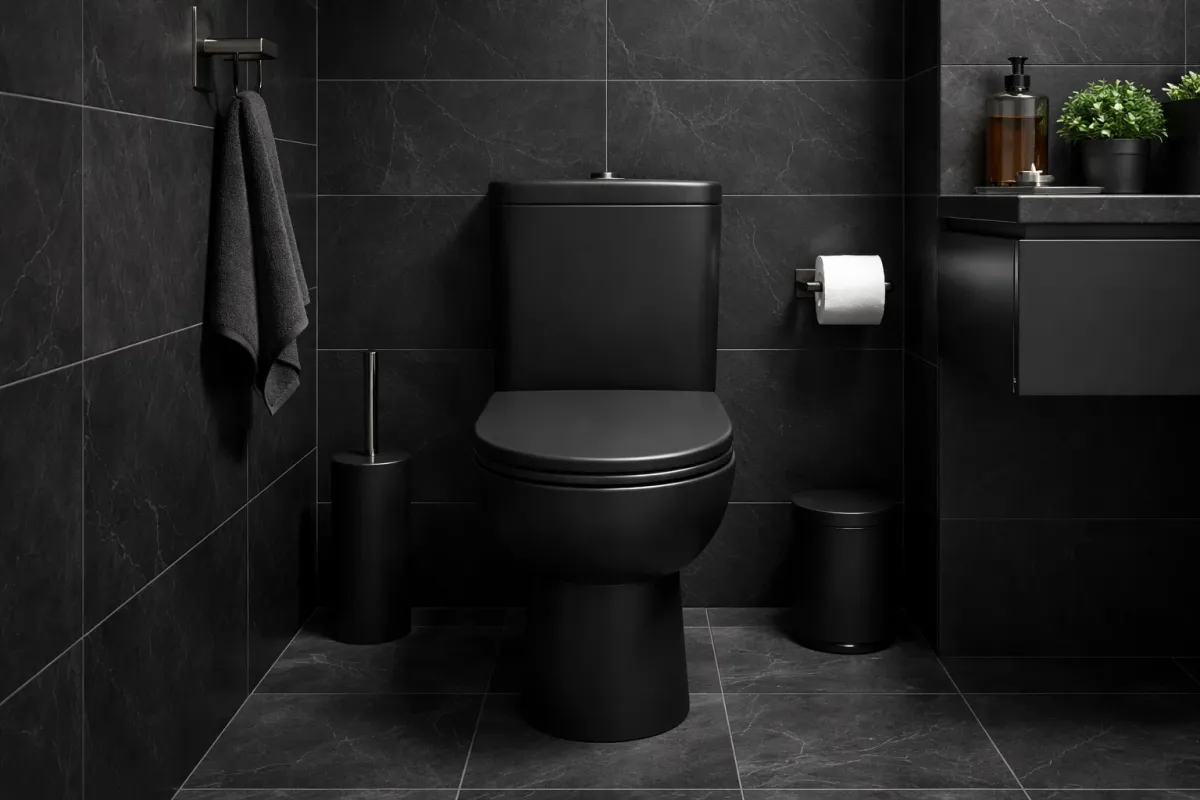
A close-coupled toilet is one where the cistern (the water tank) sits directly on top of the toilet pan, bolted together as a single, compact unit. The two pieces are “closely coupled” — hence the name. This is the standard toilet configuration you will find in the majority of UK bathrooms, from Victorian terraces to new-build apartments.
How It Differs from Other Toilet Types
There are several toilet types available in the UK, and understanding the differences will help you decide whether close-coupled is the right choice for your home.
| Feature | Close-Coupled | Back-to-Wall | Wall-Hung | Low-Level Traditional |
|---|---|---|---|---|
| Cistern location | Sits on top of pan | Concealed behind furniture or wall | Hidden inside the wall | Mounted on wall above pan with flush pipe |
| Installation complexity | Low | Medium | High | Low-Medium |
| Average cost (unit only) | £100 - £500 | £150 - £600 | £300 - £800+ | £200 - £700 |
| Installation cost | £150 - £300 | £200 - £400 | £350 - £600+ | £150 - £350 |
| Floor space required | Moderate | Less (cistern hidden) | Least (no floor contact) | Moderate |
| Ease of maintenance | Easy — all components accessible | Moderate — cistern behind panel | Harder — cistern behind wall | Easy |
| Best suited for | Most UK bathrooms | Modern fitted bathrooms | Contemporary, minimalist spaces | Period and traditional homes |
Close-coupled toilets strike the best balance between affordability, ease of installation, and ease of maintenance. That is precisely why they remain the go-to choice for the majority of bathroom fitting projects we carry out.
Why Close-Coupled Toilets Are the UK’s Most Popular Choice
There are several practical reasons why close-coupled toilets dominate the UK market:
Easy Installation and Replacement
Because the cistern and pan are a self-contained unit, a close-coupled toilet does not require any hidden framework inside the wall or bespoke furniture. Your bathroom fitter can remove an old toilet and fit a new one in a matter of hours. This keeps labour costs down and means less disruption to your home.
Accessible Maintenance
When something goes wrong — a faulty fill valve, a worn flush seal, or a running cistern — all the working parts are right there, accessible by simply lifting the cistern lid. Compare that to a wall-hung toilet where the cistern is buried behind tiles and plasterboard, and you can see why close-coupled models are favoured by homeowners and plumbers alike.
Wide Range of Styles and Prices
From budget-friendly options under £120 to designer models exceeding £500, there is a close-coupled toilet for every bathroom and every budget. Whether your bathroom is modern, traditional, or somewhere in between, you will find a model that fits the aesthetic.
Proven Reliability
Close-coupled toilets use gravity-fed flushing, which is a simple and well-established technology. There are fewer things to go wrong compared to more complex concealed cistern systems.
Our Top 7 Close-Coupled Toilets for UK Homes in 2026
We have selected these models based on our professional experience, customer feedback, build quality, water efficiency, and value for money. Every toilet listed below is readily available from UK suppliers.
1. Roca The Gap Rimless Close-Coupled Toilet
Roca’s The Gap range has been a firm favourite in the UK for years, and the rimless version takes it up another level. The rimless bowl design eliminates the traditional rim where bacteria and limescale love to hide, making it significantly easier to keep clean. The compact projection of 650mm makes it suitable for smaller bathrooms and en-suites without feeling cramped.
- Flush type: Dual flush (3/4.5 litres)
- Projection from wall: 650mm
- Bowl type: Rimless
- Seat included: Soft-close seat available separately
- Price range: £180 - £280
The build quality is excellent — we have fitted dozens of these and they consistently perform well. If you want a reliable, good-looking toilet at a sensible price, Roca The Gap Rimless is hard to beat.
2. Ideal Standard Concept Air Close-Coupled Toilet
Ideal Standard is a name that carries weight in the UK bathroom industry, and the Concept Air range demonstrates why. This toilet features clean, contemporary lines with a slim cistern profile that gives it a refined, modern appearance. The Aquablade flush technology directs water around the entire bowl in a powerful, sweeping motion, delivering a thorough clean with every flush.
- Flush type: Dual flush (4/2.6 litres)
- Projection from wall: 665mm
- Bowl type: Aquablade (rimless equivalent)
- Seat included: Soft-close seat often sold as a set
- Price range: £250 - £400
The Concept Air is a step up in terms of aesthetics and flush technology. It is a superb choice for anyone who wants their bathroom to look and feel premium. We have covered this model in more detail in our top 10 toilets guide.
3. Villeroy & Boch O.novo Close-Coupled Toilet
Villeroy & Boch is a German brand with over 275 years of heritage, and the O.novo range proves that quality does not have to come with a staggering price tag. This is their entry-level line, but do not let that fool you — the ceramic quality is outstanding and the design is clean and versatile enough to suit almost any bathroom.
- Flush type: Dual flush (3/6 litres)
- Projection from wall: 670mm
- Bowl type: Standard rim (CeramicPlus coating available)
- Seat included: No (sold separately)
- Price range: £200 - £320
The CeramicPlus coating is worth considering — it is a special surface treatment that causes water to bead and run off, reducing limescale and staining. For hard water areas across the North West, this can make a real difference.
4. RAK Ceramics Resort Close-Coupled Rimless Toilet
RAK Ceramics has rapidly gained market share in the UK thanks to competitive pricing and solid build quality. The Resort rimless model offers excellent value for money without cutting corners on performance. The rimless design ensures hygienic, easy cleaning, and the dual flush mechanism provides good water efficiency.
- Flush type: Dual flush (3/4.5 litres)
- Projection from wall: 625mm
- Bowl type: Rimless
- Seat included: Soft-close seat included
- Price range: £140 - £220
This is our top recommendation for budget-conscious buyers who do not want to compromise on quality. The shorter 625mm projection is also a bonus for compact bathrooms and cloakrooms. The fact that it comes with a soft-close seat included at this price point makes it outstanding value.
5. Duravit No.1 Close-Coupled Toilet
Duravit is a premium German brand known for exceptional design and engineering. The No.1 range was created to offer Duravit quality at a more accessible price point, and it delivers. The Rimless flushing system (called HygieneFlush) provides powerful, comprehensive cleaning with reduced water consumption.
- Flush type: Dual flush (3/4.5 litres)
- Projection from wall: 655mm
- Bowl type: Rimless (HygieneFlush)
- Seat included: Soft-close seat available
- Price range: £220 - £380
If you are drawn to designer bathroom brands but your budget does not stretch to the D-Neo or ME by Starck ranges, the No.1 is the sweet spot. It looks the part, performs brilliantly, and carries the Duravit name.
6. Burlington Riviera Close-Coupled Toilet
For period properties, traditional bathrooms, or anyone who loves a classic look, Burlington is the brand to consider. The Riviera model pairs elegant, heritage-inspired curves with modern flushing internals. It is available in both standard white and the brand’s signature Ivory finish.
- Flush type: Dual flush (3/6 litres)
- Projection from wall: 700mm
- Bowl type: Standard rim
- Seat included: No — Burlington offers a range of wooden and soft-close seats
- Price range: £350 - £550
Burlington toilets are noticeably larger than modern compact models, so measure your space carefully. The 700mm projection means you will need more room, but the visual impact in a traditionally styled bathroom is well worth it. Pair it with a Burlington basin and pedestal for a cohesive look.
7. Ideal Standard i.life A Close-Coupled Toilet
The i.life A range is Ideal Standard’s newer, more affordable line designed to offer modern rimless technology at a competitive price. It features a clean, unfussy design with a slightly rounded bowl shape that works in both modern and transitional bathrooms.
- Flush type: Dual flush (4/2.6 litres)
- Projection from wall: 665mm
- Bowl type: Rimless
- Seat included: Soft-close seat often bundled
- Price range: £160 - £260
This is quickly becoming one of the most popular choices we see on bathroom fitting projects. It offers many of the same features as the pricier Concept Air but at a lower price point. For straightforward bathroom remodelling on a sensible budget, the i.life A is an excellent pick.
Technical Specifications Comparison Table
Here is a side-by-side comparison to help you evaluate the key specifications at a glance:
| Model | Flush Volume | Projection | Rimless | Seat Included | Price Range |
|---|---|---|---|---|---|
| Roca The Gap Rimless | 3/4.5L | 650mm | Yes | No | £180 - £280 |
| Ideal Standard Concept Air | 4/2.6L | 665mm | Yes (Aquablade) | Optional bundle | £250 - £400 |
| Villeroy & Boch O.novo | 3/6L | 670mm | No (CeramicPlus option) | No | £200 - £320 |
| RAK Resort Rimless | 3/4.5L | 625mm | Yes | Yes (soft-close) | £140 - £220 |
| Duravit No.1 | 3/4.5L | 655mm | Yes (HygieneFlush) | Optional | £220 - £380 |
| Burlington Riviera | 3/6L | 700mm | No | No | £350 - £550 |
| Ideal Standard i.life A | 4/2.6L | 665mm | Yes | Optional bundle | £160 - £260 |
Pros and Cons of Close-Coupled Toilets
Advantages
- Affordable: Generally the most budget-friendly toilet type, both to purchase and to install.
- Easy to install: No concealed frames or specialist wall-mounting required. A skilled bathroom fitter can typically complete installation in 2-3 hours.
- Simple maintenance: All components are readily accessible. Replacing a fill valve or flush mechanism is a straightforward job.
- Huge variety: Available in hundreds of styles, from ultra-modern rimless to traditional Victorian designs.
- Reliable flushing: Gravity-fed dual flush systems are proven, dependable technology.
- Compatible with most bathrooms: Works with standard waste pipe configurations found in the vast majority of UK homes.
Disadvantages
- Takes up more visual space: The exposed cistern is visible, unlike concealed cistern models which offer a sleeker appearance.
- Harder to clean behind: The gap between the toilet and the wall, and the area around the cistern connection, can accumulate dust and grime.
- Not the most space-efficient: While compact models exist, a close-coupled toilet generally has a larger footprint than a wall-hung alternative.
- Design limitations for minimalist spaces: If you are aiming for a very clean, contemporary bathroom with minimal visible fixtures, a wall-hung toilet may be a better fit.
Installation Considerations
Whether you are fitting a new toilet as part of a full bathroom remodelling project or simply swapping an old one, here are the key installation points to keep in mind:
Waste Pipe Position
Close-coupled toilets in the UK typically use either an S-trap (waste goes down through the floor) or a P-trap (waste goes horizontally into the wall). Check your existing waste pipe configuration before purchasing, as not every model is compatible with both setups. Most modern close-coupled toilets are designed for horizontal or dual-exit waste, but it is always worth confirming.
Water Supply Connection
The cistern will need a cold water supply connection, usually at the base or side of the cistern. Flexible connector hoses make this straightforward, but ensure your isolation valve is accessible and in good working order.
Floor Fixing
Close-coupled toilets are bolted to the floor through the pan base. If you have underfloor heating, you need to know the pipe layout to avoid drilling through a heating pipe. Your installer should always check this before fixing.
Soil Pipe Compatibility
When replacing an older toilet, the soil pipe position may not perfectly align with a new model. Offset pan connectors and flexible waste connectors can resolve most alignment issues, but significant repositioning may require additional plumbing work.
Professional Installation
While some experienced DIYers can manage a like-for-like toilet replacement, we strongly recommend using a professional bathroom fitter for any installation that involves moving pipework, adjusting waste connections, or tiling around the toilet. A poorly sealed toilet can lead to leaks, water damage, and hygiene issues that cost far more to fix than the original installation.
Water Efficiency: What to Look For
Water efficiency is an increasingly important consideration for UK homeowners. Not only does it reduce your water bills (particularly if you are on a water meter), but it also minimises your environmental impact.
Dual Flush Systems
All of the toilets we have recommended feature dual flush mechanisms, allowing you to choose between a smaller flush for liquid waste and a larger flush for solid waste. The most efficient models use as little as 2.6 litres for a short flush and 4 litres for a full flush.
WRAS Approval
Look for toilets that carry WRAS (Water Regulations Advisory Scheme) approval. This confirms the product meets UK water regulations and has been tested for performance and water efficiency.
Flush Volume Comparison
- Older single-flush toilets: 9-13 litres per flush
- Standard dual flush: 4/6 litres
- Efficient dual flush: 2.6/4 litres or 3/4.5 litres
Upgrading from an old 9-litre single-flush toilet to a modern 3/4.5-litre dual flush model can save a family of four approximately 20,000 litres of water per year. That is a significant saving on your water bill and a meaningful reduction in water waste.
Tips for Buying a Close-Coupled Toilet
Drawing on our experience as professional bathroom fitters, here are our top practical tips for getting the right toilet:
1. Measure Your Space First
Before you fall in love with a particular model, measure the available space in your bathroom. Pay particular attention to the distance from the wall to the centre of the waste pipe, the overall depth available (projection), and the clearance either side of the toilet. A toilet that looks perfect in a showroom may be too large for your space.
2. Check the Waste Pipe Configuration
As mentioned, confirm whether you have an S-trap or P-trap waste setup. Buying a toilet that is incompatible with your existing waste pipe will create unnecessary complications and additional cost.
3. Go Rimless If Your Budget Allows
Rimless toilets are genuinely easier to keep clean. The traditional rim is a breeding ground for bacteria and limescale, and rimless designs eliminate this entirely. The small price premium is well worth it in the long run.
4. Do Not Forget the Seat
Many close-coupled toilets do not include a seat. Budget for a soft-close seat — they are quieter, gentler on the hinges, and prevent the seat from slamming. Quick-release hinges are another worthwhile feature, allowing you to remove the seat easily for thorough cleaning.
5. Consider the Brand’s UK Support
Choose a brand with a strong UK presence and readily available spare parts. Brands like Ideal Standard, Roca, and RAK Ceramics have extensive UK distribution networks, meaning replacement parts are easy to source years down the line. This is something we discuss further in our guide to the best toilet brands.
6. Look at the Full Cost Picture
The ticket price of the toilet is only part of the story. Factor in the cost of the seat (if not included), any pan connectors or flexible waste fittings you may need, and the installation labour. Getting a complete quote from your bathroom fitter before purchasing is always a good idea.
7. Read Real User Reviews
Manufacturer descriptions are always positive, so look for independent user reviews from UK buyers. Pay particular attention to comments about flush performance, build quality, and how well the toilet holds up after 12+ months of daily use.
8. Think About Cleaning Access
Consider how easy it will be to clean around and behind the toilet once installed. Some models have a smoother, more enclosed base that is easier to wipe down, while others have more crevices that can trap dirt.
Frequently Asked Questions
What is the difference between a close-coupled and a back-to-wall toilet?
Are rimless close-coupled toilets really better?
How long does it take to install a close-coupled toilet?
Can I install a close-coupled toilet myself?
What is the best close-coupled toilet for a small bathroom?
How much should I budget for a close-coupled toilet including installation?
Do all close-coupled toilets have dual flush?
Which brands offer the best spare parts availability in the UK?
Final Thoughts
Choosing the right close-coupled toilet does not have to be complicated. Focus on the key factors — rimless bowl for hygiene, dual flush for water efficiency, the right projection for your space, and a reputable brand for long-term reliability — and you will end up with a toilet that serves your household well for many years.
If you are planning a bathroom renovation or need professional toilet installation, our team at Builders Squad is here to help. As experienced bathroom fitters based in Manchester, we can advise on the best toilet for your specific bathroom layout and handle the complete installation to the highest standards.
For more bathroom inspiration and advice, explore our other guides:
- Top 10 Toilets You Can Buy in the UK
- The Throne Guide: Best Toilet Brands for Home Use
- Bathroom Remodelling Ideas for Greater Manchester Homeowners
See Our Bathroom Projects in Greater Manchester


Get a Free Quote
Book a free, no-obligation site survey. Call us on +44 7428 653 653 or request a callback.
Book Free SurveyOur Clients' Reviews

5/5

5/5

5/5

5/5
Based on 453+ verified reviews across all platforms
Related Articles
Smart Toilets and Bidet Toilets: The Future of UK Bathrooms
Smart toilets have been a staple in Japanese and South Korean households for decades, but they are now making serious inroads into British bathrooms.
view this article Read more
Wall-Hung Toilets: Are They Worth It? Complete UK Review
Wall-hung toilets have been standard in much of continental Europe for decades, but they have taken longer to gain traction in British homes.
view this article Read more
Best Back-to-Wall Toilets for Small Bathrooms
If you have a small bathroom, you already know that every centimetre counts. Choosing the right toilet can make or break your layout, and for compact British bathrooms, back-to-wall (BTW) toilets are quickly becoming the go-to option.
view this article Read more
Rimless Toilets vs Standard: Which Should You Choose?
If you have been shopping for a new toilet recently, you have almost certainly noticed that “rimless” has become one of the biggest selling points in the market.
view this article Read more
Top 10 Toilets You Can Buy in the UK | Expert Picks
Choosing the Right Toilet for Your Bathroom Choosing a toilet might not seem like a momentous decision, but considering you will use it several times a day for years, getting it right matters more than most people realise.
view this article Read more
The Best Toilet Brands for Your Home: A UK Buyer's Guide
Choosing a Toilet Brand: What Actually Matters Selecting a toilet brand might seem less important than choosing a specific model, but the manufacturer behind your toilet determines the quality of the ceramic, the reliability of the flush mechanism, the availability of spare parts years down the line, and the level of after-sales support when something eventually needs attention.
view this article Read more
GROHE Grohtherm 800 Thermostatic Shower Mixer Review
An Installer’s Honest Assessment We fit dozens of thermostatic shower mixers every year across Greater Manchester bathrooms and shower rooms. Some arrive in impressive packaging and disappoint within months.
view this article Read more
How to Plan a Kitchen Renovation: A Practical UK Guide
What Separates a Good Kitchen Renovation From a Costly Mistake ![Modern kitchen with clean lines and quality finishes showing the result of careful renovation planning](modern kitchen.
view this article Read more