
Bathroom Panels vs Tiles: Which Is Better for Your Bathroom?
Bathroom panels vs tiles compared: cost, durability, installation and maintenance. Expert advice from professional bathroom fitters in Manchester.
The Panel vs Tile Decision
Every bathroom renovation eventually arrives at one fundamental question: what goes on the walls? For generations the answer was straightforward. Tiles dominated British bathrooms with barely a challenger in sight. But the rise of modern wall panels has genuinely complicated that decision, and homeowners across Greater Manchester now find themselves weighing two very different approaches to waterproofing and finishing their bathrooms.
The choice between bathroom panels and tiles is not simply about aesthetics. It touches on budget, installation time, long-term maintenance, durability, and even the resale value of your property. Both materials have passionate advocates, and both have genuine strengths in the right context. What matters is understanding which option suits your particular bathroom, your lifestyle, and your priorities. Having fitted hundreds of bathrooms across Manchester, we have seen both materials perform brilliantly and both fall short when poorly specified. This guide draws on that hands-on experience to give you an honest, practical comparison.
What Are Bathroom Panels?
Bathroom wall panels are large, flat sheets designed to cover walls and ceilings in wet environments. They slot or bond together to form a continuous, near-seamless surface that keeps water out without the need for grouting. The technology has improved dramatically over the past decade, and the panels available today bear little resemblance to the flimsy plastic sheeting that gave earlier products a poor reputation.
There are four main types you will encounter in the UK market.
PVC panels are the most affordable option. Lightweight and hollow-cored, they click together with a tongue-and-groove joint and can be fitted directly over existing tiles or plasterboard. They come in a wide range of printed finishes, from plain white to marble and stone effects, though the surface can look somewhat flat compared to the real thing.
Acrylic panels sit a step above PVC in both quality and price. They are solid sheets with a high-gloss finish, often used behind baths and in shower enclosures. Acrylic is scratch-resistant, non-porous, and produces a sleek, modern appearance that photographs well and feels genuinely premium.
Laminate panels use a high-pressure laminate bonded to a moisture-resistant core, typically MDF or plywood. These offer the most convincing reproduction of natural materials. A good laminate panel can mimic the texture and depth of stone, wood, or concrete to a degree that is surprisingly convincing at arm’s length.
Composite panels represent the top end of the market. Constructed from multiple bonded layers, they combine rigidity with waterproofing and can be specified for commercial as well as domestic settings. They tend to be the thickest and most robust option, though also the heaviest.
All four types share a common advantage: the absence of grout lines. That single characteristic accounts for much of their appeal, because grout is the component of a tiled bathroom that demands the most ongoing attention.
What Makes Tiles Different
Tiles have been a staple of British bathrooms since the Victorian era, and there is a reason they have endured. A well-tiled bathroom is hard to beat for longevity, design versatility, and sheer visual impact. If you want to explore the rich history behind this material, our guide to tile history, manufacturing, and UK brands covers the subject in depth.
Ceramic tiles remain the most popular choice for domestic bathrooms. They are made from fired clay, glazed on one surface, and available in virtually any colour, pattern, or size. Ceramic is affordable, easy to cut during installation, and performs reliably in normal bathroom conditions.
Porcelain tiles are denser and harder than ceramic. Fired at higher temperatures, they absorb less water and resist staining more effectively. Porcelain is the better option for floors and high-traffic areas, and the range of available finishes has expanded enormously. Large-format porcelain slabs can even replicate the veining of Calacatta marble with startling accuracy. Our overview of bathroom tile types breaks down the differences between ceramic and porcelain in greater detail.
Natural stone tiles such as marble, slate, limestone, and travertine bring an organic warmth that no manufactured product can fully replicate. They require more maintenance, including periodic sealing, but for homeowners who value authenticity and character, stone remains the gold standard.
The design possibilities with tiles are essentially limitless. You can mix sizes, lay herringbone or chevron patterns, introduce accent strips, and create feature walls that become genuine focal points. Our article on contemporary tiling styles showcases some of the more striking layouts currently popular in Manchester homes. If you go the tile route, our tile and grout calculator works out quantities and grout weight before you order.
Direct Comparison
The table below sets out how panels and tiles stack up across the factors that matter most during a renovation.
| Factor | Bathroom Panels | Tiles |
|---|---|---|
| Cost (supply) | £15-£60 per sqm depending on type | £20-£80+ per sqm; natural stone higher |
| Installation time | 1 day for an average bathroom | 2-4 days including prep and grouting |
| Durability | 15-20 years for quality panels | 25-50+ years for porcelain and stone |
| Maintenance | Wipe clean; no grout to maintain | Grout needs periodic cleaning and resealing |
| Design options | Good range of printed and solid finishes | Virtually unlimited colours, patterns, sizes |
| Waterproofing | Inherently waterproof at joints | Relies on grout integrity and tanking |
| Repair/replacement | Entire panel may need replacing | Individual tiles can be swapped out |
| Resale value | Neutral to modest impact | Positive impact, especially quality tiles |
The numbers tell part of the story, but context matters enormously. A budget PVC panel will never compete with hand-cut marble, and an expensive composite panel will outperform cheap ceramic in almost every practical measure. The comparison is most useful when you hold like-for-like quality constant and focus on the inherent characteristics of each material type.
When Panels Are the Better Choice
Panels truly come into their own in specific scenarios, and recognising these can save you both money and frustration.
Rental properties and buy-to-let investments benefit hugely from panels. Tenants are not always gentle with bathrooms, and the ability to wipe down a smooth surface rather than scrubbing discoloured grout lines reduces turnover maintenance costs substantially. If a panel does sustain damage, the entire wall can be re-clad in a single day without disrupting tenants for long.
Budget-conscious renovations are another natural fit. When the priority is transforming a tired bathroom quickly and affordably, panels deliver remarkable visual improvement for modest outlay. The reduced labour cost is significant too. Because panels require far less preparation and no grouting, the installation bill can be 30 to 50 percent lower than an equivalent tiled job.
Bathrooms in older properties with uneven walls sometimes present challenges for tiling. Achieving a flat, true surface for tiles can require extensive plastering or boarding. Panels are more forgiving of minor imperfections and can be shimmed or scribed to fit without the same degree of wall preparation.
Speed matters to you. If you need a bathroom back in service quickly, perhaps because you only have one in the house, panels can cut the project timeline dramatically. We have completed full panel installations in a morning, whereas a tiled bathroom of the same size might take three or four days.
When Tiles Are the Better Choice
Tiles remain the superior choice in several important situations.
Long-term family homes deserve a finish that will last decades rather than years. A properly installed porcelain or stone tiled bathroom will outlive most other elements of the room. The taps, the suite, even the furniture will likely be replaced before the tiles need attention. For homeowners who intend to stay in their property for the long haul, tiles represent better value across their full lifespan.
Design-led bathrooms demand the flexibility that tiles provide. If you have a specific vision involving patterned encaustic tiles on the floor, large-format slabs on the walls, and a mosaic niche in the shower, panels simply cannot deliver that level of creative expression. Our guide to bathroom tile trends highlights just how far tile design has pushed in recent years.
Resale value is a consideration that often tips the balance. Estate agents consistently report that a well-tiled bathroom adds perceived value to a property in a way that panels rarely do. Buyers associate tiles with quality and permanence. In a competitive housing market like Manchester, that perception can translate into real pounds on the sale price.
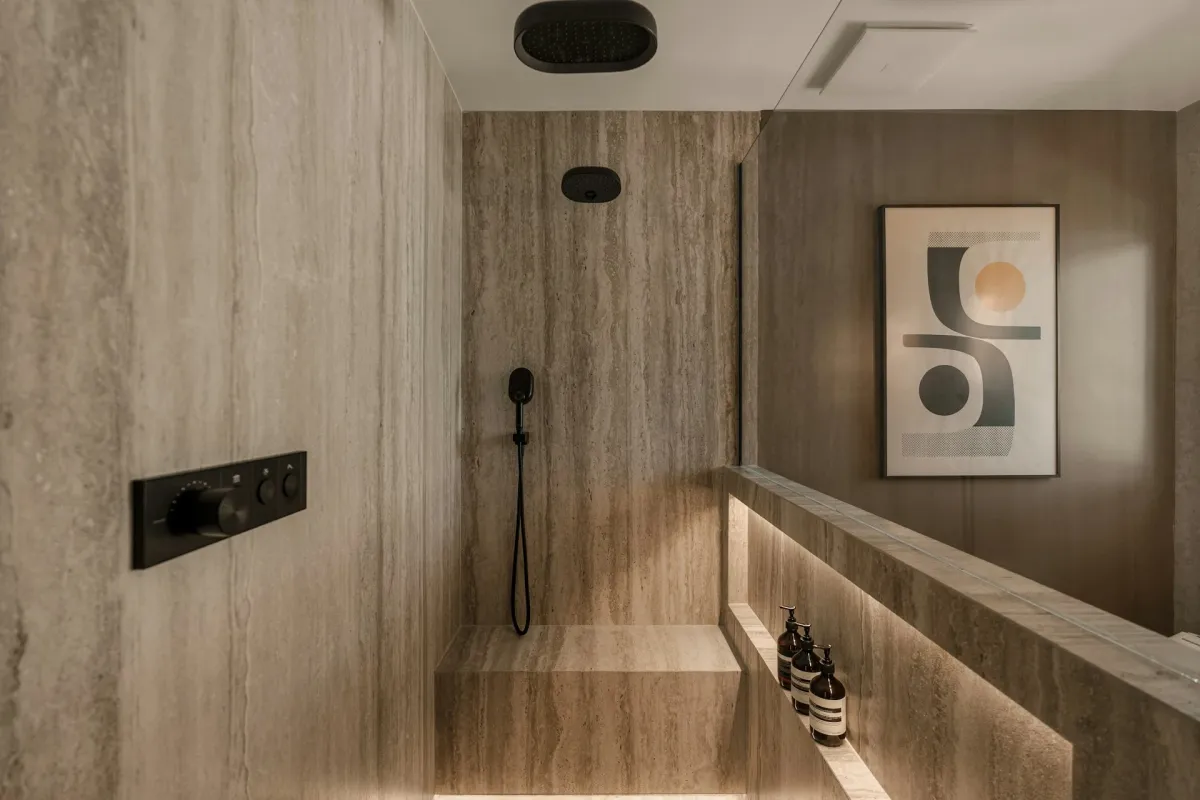
Wet rooms and walk-in showers that see heavy daily use demand the robustness that quality tiles provide. While panels are waterproof, the combination of properly tanked substrates and porcelain tiles creates a shower environment that will handle decades of use without deterioration. For comprehensive guidance on material choices, our complete guide to bathroom tiles covers the full spectrum.
Underfloor heating compatibility is another area where tiles excel. Their thermal conductivity means heat transfers efficiently from the mat or cable through to the surface, warming the room effectively. Panels insulate rather than conduct, which can reduce the effectiveness of underfloor heating systems.
Installation Differences
The installation process differs considerably between the two materials, and understanding those differences helps you plan your renovation realistically.
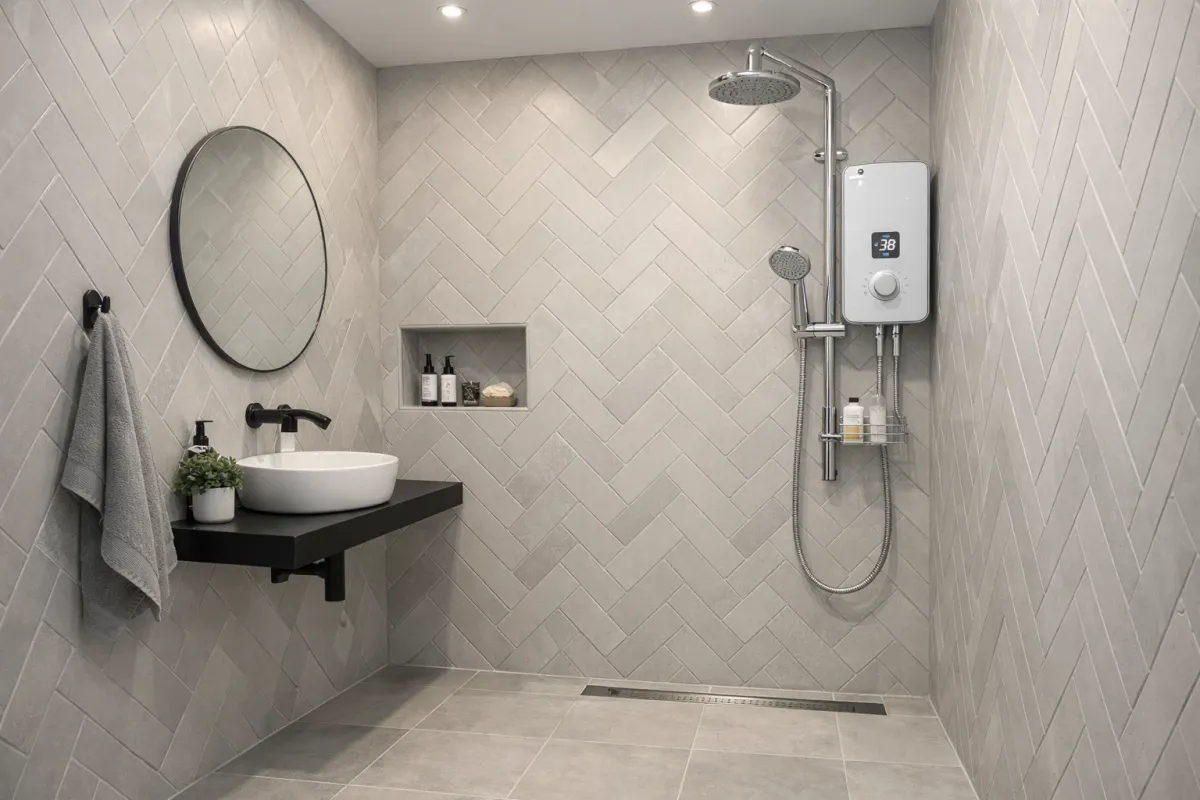
Panel installation is relatively straightforward. The walls need to be clean, dry, and reasonably flat. Panels are cut to size with a fine-toothed saw or sharp blade, then fixed to the wall with adhesive, screws, or a combination of both. Joints are sealed with colour-matched silicone or concealed by purpose-made trims. A competent bathroom fitter can panel an entire room in a single day, and the bathroom is ready to use almost immediately because there is no drying or curing time for grout.
Tile installation is a more involved process. The substrate must be sound, level, and properly prepared. In wet areas, a tanking membrane or liquid waterproofing compound is applied first. The tiles are then set in adhesive, allowed to cure, and grouted. Depending on the tile size and layout complexity, this process takes two to four days for a typical bathroom. Intricate patterns, mosaic borders, or very large format tiles add further time. The grout itself needs 24 to 48 hours before the bathroom can be used normally.
Both approaches require skilled tradespeople to achieve a professional finish. Poorly fitted panels can trap moisture behind the wall surface, leading to mould and damp. Poorly laid tiles will crack, lift, or allow water ingress through failed grout. If you are planning a bathroom remodelling project, the quality of the installation matters at least as much as the material you choose.
Making Your Decision
There is no universally correct answer to the panels versus tiles question. The right choice depends entirely on your circumstances.
If you are renovating a family bathroom in a home you plan to live in for many years, and you value design flexibility and long-term durability, tiles are almost certainly the stronger option. If you are updating a rental property, working within a tight budget, or need the work completed as quickly as possible, panels offer a practical and increasingly attractive alternative.
Consider combining both materials too. We regularly fit panels on three walls of a bathroom while tiling a feature wall or the shower enclosure. This approach captures the easy maintenance of panels where it matters most while preserving the design impact of tiles where they are most visible. It also keeps costs manageable without compromising on the areas that define the room’s character.
Whatever you decide, professional installation is not optional. Both panels and tiles perform only as well as the fitting behind them. If you would like to discuss the best approach for your bathroom, get in touch and we can walk you through the options.
Frequently Asked Questions
Are bathroom panels cheaper than tiles overall?
How long do bathroom panels last compared to tiles?
Can bathroom panels be fitted over existing tiles?
Do bathroom panels go mouldy?
Are panels suitable for shower enclosures?
Will bathroom panels affect my property value?
Can I mix panels and tiles in the same bathroom?
Past Projects


Get a Free Quote
Book a free, no-obligation site survey. Call us on 07428 653 653 or request a callback.
Book Free SurveyOur Clients' Reviews

5/5

5/5

5/5

5/5

5/5
Based on 453+ verified reviews across all platforms
Related Articles

Bathroom Tap Finishes: Chrome, Brass, Matt Black and Beyond
The Finish You Choose Outlasts Every Other Bathroom Decision Tiles can be re-grouted. Paint can be refreshed in a weekend. But the finish on your taps, shower valves and accessories is permanent for the life of the fitting. Choose a finish that scratches, tarnishes or shows every water spot, and you will notice it every time you wash your hands for the next decade.
view this article Read more
Top 10 Shower Mixers You Can Buy in the UK
Why Your Shower Mixer Matters The shower mixer is the heart of your shower system. A good one delivers stable temperature, consistent flow and reliable performance for years. A poor one fluctuates when someone runs a tap elsewhere in the house, dribbles at low pressure, or seizes up from limescale within a couple of years. The difference between a satisfying daily shower and a frustrating one often comes down to this single component.
view this article Read more
Bathroom Renovation Mistakes and How to Avoid Them
Why Bathroom Renovations Go Wrong Most bathroom renovations that end badly were doomed before the first tile came off the wall. The problems trace back to the planning stage, or more precisely, to planning that never happened. Budgets set without research. Drainage routes that nobody checked. Waterproofing skipped entirely. Materials picked because they looked good in a showroom, with no thought about how they handle a room full of steam.
view this article Read more
Electric Shower Not Working? Expert Troubleshooting Guide
Why Electric Showers Fail and What You Can Do About It
view this article Read more
How Small Businesses Are Being Targeted by Fake Negative Reviews
What Fake Reviews Look Like Fake negative reviews usually follow a recognisable pattern. Some common red flags include: Vague or generic complaints - Reviews that lack specific details about the service, product, or experience. No record of interaction - Businesses often cannot find any record of the reviewer being a customer. Repetitive wording - Multiple reviews using nearly identical phrasing, suggesting coordinated posting. Anonymous or newly created accounts - Reviewers with no history or with suspiciously similar profiles. Exaggerated negativity - Reviews that use overly dramatic language without providing factual information. Unrelated complaints - Sometimes a review will describe services or products the company does not even provide, making it clear the feedback was copied and pasted without relevance. No proof of purchase or invoice details - Genuine reviews often reference an invoice number, order ID, or project details, while fake ones lack any verifiable transaction information. Lack of supporting evidence - Fake reviewers rarely attach photos of completed work, receipts, or documents that back up their claims. Hidden or non-existent reviewer history - Profiles posting fake reviews often have no visible activity, or their entire history is hidden from the public. Suspicious formatting - Many fake reviews begin or end with quotation marks, a telltale sign they may have been copied from AI text generators or template-driven scripts. Unnatural posting frequency - One of the clearest signs of automated activity is the timing. Fake reviews are often placed in rigid intervals - every 30 minutes, every hour, or at the same time each day - a pattern that strongly suggests the use of bots and algorithms for automatic posting. For example, a long-standing client-focused company like Builders Squad Ltd may suddenly receive several one-star reviews from individuals who never used their services. These reviews often appear in clusters, pointing to organised campaigns rather than genuine customer dissatisfaction.
view this article Read more

Hiring Bathroom Fitters in Manchester: Costs, Process and Advice
What Manchester Homeowners Need to Know Before Hiring
view this article Read more
The Best Toilet Brands for Your Home: A UK Buyer's Guide
Choosing a Toilet Brand: What Actually Matters Selecting a toilet brand might seem less important than choosing a specific model, but the manufacturer behind your toilet determines the quality of the ceramic, the reliability of the flush mechanism, the availability of spare parts years down the line, and the level of after-sales support when something eventually needs attention. A cheap toilet from an unknown brand might look similar on day one, but the differences become apparent over months and years of daily use.
view this article Read more
Bathroom Remodelling Ideas for Greater Manchester Homeowners
Remodelling Ideas That Work for Manchester Homes Greater Manchester homes come with character. Victorian terraces in Didsbury, semi-detached houses in Prestwich, post-war estates in Salford, new builds in Trafford. Each type brings its own quirks to a bathroom renovation, from awkward plumbing routes in older properties to compact en-suites in modern developments. The ideas in this guide are drawn from projects we have completed across the region and reflect what actually works in the kinds of bathrooms Manchester homeowners live with every day.
view this article Read more
How to Replace a Shower with a Bath
Replacing a shower with a bath is an excellent way to enhance both the functionality and comfort of your bathroom, especially if you’re accommodating a growing family. This project walkthrough covers the entire process from strip-out to finished result, and applies equally to a full bathroom remodelling or a more targeted upgrade.
view this article Read more
How to Find the Best Bathroom Fitters Near You
Finding a Bathroom Fitter You Can Trust
view this article Read more
Small Bathroom Ideas for British Homes
Making the Most of a Small British Bathroom The average bathroom in a British home measures roughly 2.2 metres by 1.7 metres. That is not a lot of space. Yet within those modest dimensions, thousands of homeowners across the UK manage to create bathrooms that feel luxurious, function beautifully and serve families of four or more without a daily battle for elbow room. The secret is not magic. It is thoughtful design, clever product choices and a willingness to rethink what a bathroom can be.
view this article Read more